VACUUM WEIGHING
Convey by vacuum and weigh at the same time: dust-free, enclosed dosing
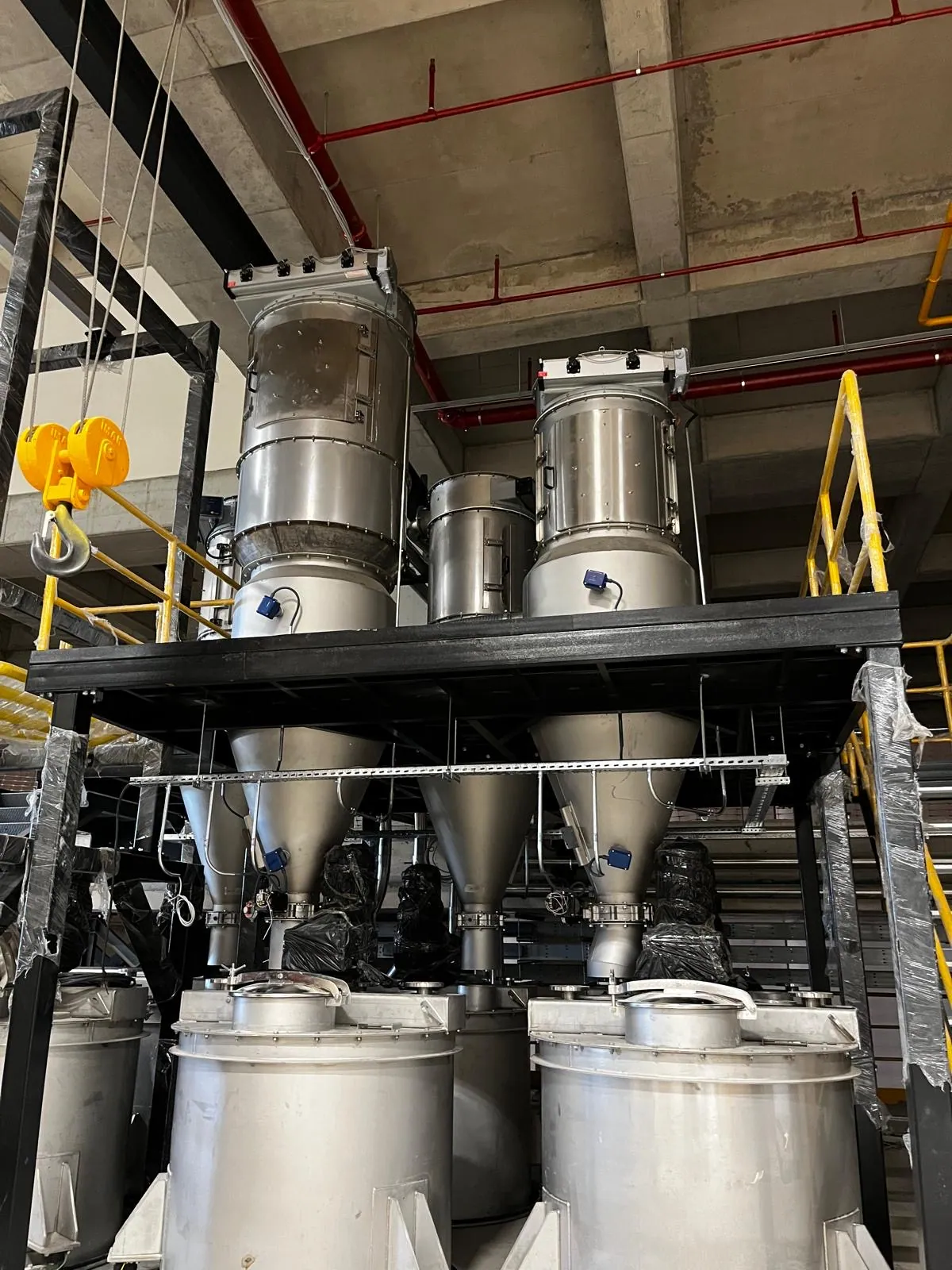
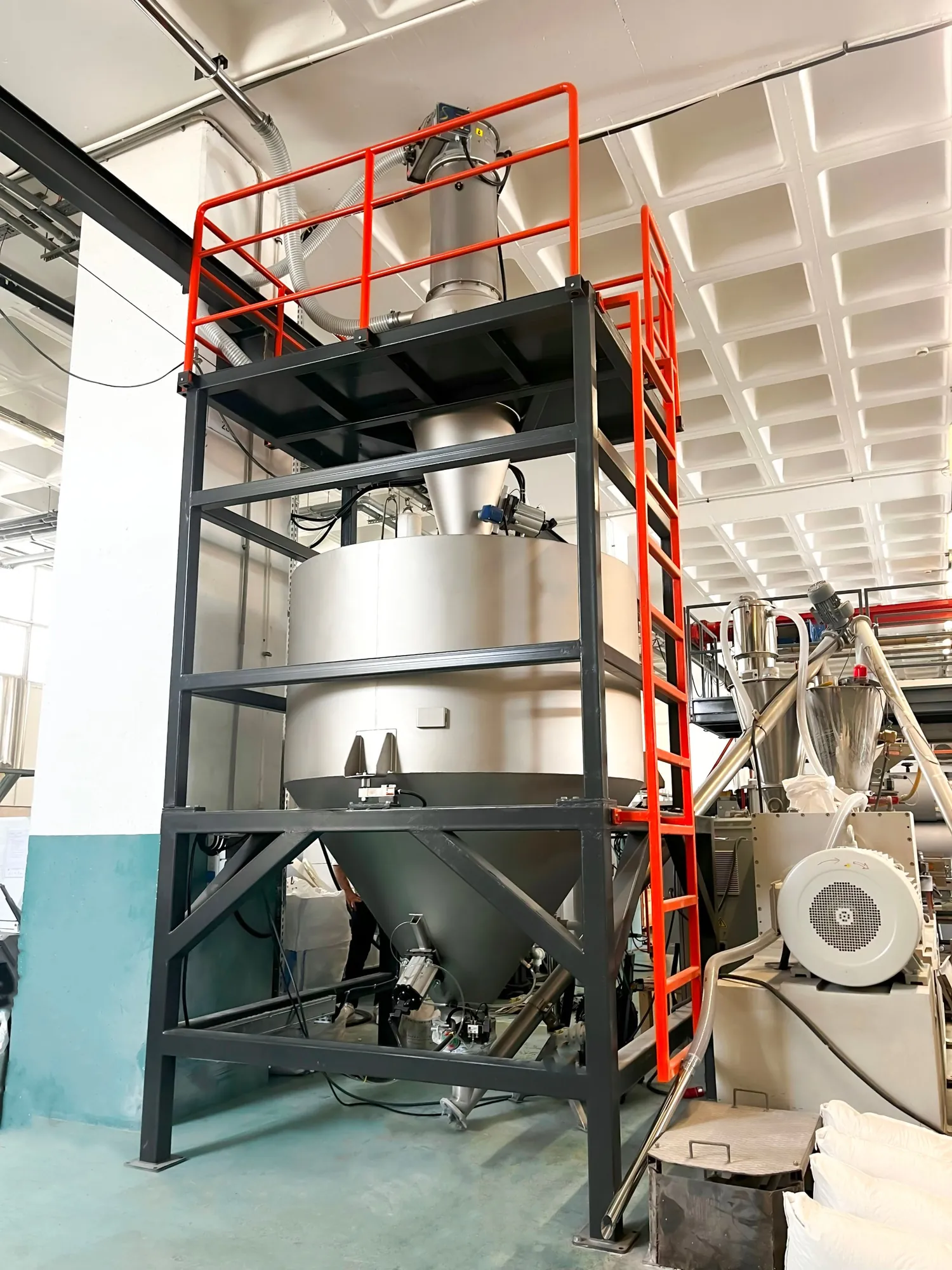
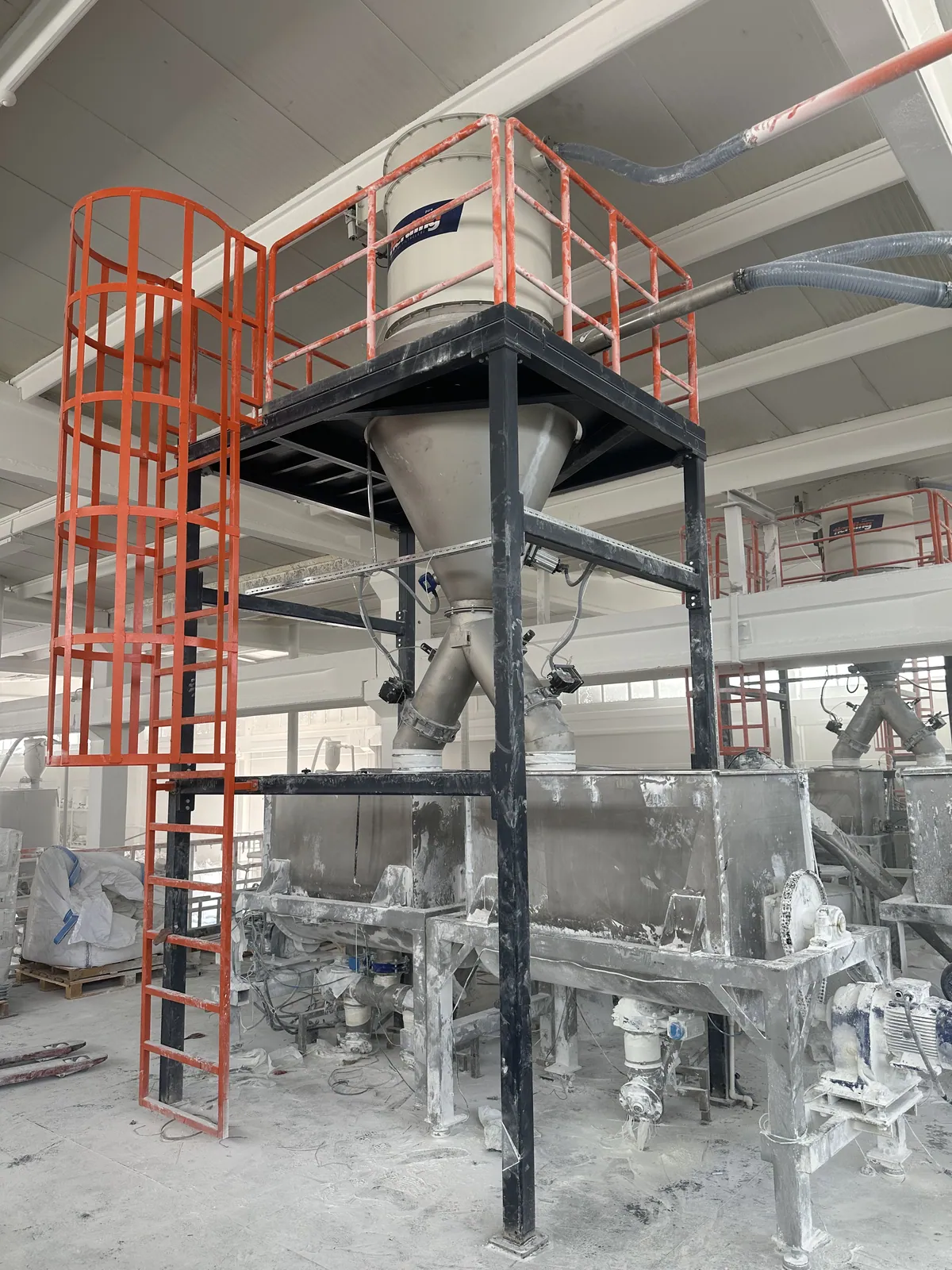
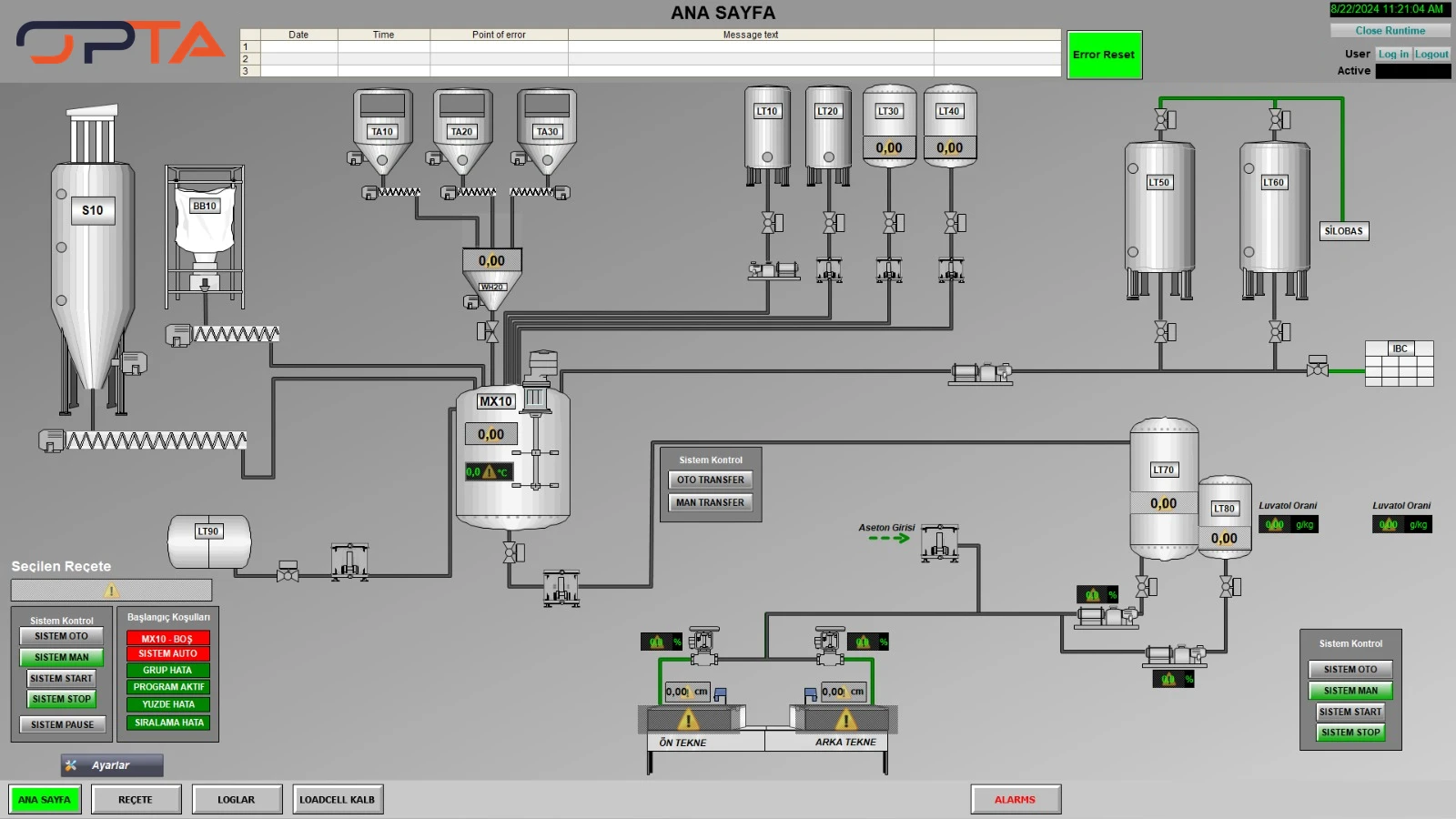
In a vacuum weighing system the weigh hopper is also the vacuum receiver. Components are drawn by vacuum from their own pick-up points and, because the hopper stands on load cells, the weight of each component is measured during conveying. Dust never escapes at any stage.
At OPTA Mühendislik we recommend vacuum weighing systems for recipes that include pigments, additives, stabilisers and fine powders, and for plants where operator health and cleanliness matter. We size the system according to number of components, batch size and cycle time, and install it turnkey with the recipe software.


Conveying and weighing in one step
In a conventional system material is first conveyed through a line and then weighed in a separate weigh hopper. In vacuum weighing these two tasks are combined in one unit: the weighed vacuum receiver both draws the material and measures the quantity drawn.
Approaching the target weight, suction is done in short bursts; the weight is read after each burst and suction stops before the target is exceeded. This gives dosing that is both fast and accurate.
- Less equipment, more compact layout
- Dust does not spread
- Easy line cleaning when changing components
- Actual weight of each component recorded
How does a weighing cycle proceed?
- STEP 01
Recipe selection
The operator selects the recipe and number of batches; the system sets the target quantity for each component.
- STEP 02
Tare
The empty weigh hopper is weighed and zeroed.
- STEP 03
Coarse suction
The first component's suction valve opens; material is drawn continuously up to most of the target.
- STEP 04
Fine suction
Near the target, suction is done in short bursts, checking the weight after each.
- STEP 05
Next component
The valve closes, the actual weight is recorded and the next component starts.
- STEP 06
Discharge
When all components are complete the bottom flap opens, the batch is discharged into the mixer or target vessel, and the filter is cleaned.
Vacuum weighing vs conventional weighing
| Vacuum weighing | Conventional weigh hopper | |
|---|---|---|
| Conveying | Into the weigh hopper by vacuum | Separate screw or pneumatic line |
| Dust control | Fully enclosed, negative pressure | Filters and aspiration needed at connection points |
| Layout | Compact; components can be far away | Components gathered above the weigh hopper |
| Batch size | Small and medium batches | Medium and large batches |
| Adding components | Easy with a new suction valve and hose | Needs a new feeder and layout |
| Suitable materials | Fine powders, pigments, additives | Free-flowing powders and granules |
Where is it used?
Plastics and cable
Weighing stabilisers, pigments and additives in PVC dryblend, compound and masterbatch recipes.
Chemicals and paint
Dust-free, recorded weighing of pigment, filler and additive powders.
Food and additives
Dosing powder ingredients that require hygiene in a closed system.
Construction chemicals
Weighing additives and minor components in cement-based mixes.
From the field
Equipment and standards
Standard
- Load cells and weighing indicator
- Coarse / fine feed control
- PLC and HMI recipe screen
- Flexible connections that do not affect weighing
Optional
- Recipe and batch reports via SCADA
- Barcode raw material verification
- Calibration weight hanger
- ERP integration
Standards
- OIML R76-compliant weighing (option)
- ATEX 2014/34/EU
- Machinery Directive 2006/42/EC
More in Batch dosing
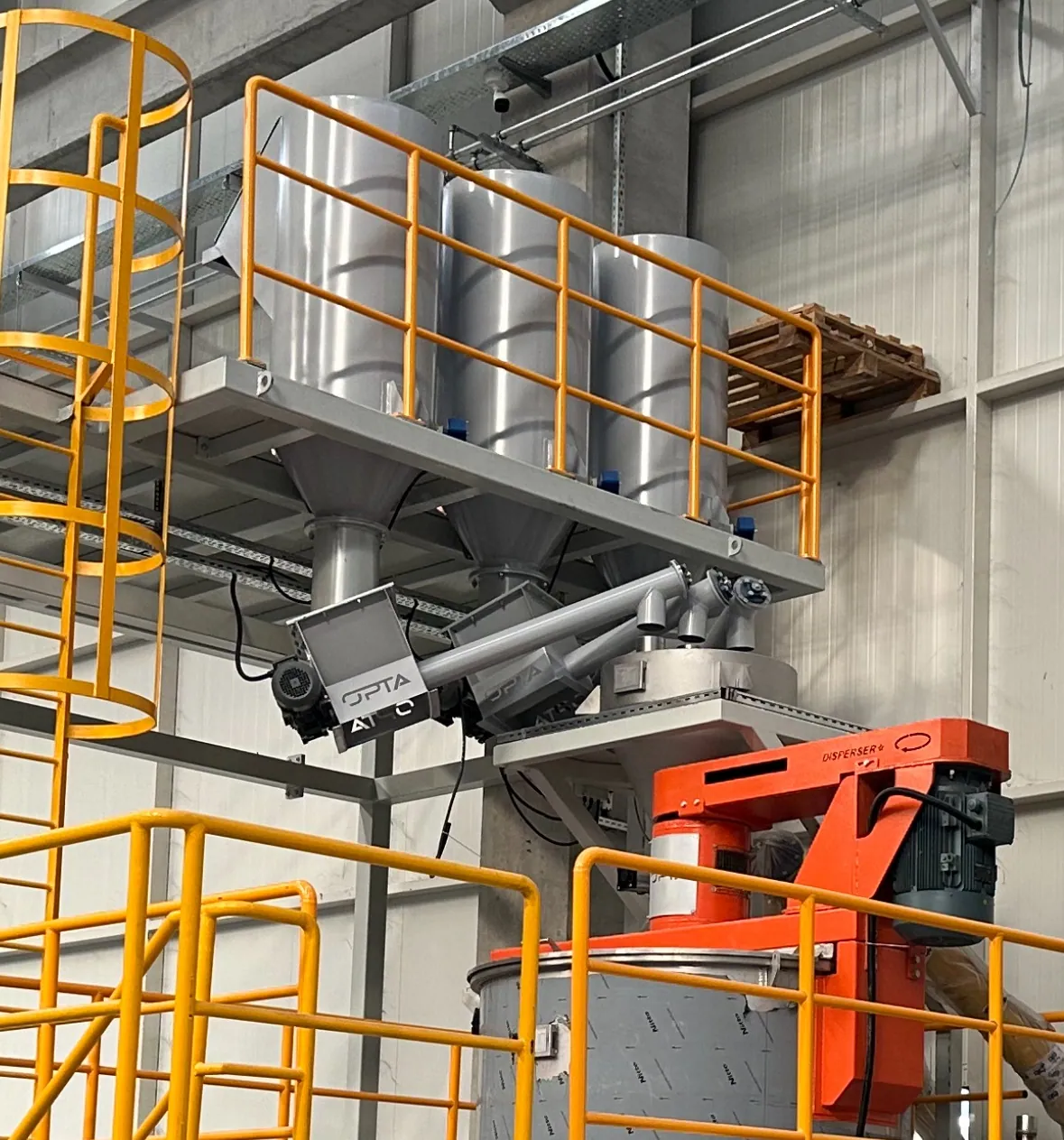 Batch dosing systemsBatch dosing with weigh hoppers and feeders.→
 Recipe preparation systemsAutomatic preparation with recipe, stock and batch tracking.→All batch dosingWeighing and Dosing→
Frequently asked questions
What capacities is vacuum weighing suitable for?
It suits batches from a few kilograms to a few hundred kilograms; for larger batches pressure conveying and a separate weigh hopper are recommended.
Do different components get mixed up?
It is not a problem since the components are combined in the same hopper anyway; the line is swept at the end of suction to clear residue.
Does vacuum affect weighing?
The effect of vacuum on weighing is avoided with flexible connections and by reading the weight after the vacuum is released.
How many components can be connected?
Each component uses its own suction valve and line; typically 4–10 components are connected to the same weigh hopper.
Can it pick up from big bags and bags?
Yes. Big bag discharge stations, bag dump stations and silos can be connected as pick-up points.
Let’s work together on vacuum weighing
Tell us about your raw material, capacity and site, and we will come back with a preliminary design and quotation.