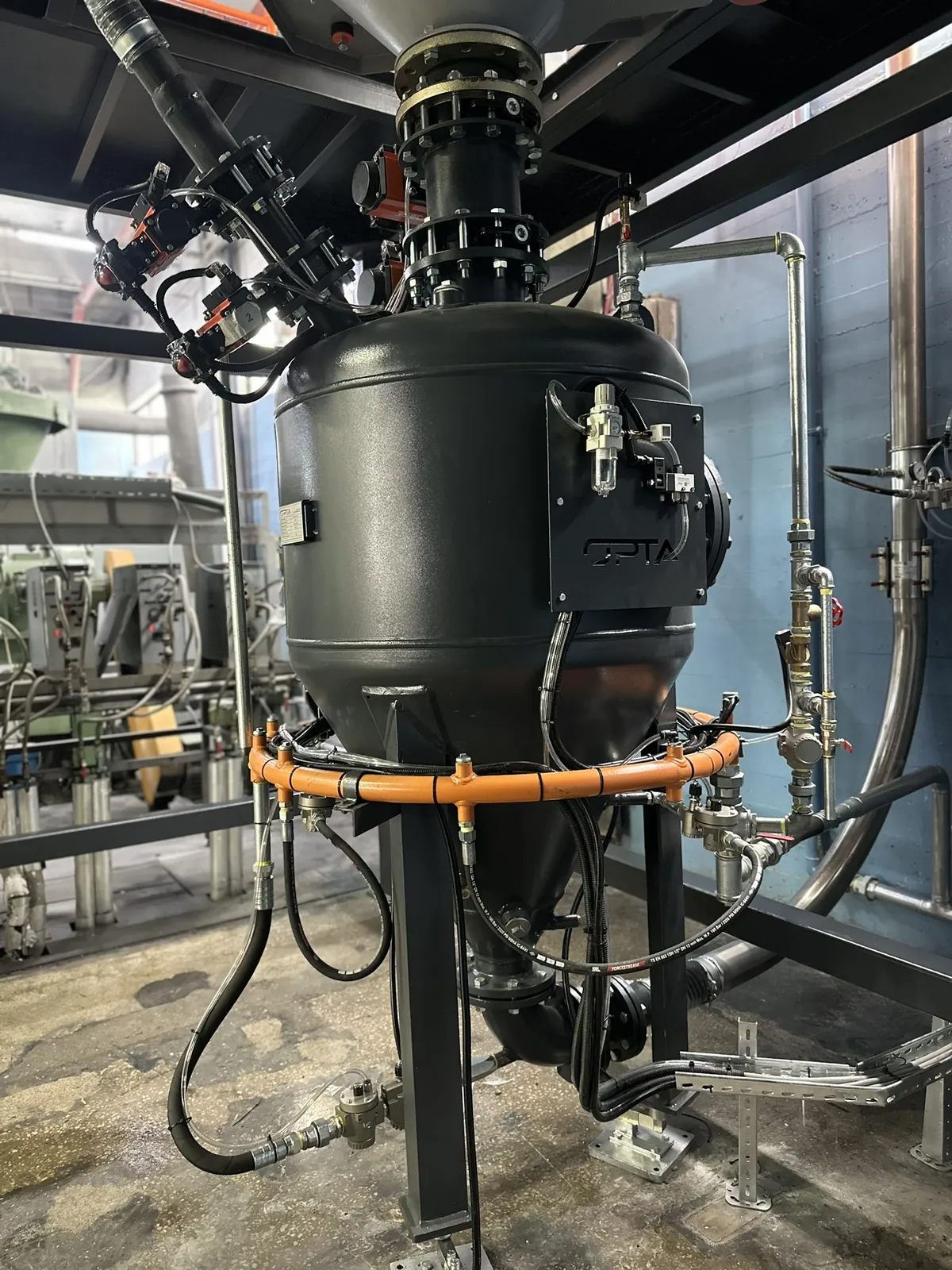
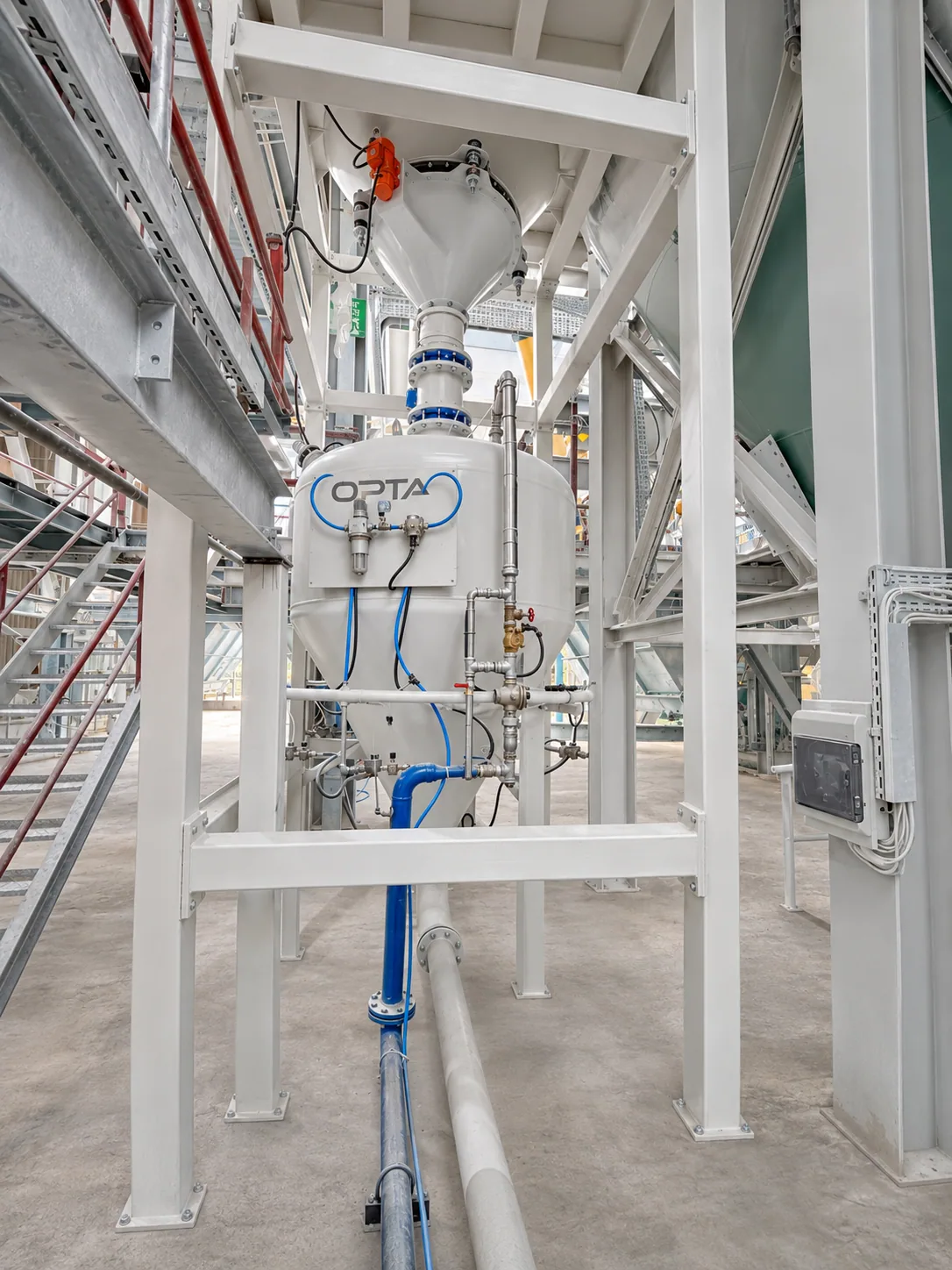
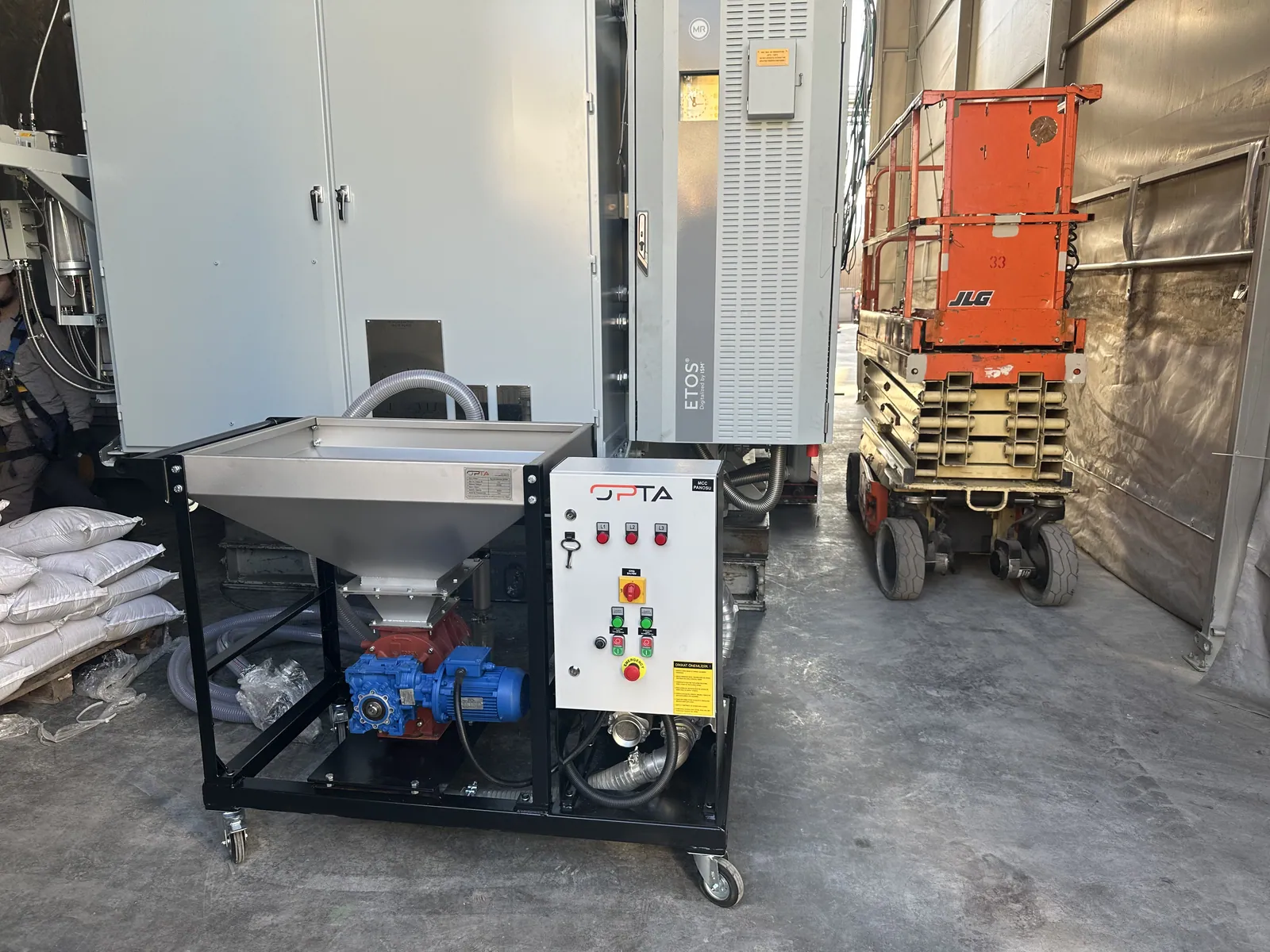
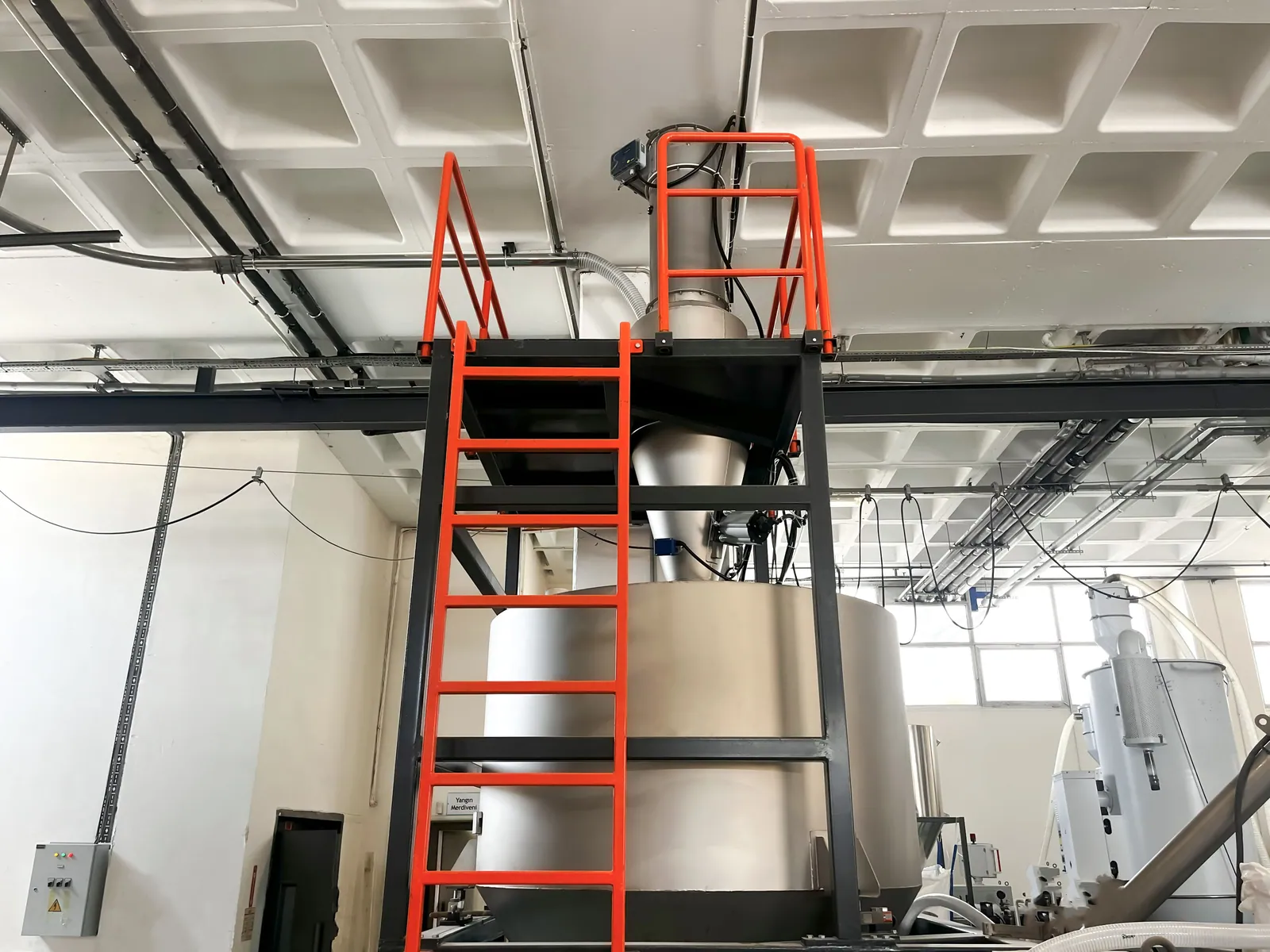
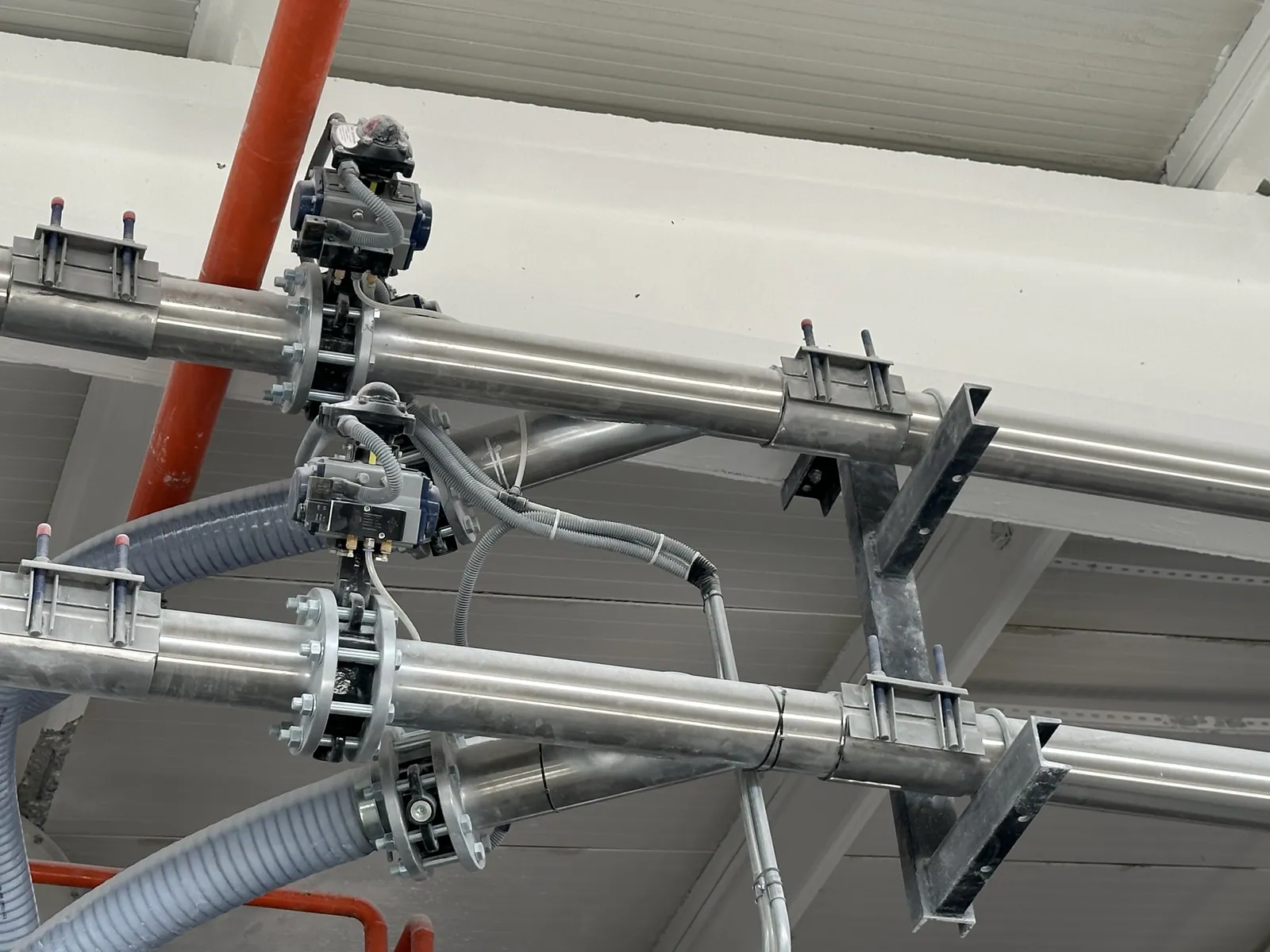
Convey powder and granules through a closed pipeline, dust-free and automatically
Pneumatic conveying moves powder and granular raw material from one point to another inside a closed pipeline using compressed air or vacuum. Every transfer in the plant — unloading silo trucks, silo to day silo, big bag station to mixer or to the hopper above the machine — can be done dust-free, loss-free and automatically.
Depending on conveying velocity, air volume and solids loading ratio, there are different regimes: dilute phase, medium phase and dense phase. The right regime is chosen according to the material's abrasiveness, fragility, conveying distance and capacity. At OPTA Mühendislik we analyse your material, determine line diameter, air demand and conveying equipment through pressure drop calculations, and install the system turnkey.
Material conveyed in the same pipeline behaves very differently depending on air velocity and the amount of material fed into the line. As air velocity falls and the material carried per unit of air increases, flow changes from dilute phase towards dense phase. The three animations show three different flow patterns in the same pipe side by side.
DiluteMediumDenseAir velocity decreasesMaterial per unit of air increases
01 · Dilute phase
Dilute phase
Material flies suspended and dispersed in a high-velocity air stream. It is continuous, simple and economical conveying; however, the high velocity wears the pipe with abrasive materials and damages fragile products.
Air velocity
15 – 30 m/s
Solids / air ratio
1 – 15
Air source
Blower
Velocity
Material loading
Breakage and wear
02 · Strand / dune flow
Medium phase
As velocity falls, part of the material forms dune-like waves on the pipe bottom while part travels in suspension. It is a transitional regime and, if not set correctly, the most prone to blockages.
Air velocity
10 – 15 m/s
Solids / air ratio
15 – 30
Air source
Blower / compressor
Velocity
Material loading
Breakage and wear
03 · Dense phase
Dense phase
Material is pushed through the pipe as plugs separated by air cushions, at low velocity and with very little air. Granules do not break and blends do not segregate; with abrasive powders and over long distances it gives the lowest wear and air consumption.
Answer five questions to see the recommended conveying method for your material and line, and why. The result is a preliminary assessment; we make the final choice together with material analysis and a pressure drop calculation.
Once you have seen the phases and their differences, choose the system that fits your needs; under each heading you will find the equipment, how it works and its applications.
If you have any other questions, you can contact our team directly.
How do I know which phase suits my material?
We examine bulk density, particle size distribution, abrasiveness, moisture and flow properties, and run a material test if needed. We make the choice from a pressure drop calculation together with capacity, distance and height difference.
What happens if the pneumatic line blocks?
On dense phase lines, OPTAIR booster air stations monitor line pressure and break up the plug by injecting air step by step into the area that is starting to block. The line is monitored by pressure sensors and alarms are passed to the automation system.
How is wear in pipe bends prevented?
We minimise wear by keeping conveying velocity low and using long-radius or wear-resistant (ceramic-lined, thick-walled) bends.
Can one line convey to several silos?
Yes. With diverter valves, one line can distribute in sequence to many silos, day silos or machines.
Let’s design your pneumatic Conveying project together
Tell us about your raw material, capacity and site, and we will come back with a preliminary design and quotation.