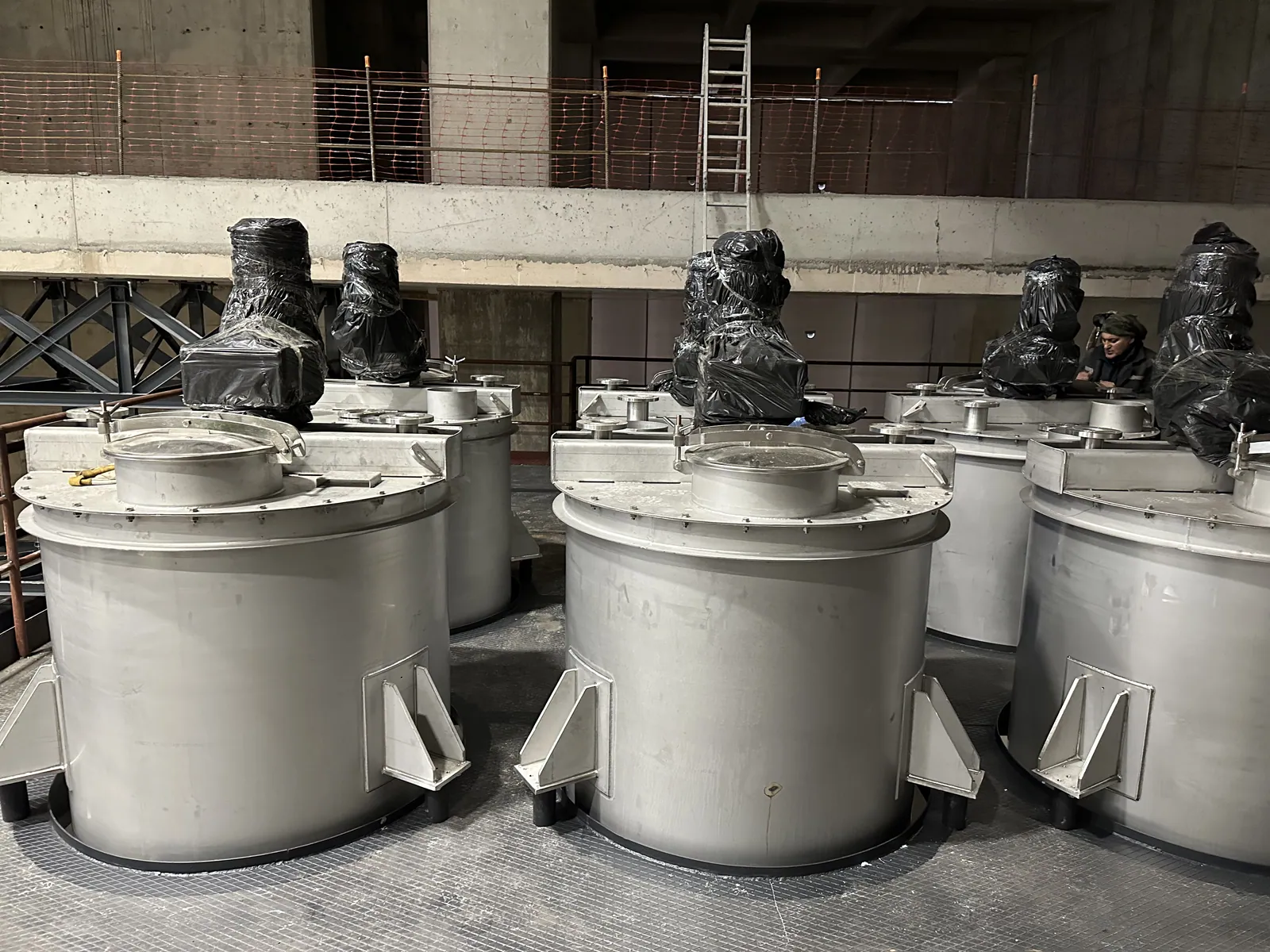
Powder mixers
Mix powders and powder–liquid blends quickly and homogeneously
Mix powders and granules homogeneously, repeatably and without segregation
Mixing is the process step that ensures every gram contains the recipe's components in the same proportion. The mixer type is chosen according to the components' particle size, bulk density, flowability, fragility and whether liquid is added. A poorly chosen mixer either does not mix homogeneously enough or damages the material.
At OPTA Mühendislik we design ribbon, conical and vertical mixers as well as granule mixers, vacuum granule mixers and dryblend preparation lines, and deliver the mixer together with feeding, dosing and discharge systems.
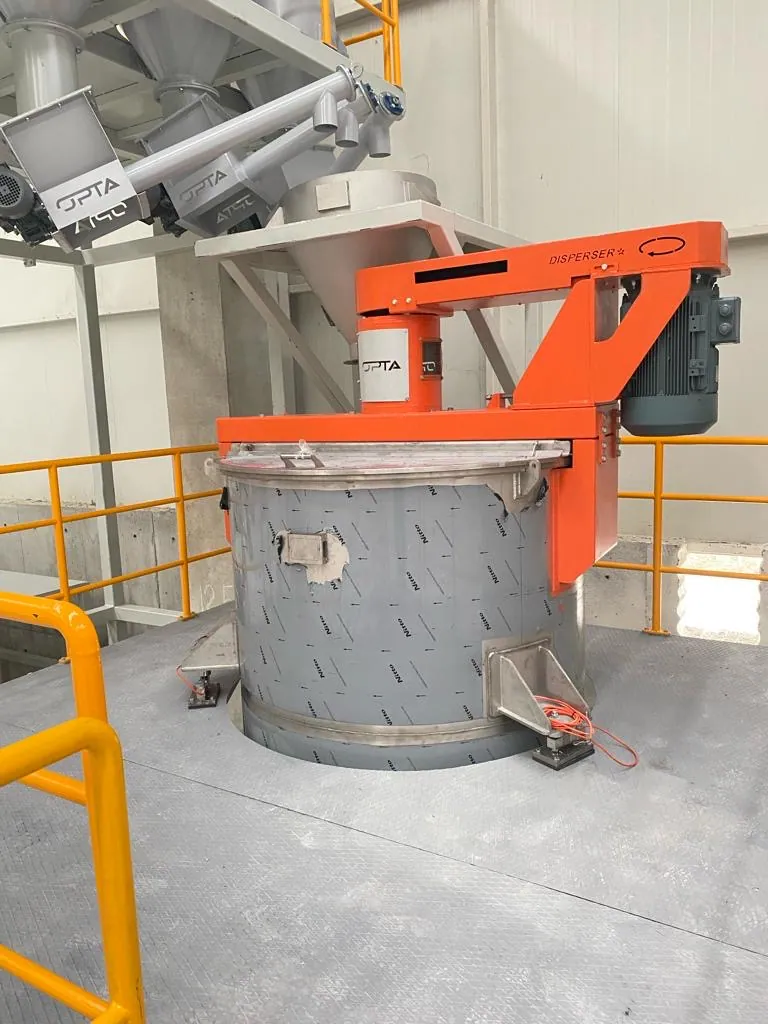
Mix powders and powder–liquid blends quickly and homogeneously
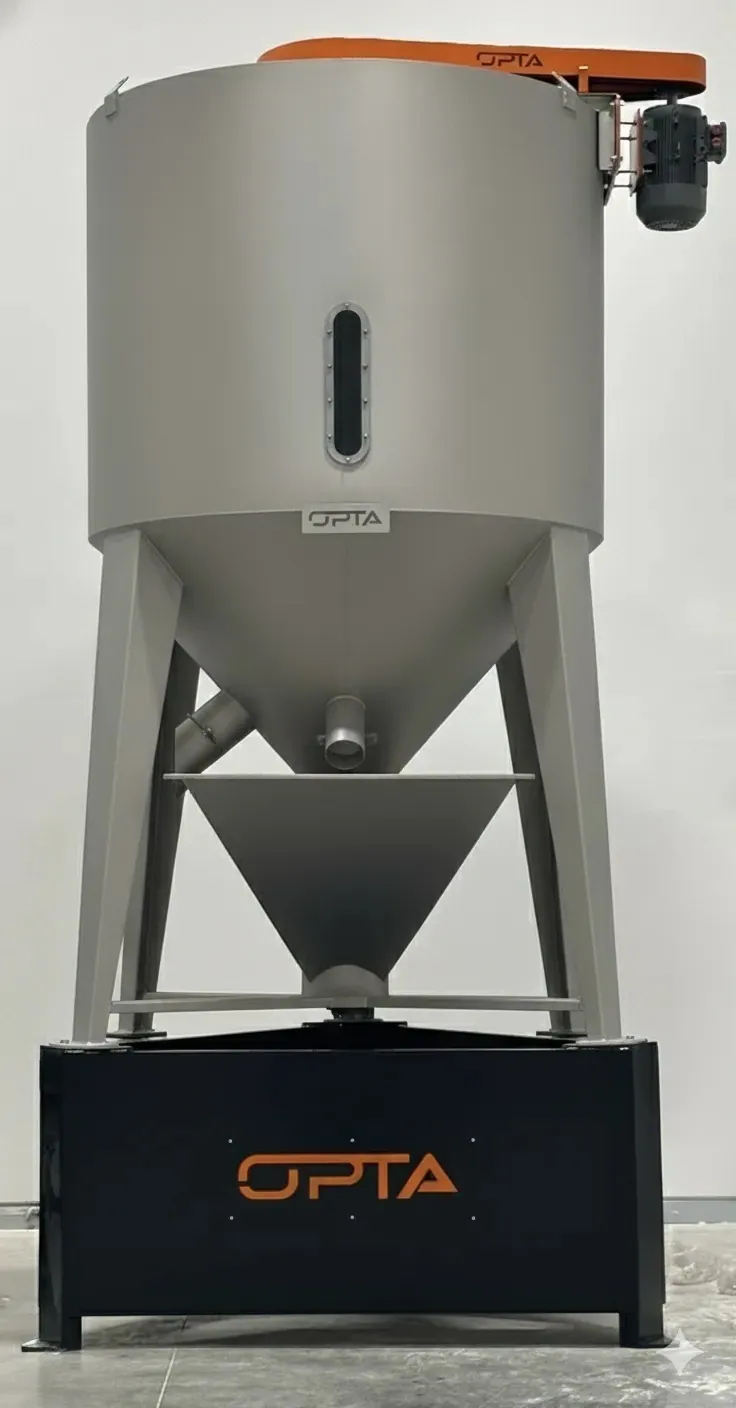
Prepare granule and masterbatch blends homogeneously, without segregation
Enter the batch weight, the material's bulk density and the mixer type to see the required mixer volume, the recommended standard size and the hourly capacity.
Batch
Cycle
Volume = batch weight / bulk density / fill ratio. Blend homogeneity and time are validated by trials with the material.
| Ribbon mixer | Conical screw mixer | Vertical granule mixer | Dryblend (hot / cold) | |
|---|---|---|---|---|
| Material | Powder, powder + liquid | Delicate powders, fragile products | Granules, granules + masterbatch | PVC and additives |
| Mixing time | 5 – 15 min | 10 – 30 min | 5 – 20 min | 8 – 15 min |
| Effect on material | Medium | Very low | Low | High (with heat) |
| Complete discharge | Good | Very good | Very good | Good |
| Space required | Horizontal, wide | Vertical, narrow | Vertical, narrow | Stepped, on a platform |
If you have any other questions, you can contact our team directly.
The deviation of component ratios in samples taken from different points is measured. During commissioning we validate the mixing time by sample analysis.
Every mixer type has a fill range in which it works efficiently. Under- or over-filling a mixer lowers blend quality.
Yes. In ribbon and dryblend mixers, liquid additives can be added homogeneously through spray nozzles.
Tell us about your raw material, capacity and site, and we will come back with a preliminary design and quotation.
How can we help?
Reach our team directly about your project.Let us help with your project. Message us on WhatsApp or give us a call.
Message on WhatsApp