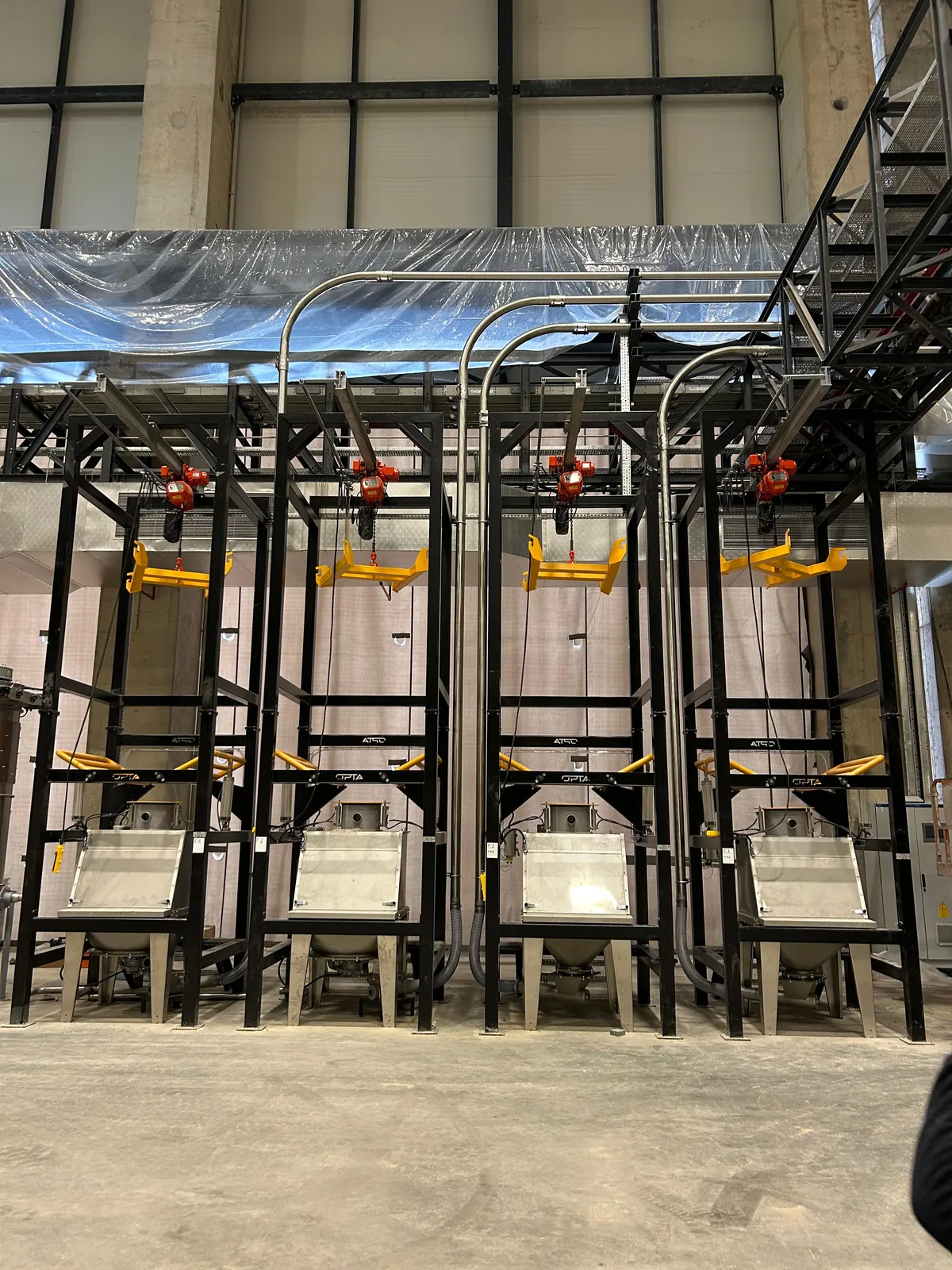
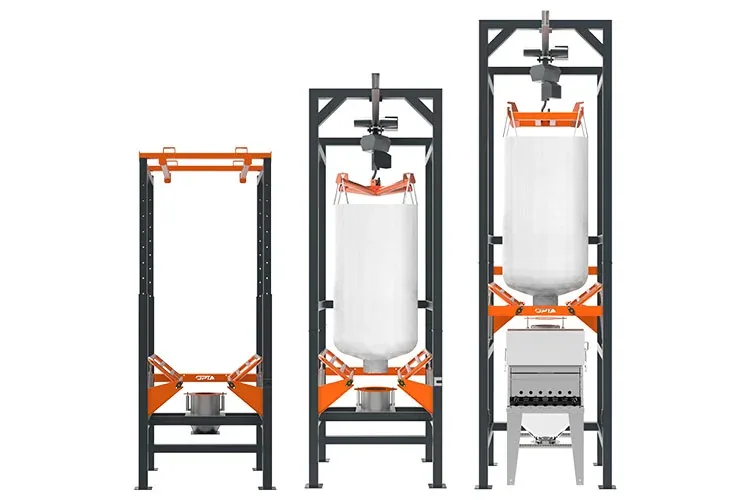
From station to silo or machine: we build the big bag discharge line end to end
A big bag discharge system covers the whole process, from placing the big bag on the station and opening and emptying it dust-free, to conveying the material by pneumatic line or screw to a silo, day hopper or directly to the machine. The station delivers results when it is designed together with the conveying and weighing system, not on its own.
At OPTA Mühendislik we design big bag discharge systems around your material's flow properties, your consumption and the lifting options on site. We deliver the hoist or forklift station, massage unit, rotary valve, blower or compressor, conveying line, receiver filter, load-cell weighing and PLC automation from a single source.
We have installed big bag discharge systems for calcite, PVC, talc, titanium dioxide, zinc, additives and granules in plastics, cable, chemical, construction chemical and food plants.
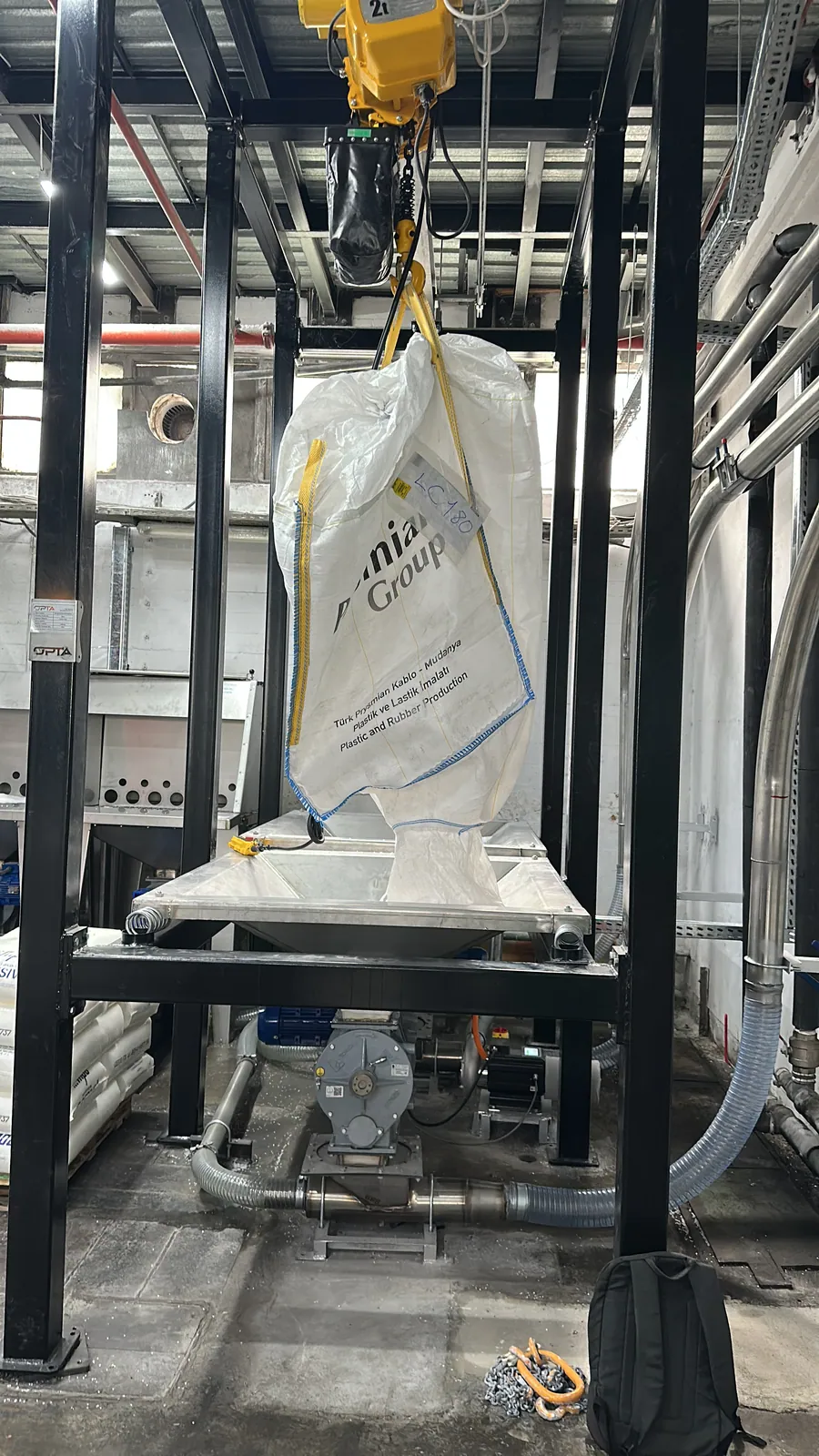
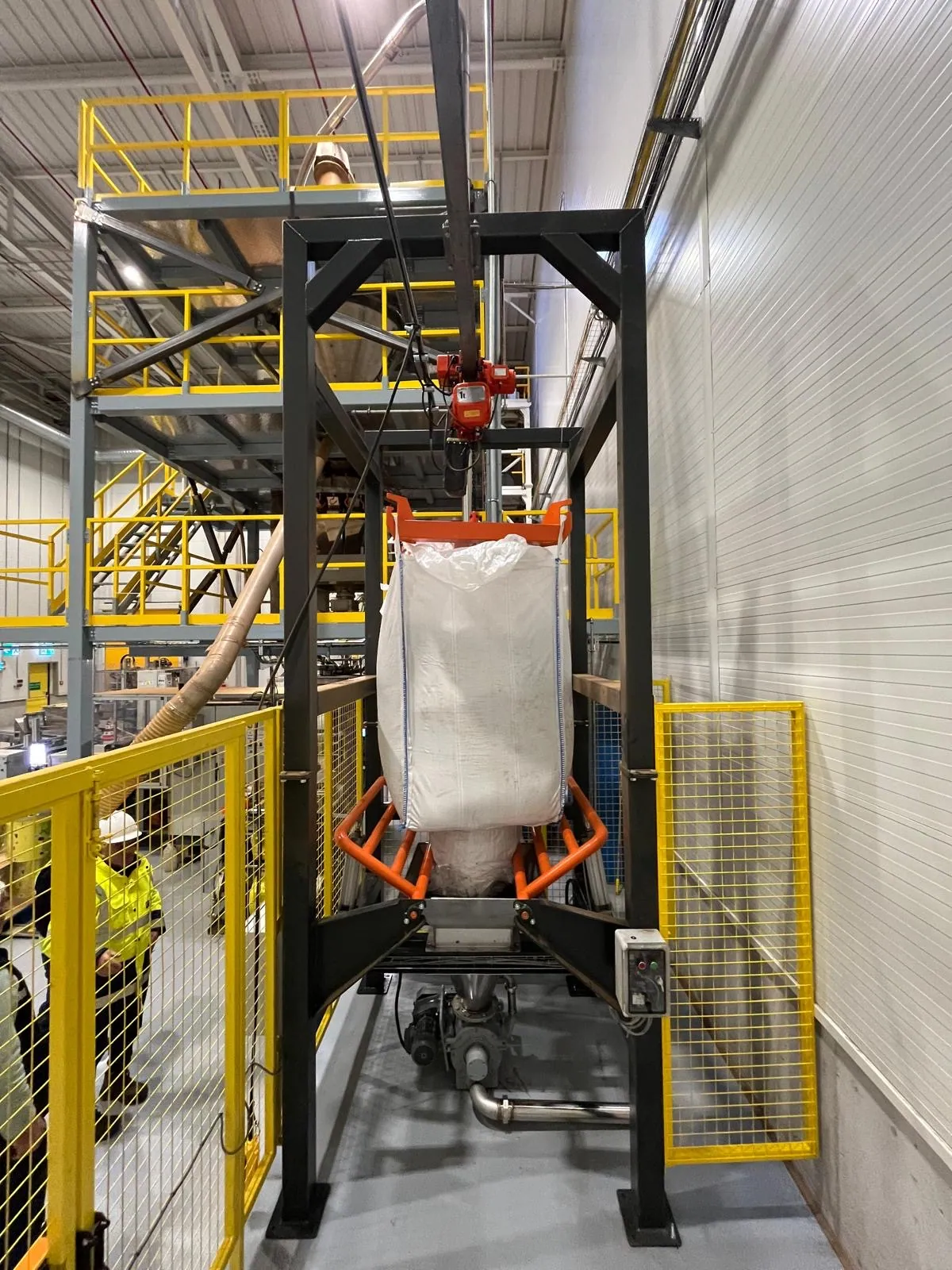
Once the big bag is placed on the station, discharge, conveying and filling run automatically. The operator only changes the big bag and folds the empty bag.
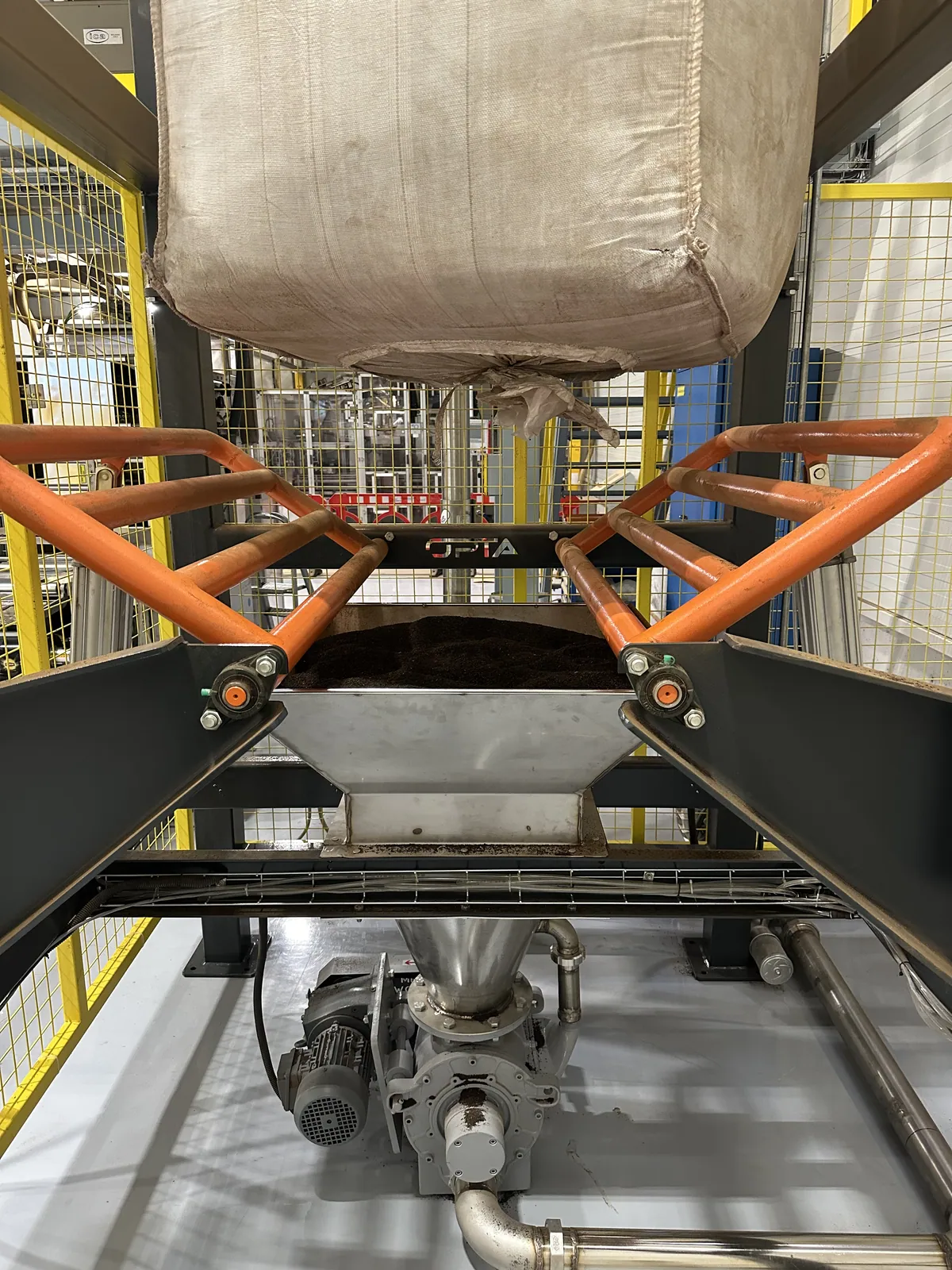
The big bag is hung on the station by hoist or forklift
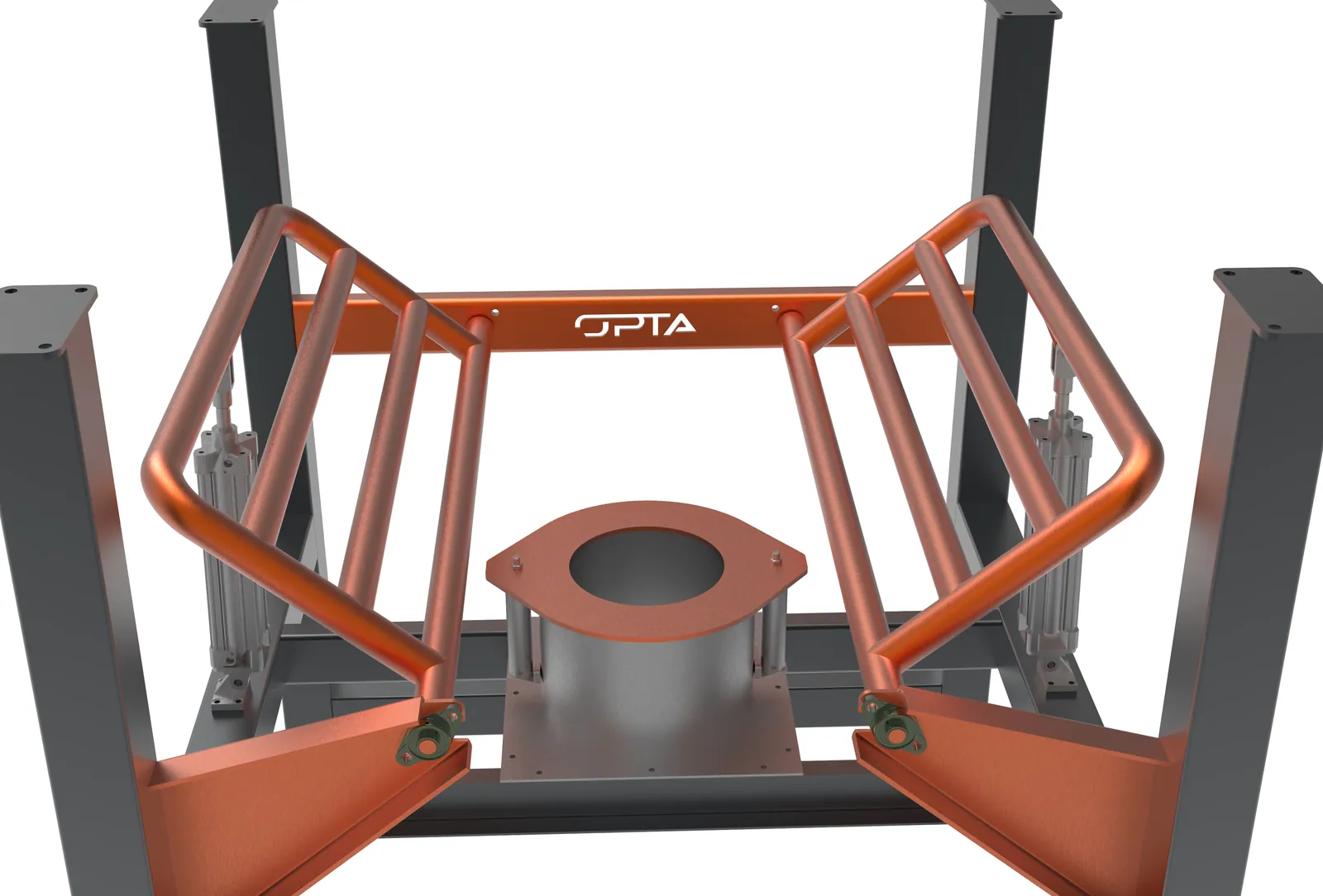
The bag spout is opened through a leak-tight connection
The massage unit and vibrator assist flow
The rotary valve feeds material into the line
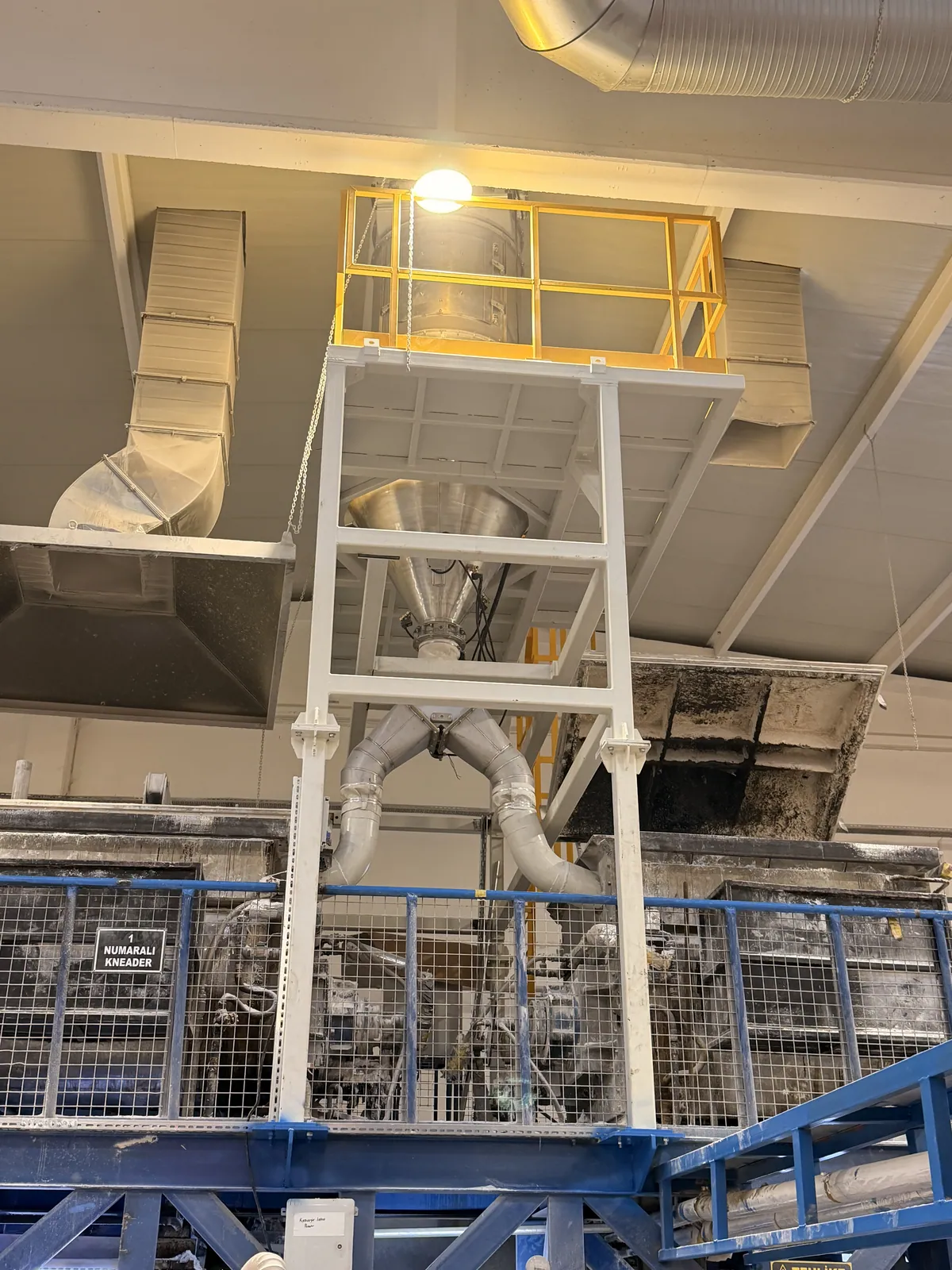
The pneumatic line conveys it to the silo or hopper
Feeding stops when the level sensor reports full
Big bag station calculator
Enter your line consumption and big bag weight to see how many minutes one bag lasts, the daily requirement, and the stations or buffer hopper volume needed for uninterrupted feeding.
The buffer hopper volume is the material the line consumes during the changeover plus a 30% safety margin.
Transfer options
01 / 03
By pneumatic conveying
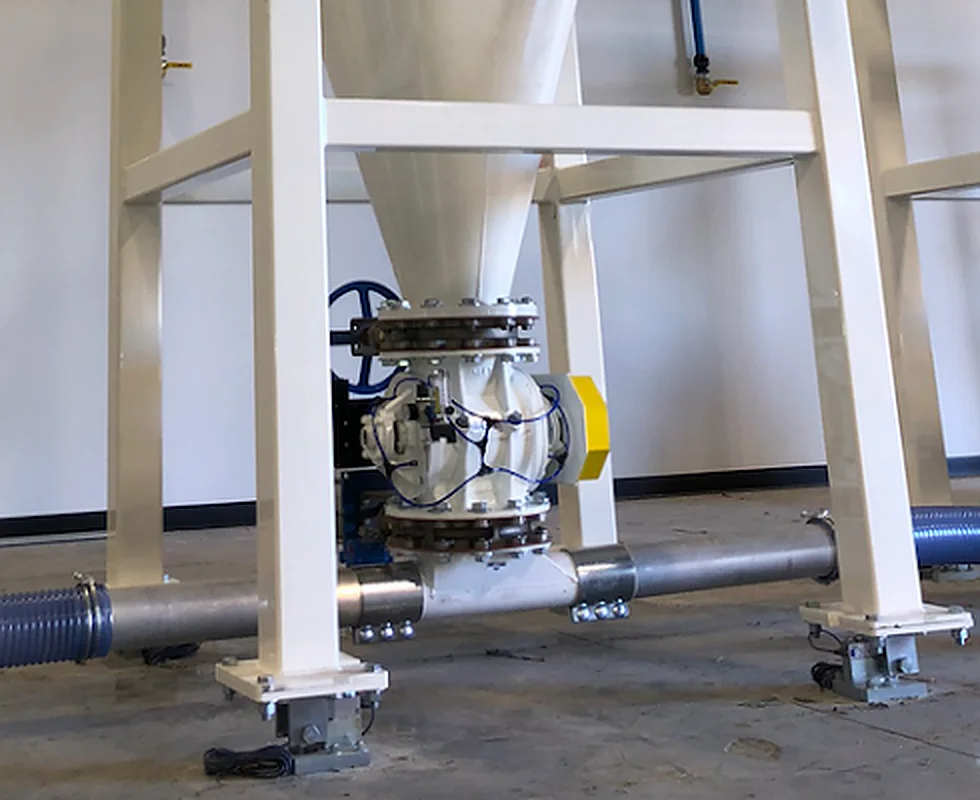
A rotary valve or pressure vessel under the big bag station conveys the material to distant points through a dilute or dense phase pneumatic line. It is the most flexible solution for conveying within buildings, between floors and outdoors.
When is it preferred?
When there is distance or a height difference between the station and the silo or machine.
Rotary valveBlowerReceiver filter
02 / 03
By screw
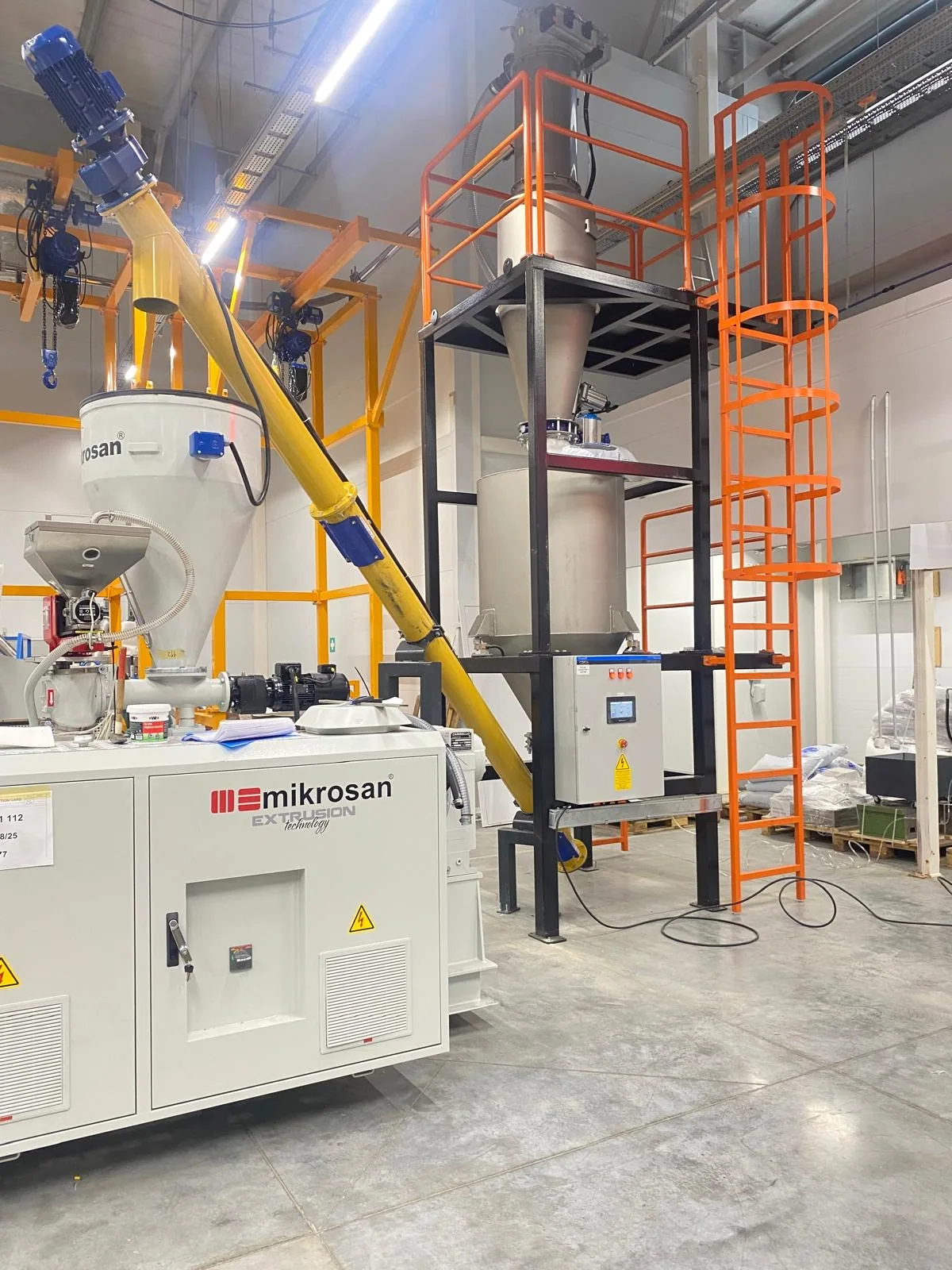
From the hopper under the station, an inclined or horizontal screw transfers material directly to the machine hopper or mixer. It is economical and easy to maintain over short distances.
When is it preferred?
Where the station is close to the machine, distances up to 10 m.
Inclined screwLevel sensor
03 / 03
By vacuum
A vacuum pump draws material from the pick-up point under the station and conveys it to the vacuum receiver above the machine. It has the lowest risk of dust escaping.
When is it preferred?
Hazardous or fine powders, distribution to several machines.