Get a Quote

VACUUM FEEDING

Clean, automatic, enclosed feeding above the machine with vacuum receivers

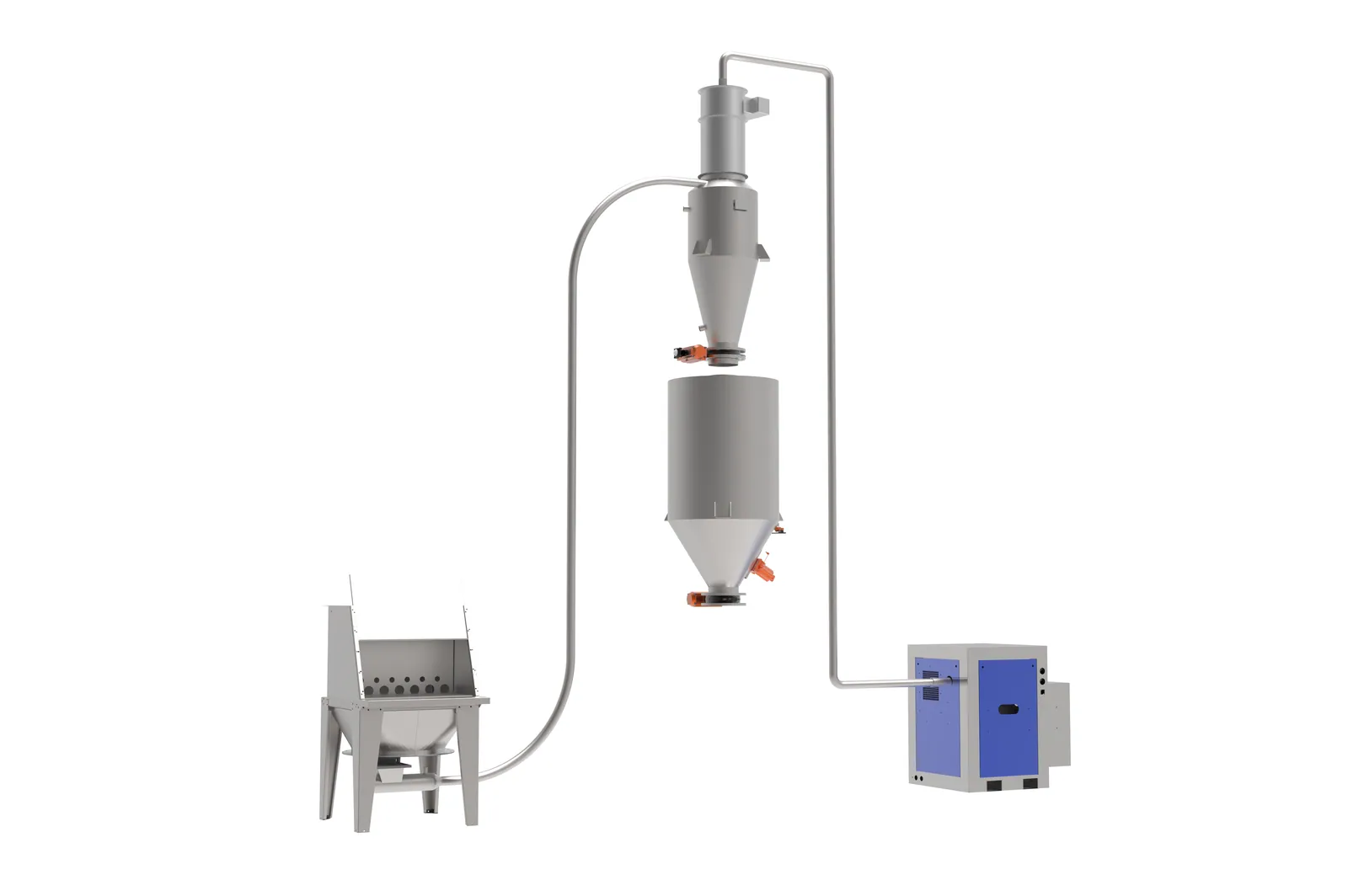
Vacuum feeding is a method in which a vacuum receiver above the machine draws material from the pick-up point with a vacuum pump into its own chamber and discharges it into the machine hopper when full. Because the line runs under negative pressure, no dust escapes even if there is a leak.

At OPTA Mühendislik we install individual and central vacuum feeding systems. We select vacuum receivers, filters, pumps and suction nozzles according to the material and capacity, and manage central systems in which one pump feeds several machines in sequence through automation.

Closed systemnegative pressure
Multiple machineswith a single pump
Weighedreceiver option
Vacuum feeding
How does vacuum feeding work?

How does vacuum feeding work?

The vacuum receiver works in cycles: suction, discharge and filter cleaning steps are run in sequence by the PLC.

  1. The vacuum pump creates vacuum in the receiver
  2. Material is drawn into the line through the suction nozzle
  3. When the receiver is full the vacuum is cut and the flap opens
  4. Material discharges into the machine hopper
  5. The filter is cleaned with reverse air

Vacuum feeding solutions

Central vacuum feeding
01 / 03

Central vacuum feeding

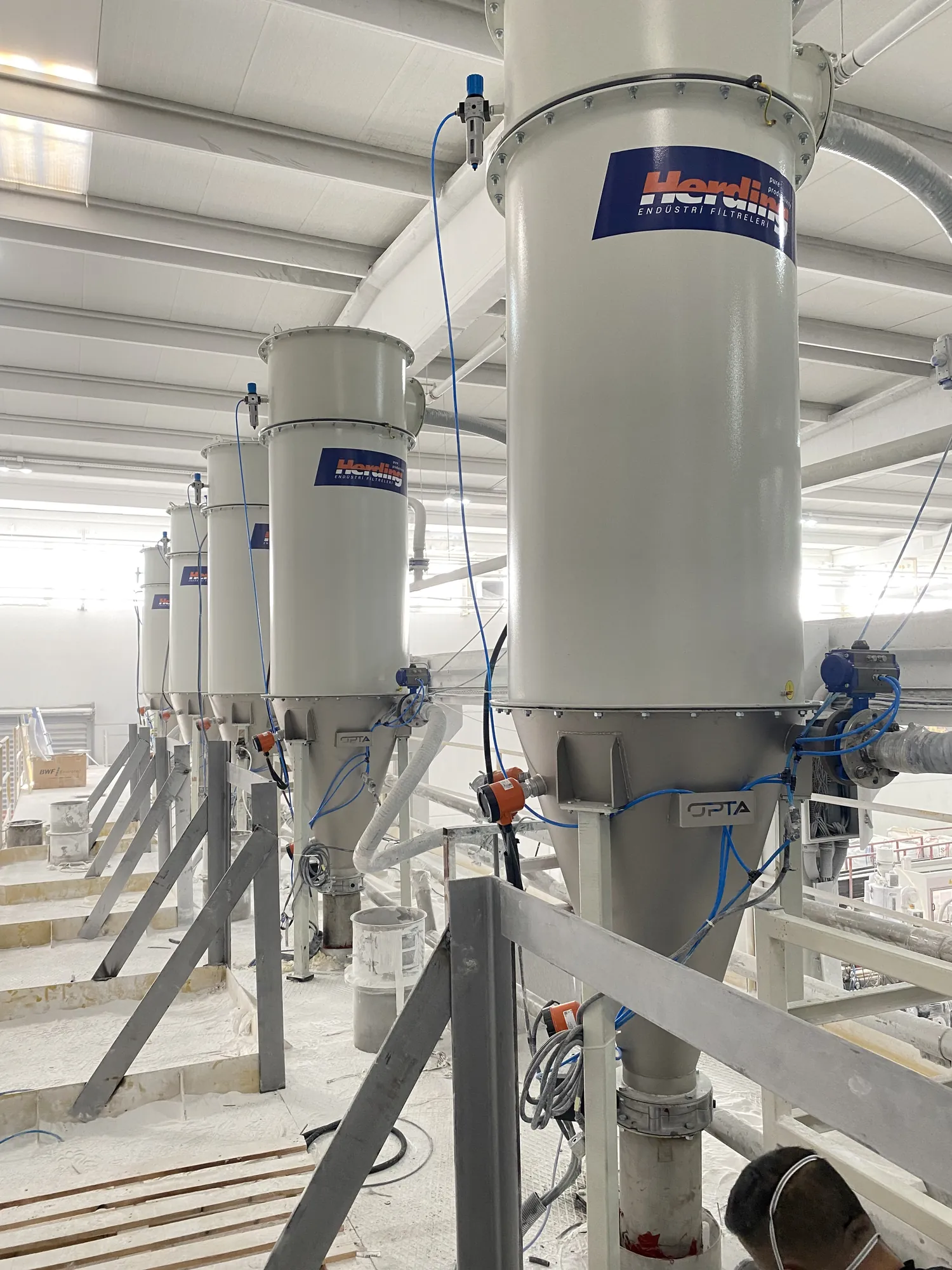
A single vacuum pump and a common vacuum line feed many vacuum receivers on the platform in sequence. The PLC decides which receiver to fill based on demands from the level sensors; each receiver's vacuum valve opens, filling ends and the next receiver is served.

How does it work?

  1. A common vacuum line runs along the platform
  2. Each receiver connects to the line through its own vacuum valve
  3. A receiver calling for material is placed in the queue
  4. The pump fills all receivers in turn

When is it preferred?

Plants where several extruders, mixers or reactors are fed in the same hall.

Central vacuum pumpVacuum valvesCyclone pre-separator
Individual machine-mounted vacuum receiver
02 / 03

Individual machine-mounted vacuum receiver

Each machine has its own vacuum receiver and, if needed, its own pump. The receiver runs when the level in the machine hopper drops and feeds the machine independently.

When is it preferred?

Single machines or lines feeding different raw materials independently.

Vacuum receiverLevel sensorSide channel blower
Vacuum receiver + buffer hopper
03 / 03

Vacuum receiver + buffer hopper

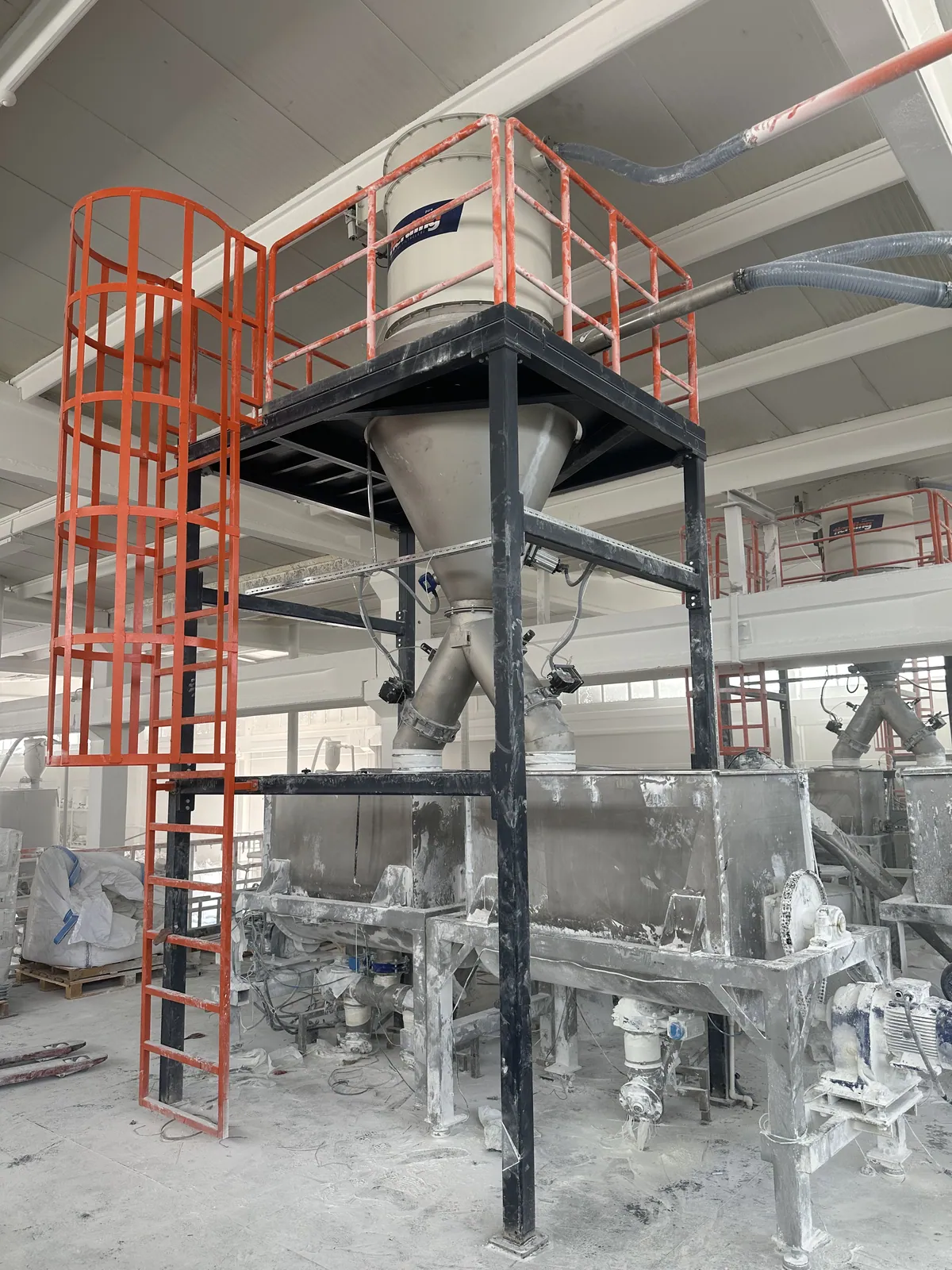
The vacuum receiver fills a larger buffer hopper above the machine. The hopper supplies the machine continuously during the receiver's cycle and, if required, is weighed with load cells to record consumption.

When is it preferred?

High-consumption machines and lines requiring consumption tracking.

Buffer hopperLoad cellLevel sensors

Why vacuum feeding?

01

Dust-free operation

Because the line is under negative pressure, no dust escapes even in a leak.

02

Operator-free feeding

Manually carrying material to the machine hopper and filling with buckets are eliminated.

03

Clean machine top

Compact receivers take up little space above the machine.

04

Flexible layout

Different levels are easily reached with hoses and pipelines.

05

Feeding multiple points

Several machines are fed in turn with a single pump.

06

Raw material protection

The closed system prevents moisture and foreign matter from entering.

From the field

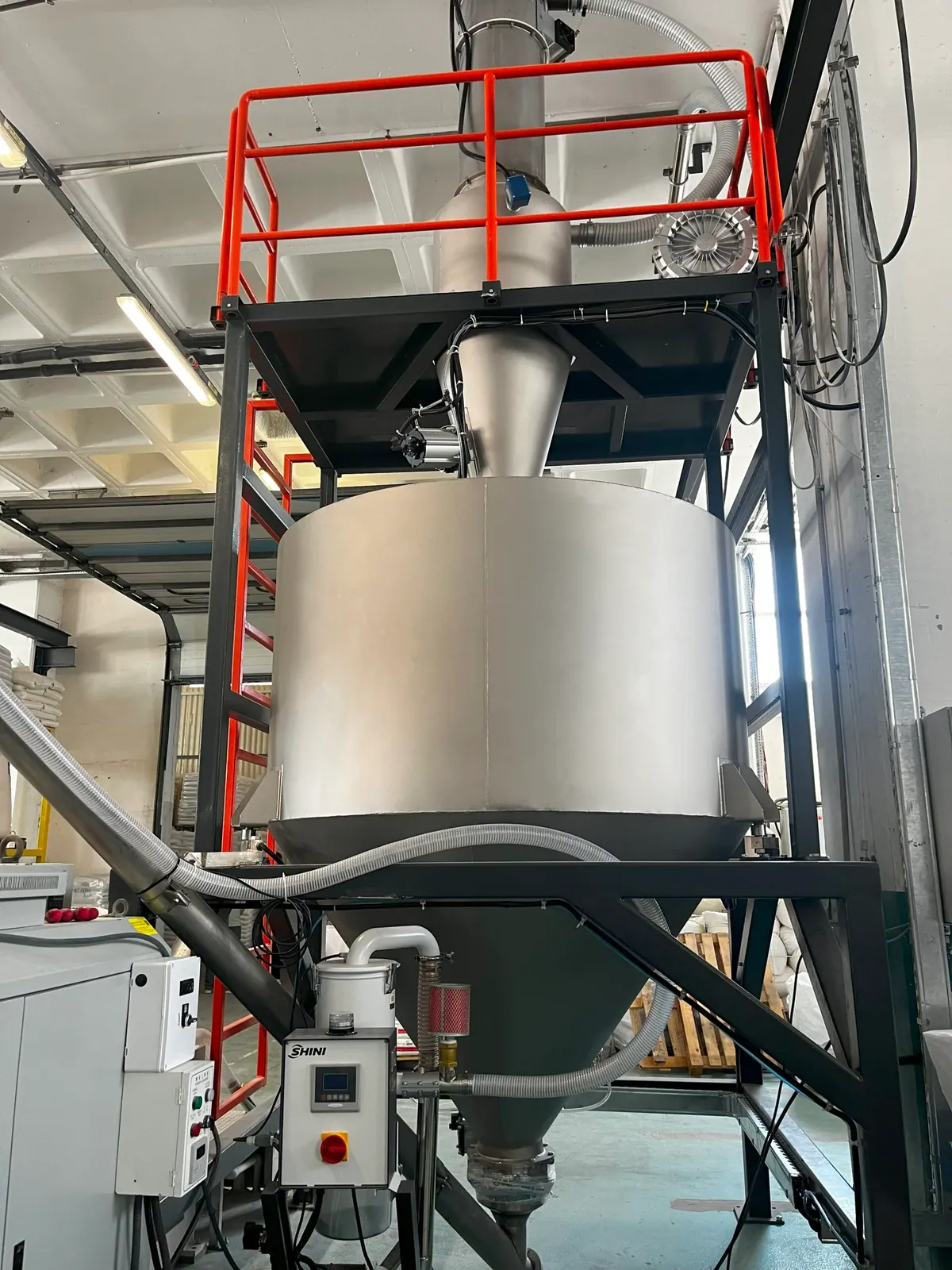
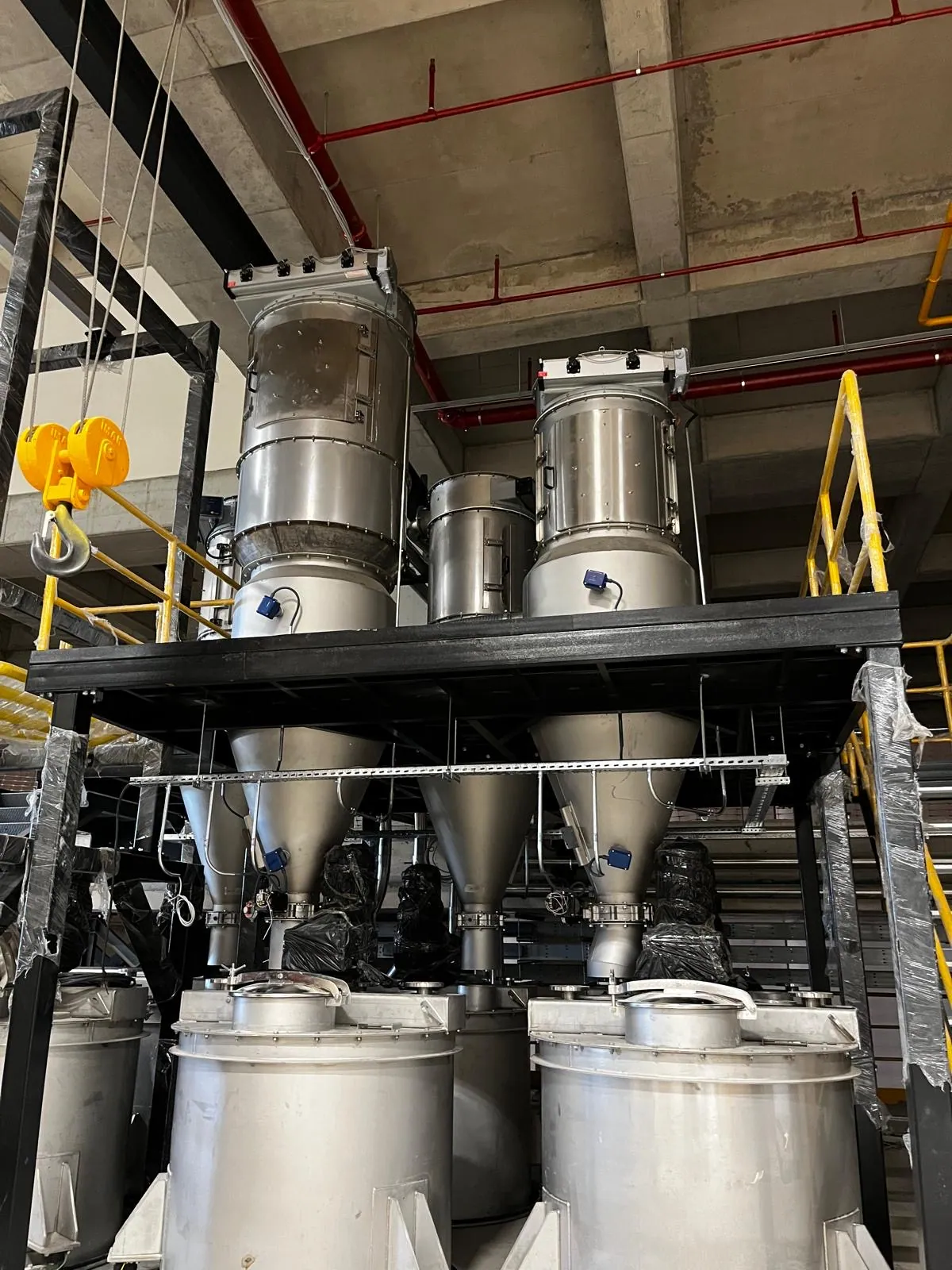
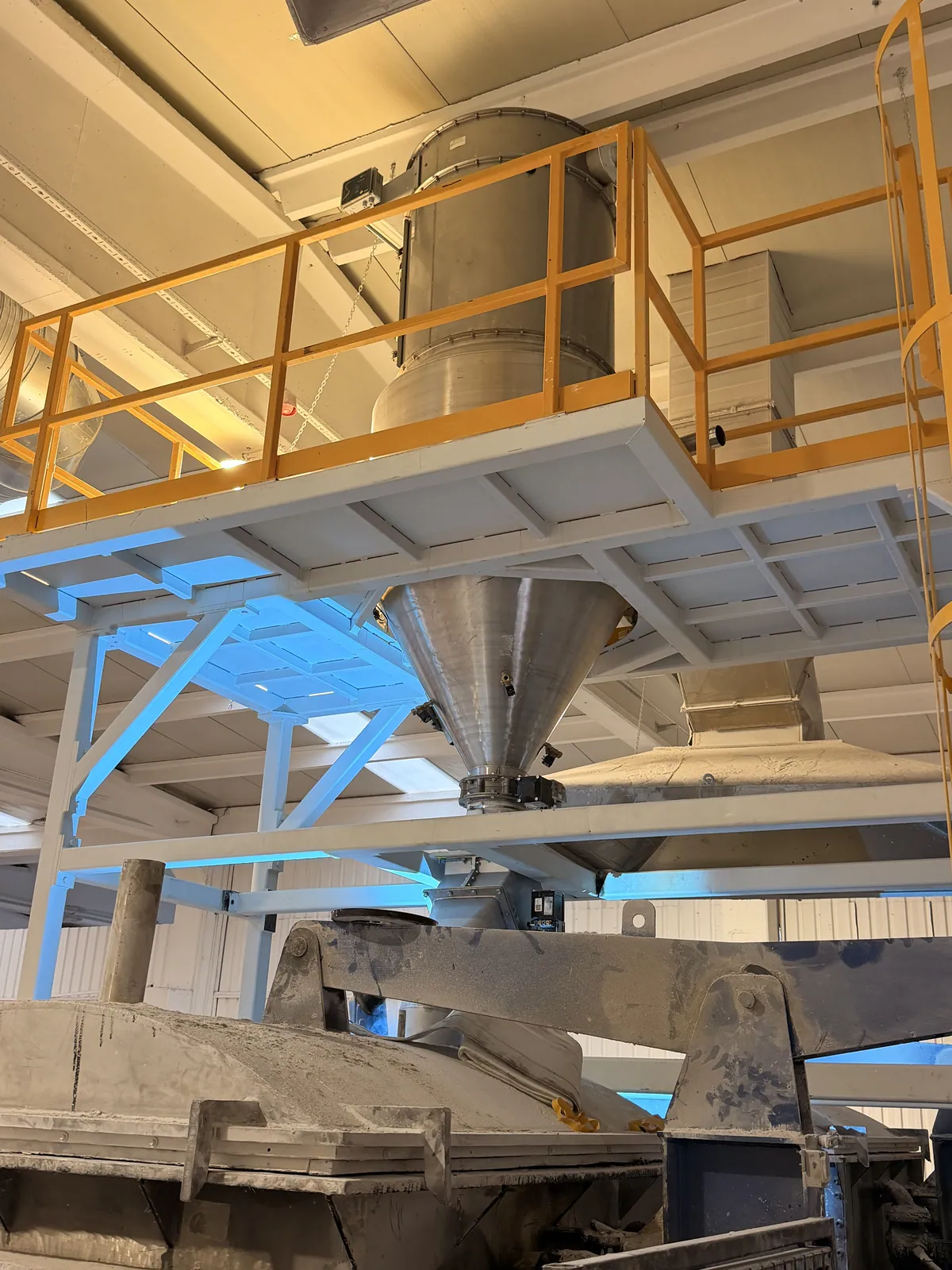
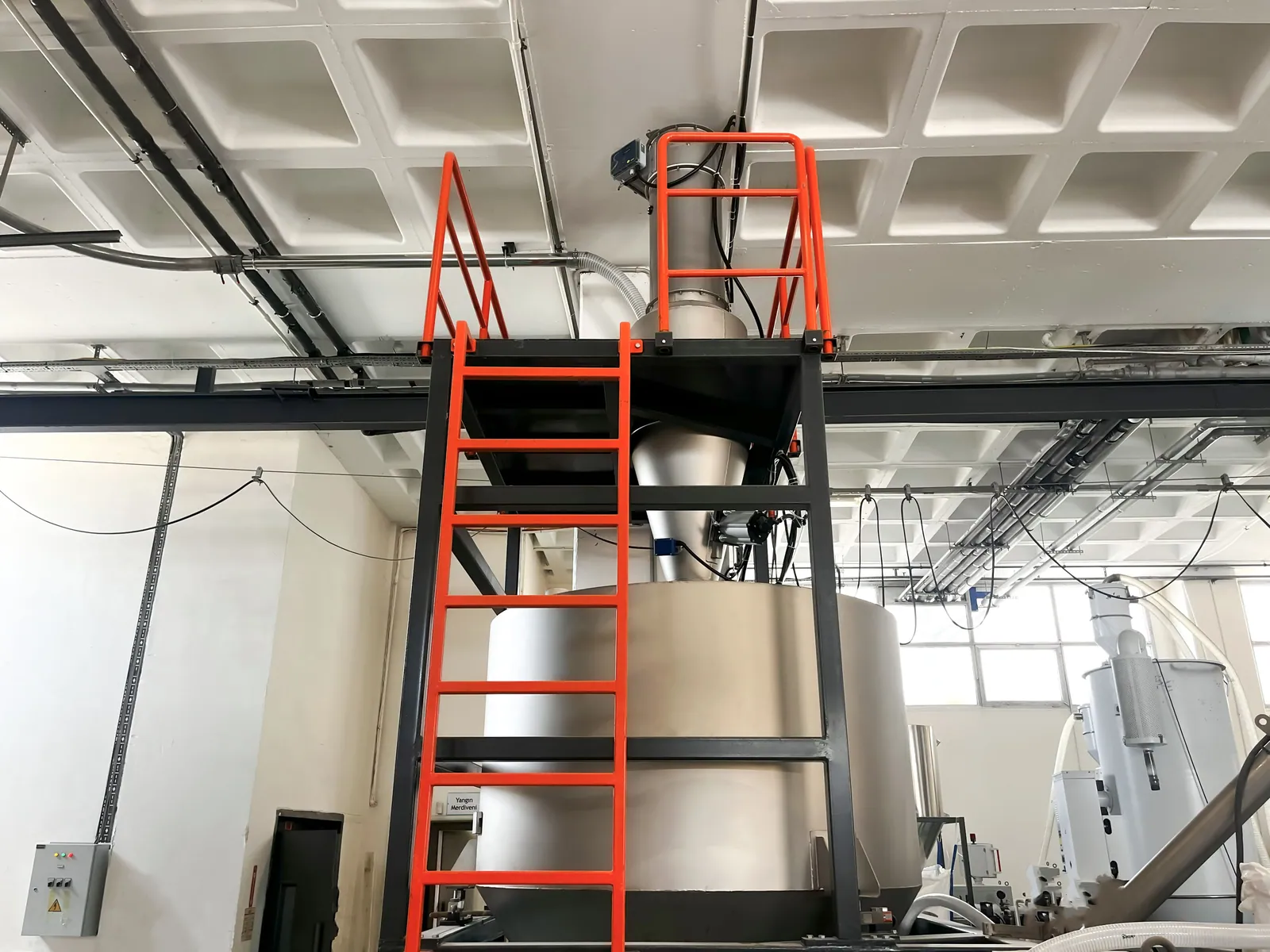
Central vacuum feeding on a platform
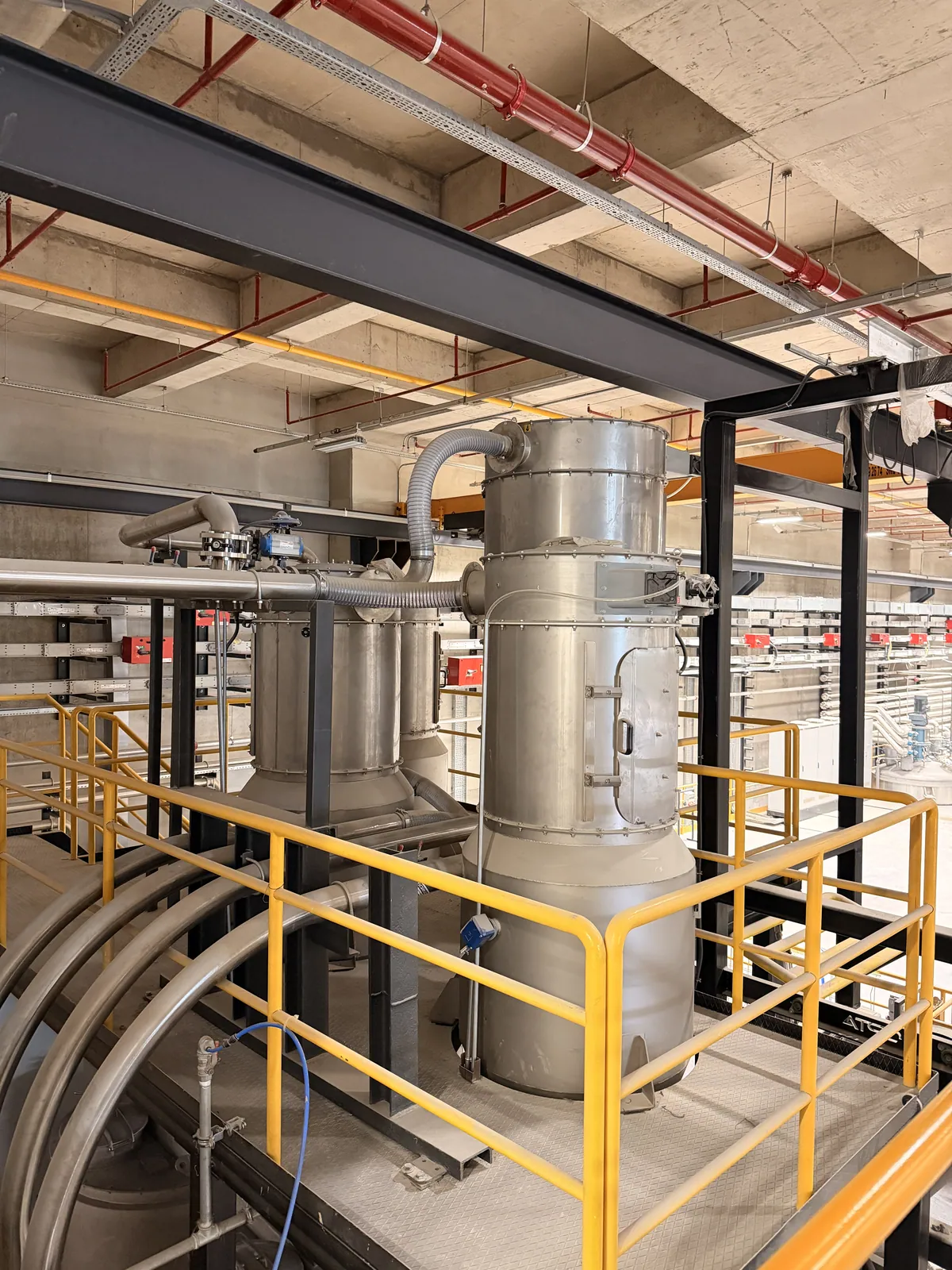
Multiple vacuum receivers and weighed hoppers
Vacuum receiver and weigh hopper
Mixer-mounted vacuum receiver
Weigh hopper with vacuum receiver

Equipment and standards

Standard

  • Stainless vacuum receiver
  • Cartridge or bag filter
  • Vacuum pump / side channel blower
  • Suction nozzle
  • Level sensor

Optional

  • Weighed receiver
  • Central vacuum system
  • Line purge valve
  • Proportional mixing valve

Standards

  • ATEX 2014/34/EU
  • Machinery Directive 2006/42/EC

More in Raw material feeding lines

Screw feedingMachine feeding with horizontal, inclined and mobile screws.→Belt conveyor feedingBelt feeding for fragile and coarse materials.→All raw material feeding linesRaw Material Feeding→

Frequently asked questions

Up to what distances is vacuum feeding suitable?

Typically up to 30–40 m and capacities of a few tonnes per hour; for longer distances pressure conveying is recommended.

How many machines can one vacuum pump feed?

Depending on total consumption and distance, a single pump can feed 6–10 receivers in sequence.

Can sticky powders be conveyed by vacuum?

The decision is based on a material test; a vibrator or flow aids can be added to the receiver.

Let’s work together on vacuum feeding

Tell us about your raw material, capacity and site, and we will come back with a preliminary design and quotation.