VISCOUS FLUID TRANSFER
Transfer resins, putties, oils and high-viscosity products safely
Transferring high-viscosity fluids requires the right pump, an adequate pipe diameter and often heating. In a poorly designed line the pump cavitates, the pressure drop becomes excessive or the product solidifies in the line.
At OPTA Mühendislik we calculate viscous fluid transfer lines from the product's viscosity–temperature behaviour. We design gear, lobe or screw pumps, jacketed or trace-heated pipelines and drum / IBC emptying units together.

Product left in the line: recovered by pigging
When a viscous product is transferred, the pipeline stays full of product once the transfer ends; a 50-metre DN50 line holds about 100 litres. In a pigging system, a flexible plug (pig) travelling through the pipe is pushed by compressed air and drives this product to its destination. The animation was made from the 3D model of a pigging system in one of our projects: a 33-metre overhead line, 12 feed points, pig launching and receiving stations at both ends and a recovery tank. Click a step to jump to that moment.
- Product transferProduct is transferred along the 33-metre overhead line to the feed points. During transfer the line is full of product from end to end.
- Pig launchWhen the transfer ends, the pig in the launching station is released; it passes through the riser into the main line. A position sensor confirms the pig has left.
- Air driveControlled compressed air is applied behind the pig. The pig scrapes the pipe wall and pushes the product ahead of it, leaving a clean line behind.
- Pig receiving and recoveryThe pig stops in the receiving station at the end of the line. The product ahead of it flows into the recovery tank; the product in the line is collected rather than wasted.
- Clean lineThe line is ready for the next product. The pig is driven back to the launching station by air for the next cycle.
Why is pigging important on viscous lines?
Viscous products stick to the pipe wall; even when the line is emptied by gravity or air, a significant part of the product stays inside. Because the pig fits the pipe bore exactly, it also scrapes off the product on the wall and carries it to the destination.
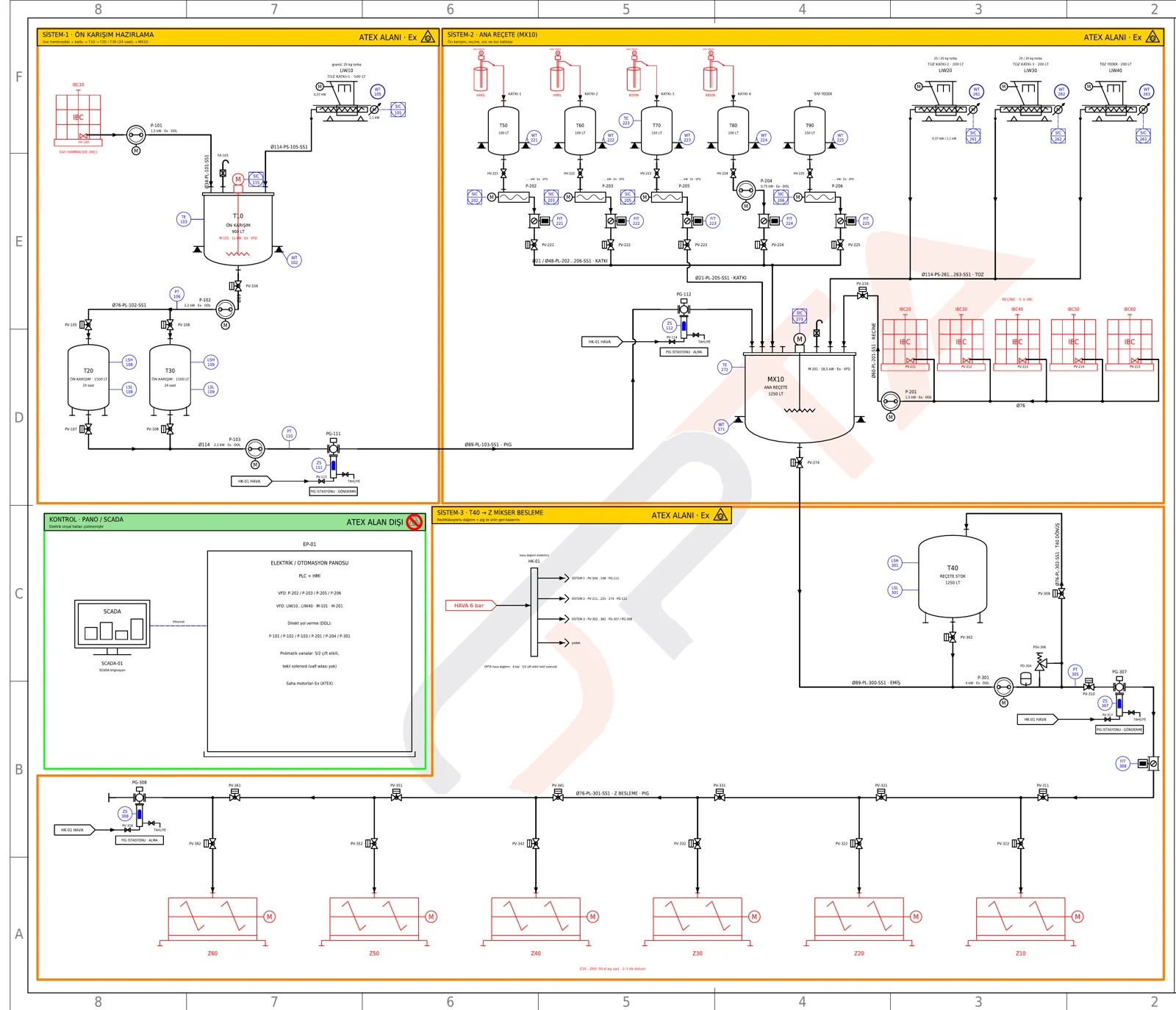
In the P&ID above, the premix line, main recipe mixer and mixer feed distribution are equipped with pig launching and receiving stations. Product at the end of the line is recovered to the tank, and at product changes the line can switch to the next product without washing.
Explore the pigging system in detail →
- Less product loss
- Less cleaning fluid and waste
- Faster product changes
- Different products through the same line
Design principles
Pump selection
Gear, lobe or screw pump according to viscosity and shear sensitivity.
Pipe diameter
Large-diameter lines to limit pressure drop.
Heating
Constant temperature with jacketed pipe or electric trace heating.
Suction side
Short, wide suction line; a fed pump if required.
Cleaning
Product loss is reduced by pigging or line sweeping.
Safety
Pressure relief valve and pressure monitoring.
Equipment
Standard
- Positive displacement pump
- Stainless pipeline
- Pressure relief valve
- Frequency inverter
Optional
- Jacketed pipe / trace heating
- Drum / IBC emptying unit
- Pigging system
- Flow meter
Standards
- PED (on pressurised lines)
- ATEX (for flammable products)
More in Transfer and dosing
 Liquid dosingRecipe-based liquid dosing by weight and flow meter.→
 Pigging (pipeline cleaning) systemA system that recovers product left in the line and speeds up product changes.→All transfer and dosingLiquid Processes→
Frequently asked questions
Our product solidifies in the cold — what should we do?
We keep the product at a pumpable temperature by heating the tanks and lines, and recommend line emptying or pigging during stoppages.
Which pump type do you recommend?
We recommend gear, lobe or screw pumps according to viscosity, flow rate, pressure and the product's shear sensitivity.
Can products be transferred from drums?
Yes. Viscous products can be transferred from drums with drum pumps or piston drum emptying units.
Let’s work together on viscous fluid transfer
Tell us about your raw material, capacity and site, and we will come back with a preliminary design and quotation.