VACUUM CONVEYING SYSTEMS
Dust-free vacuum conveying from big bags, bags or silos to the machine
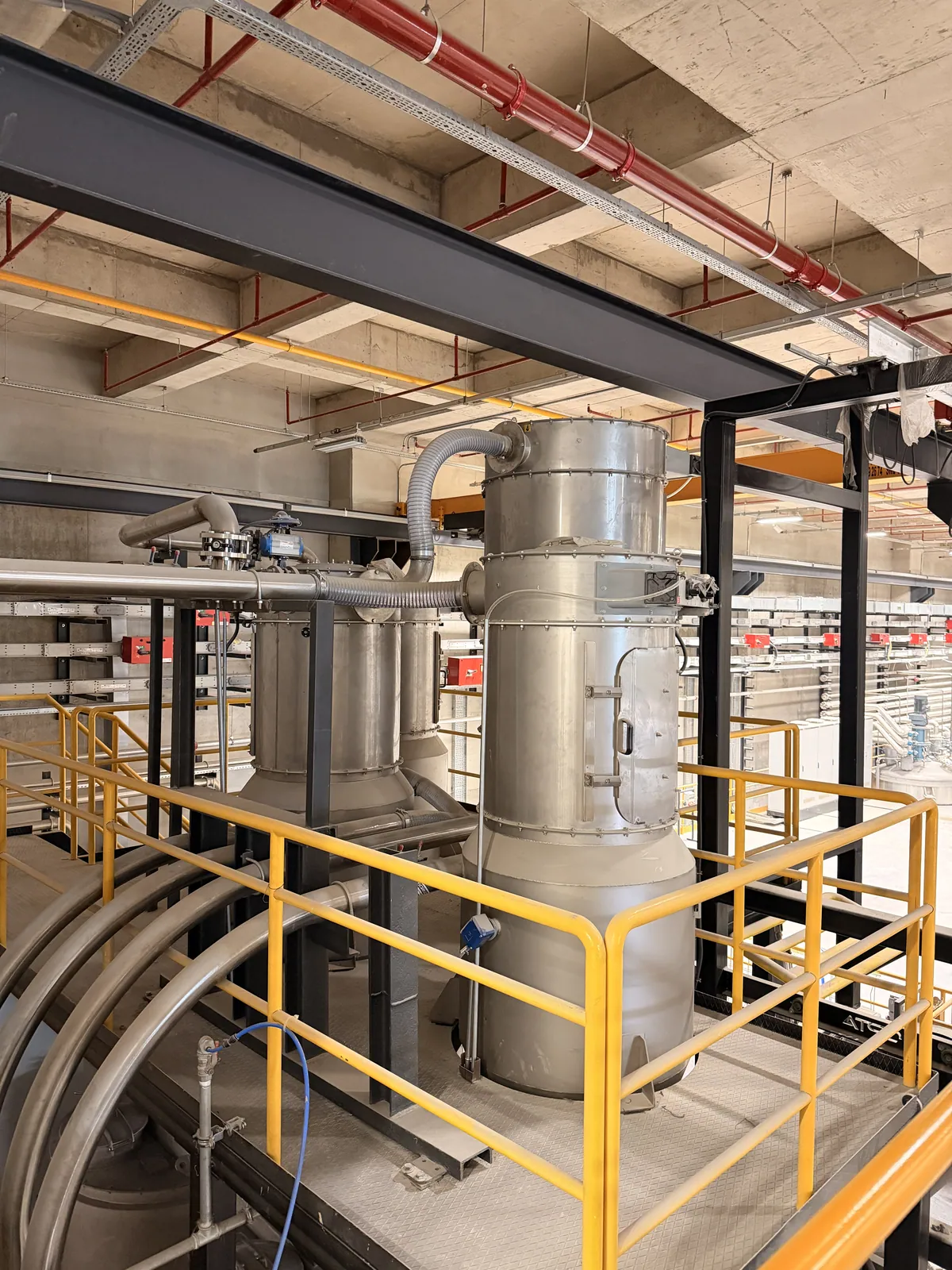
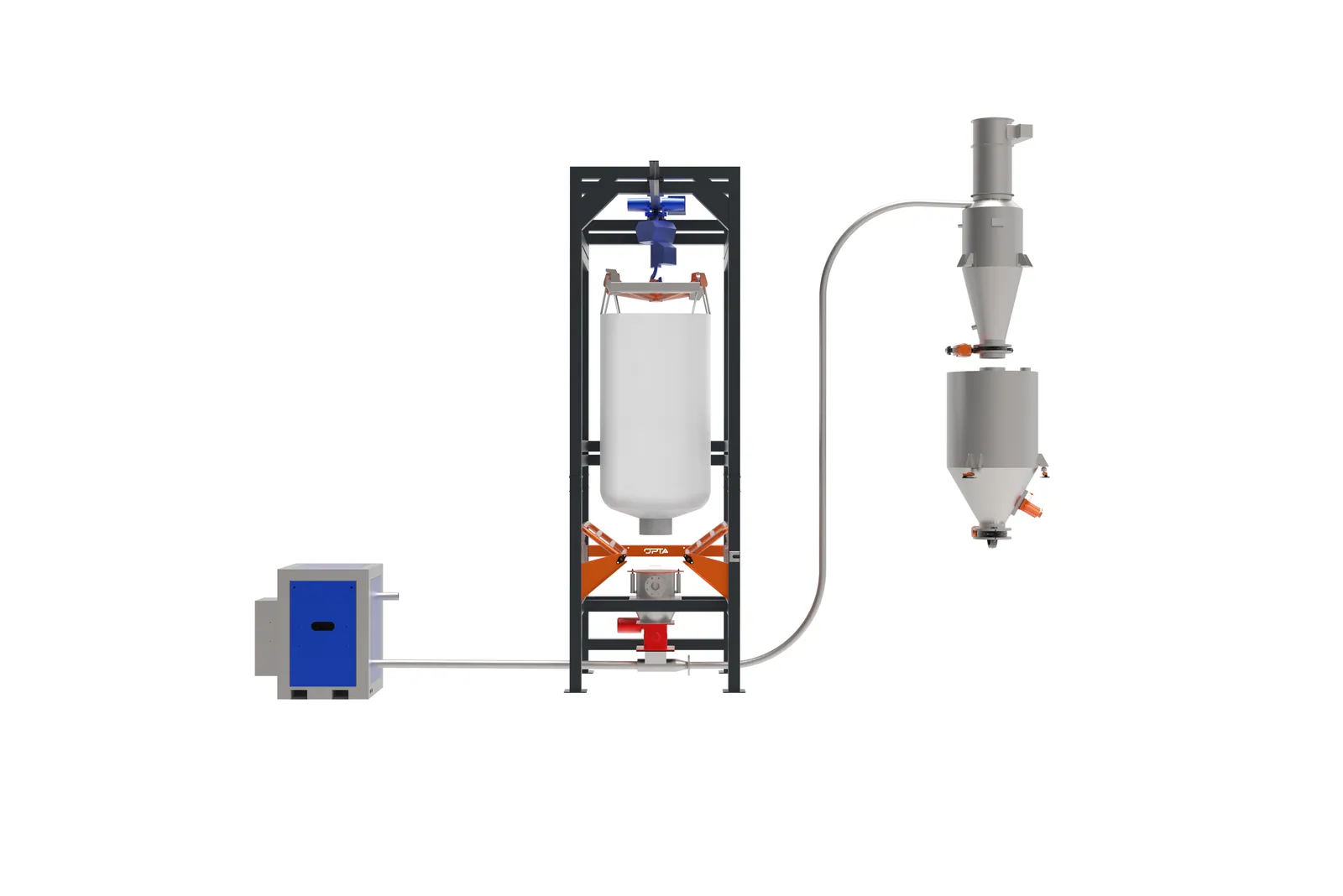
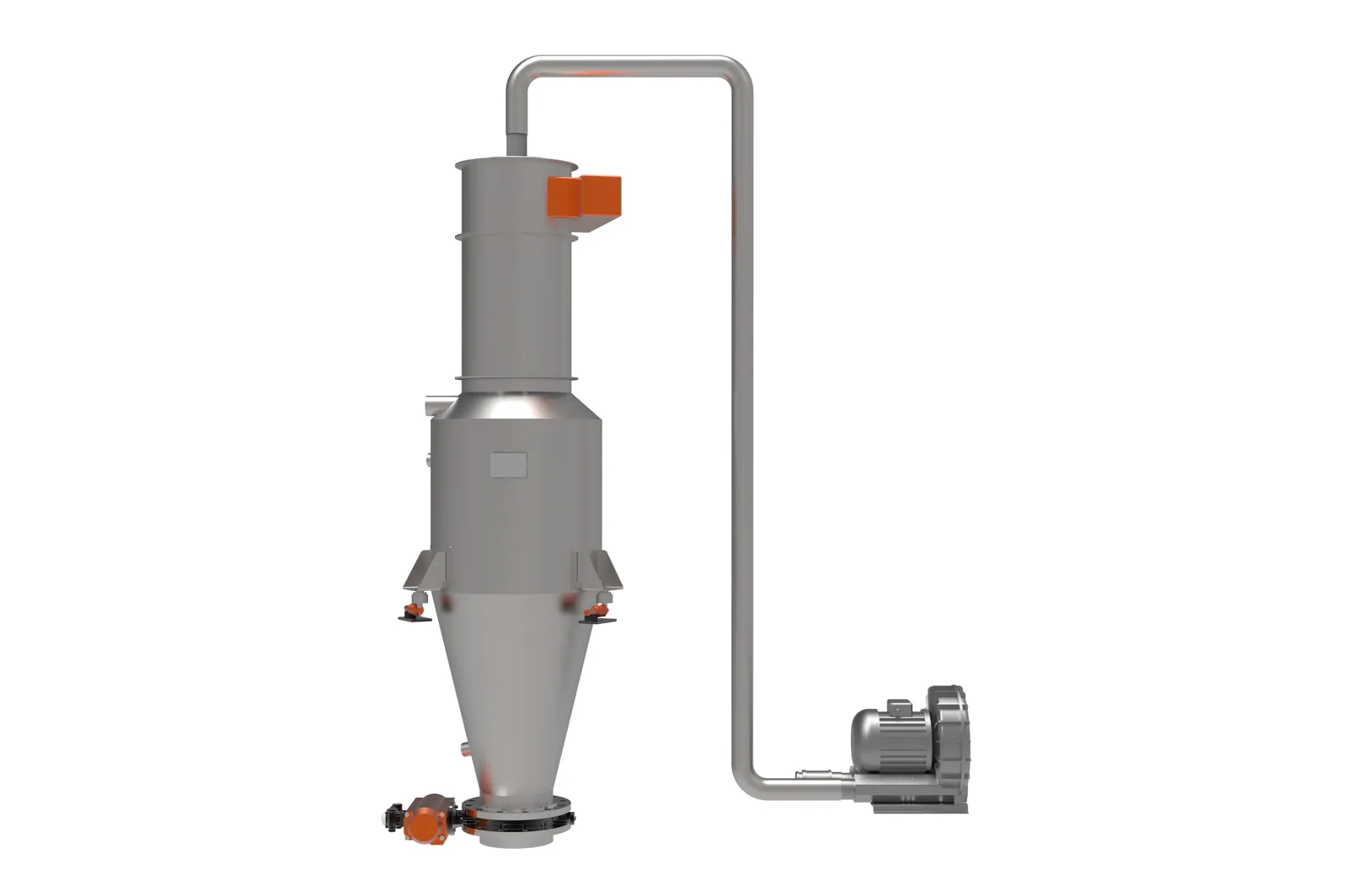
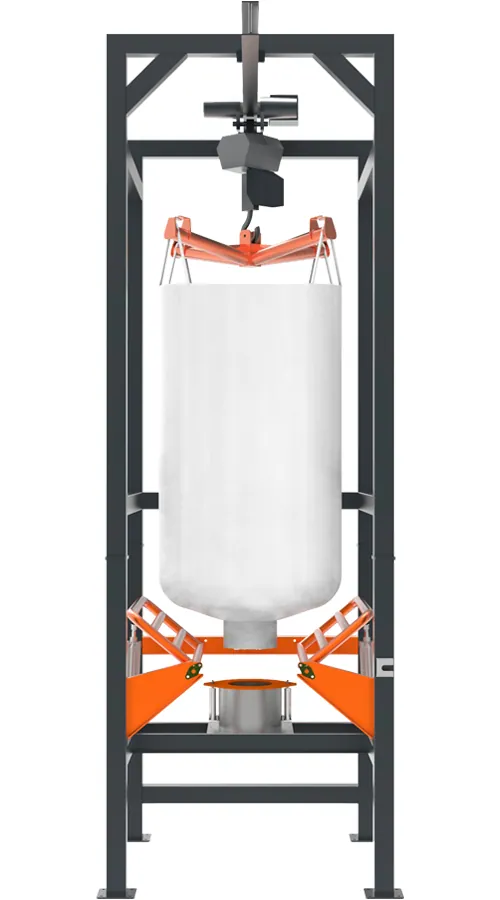
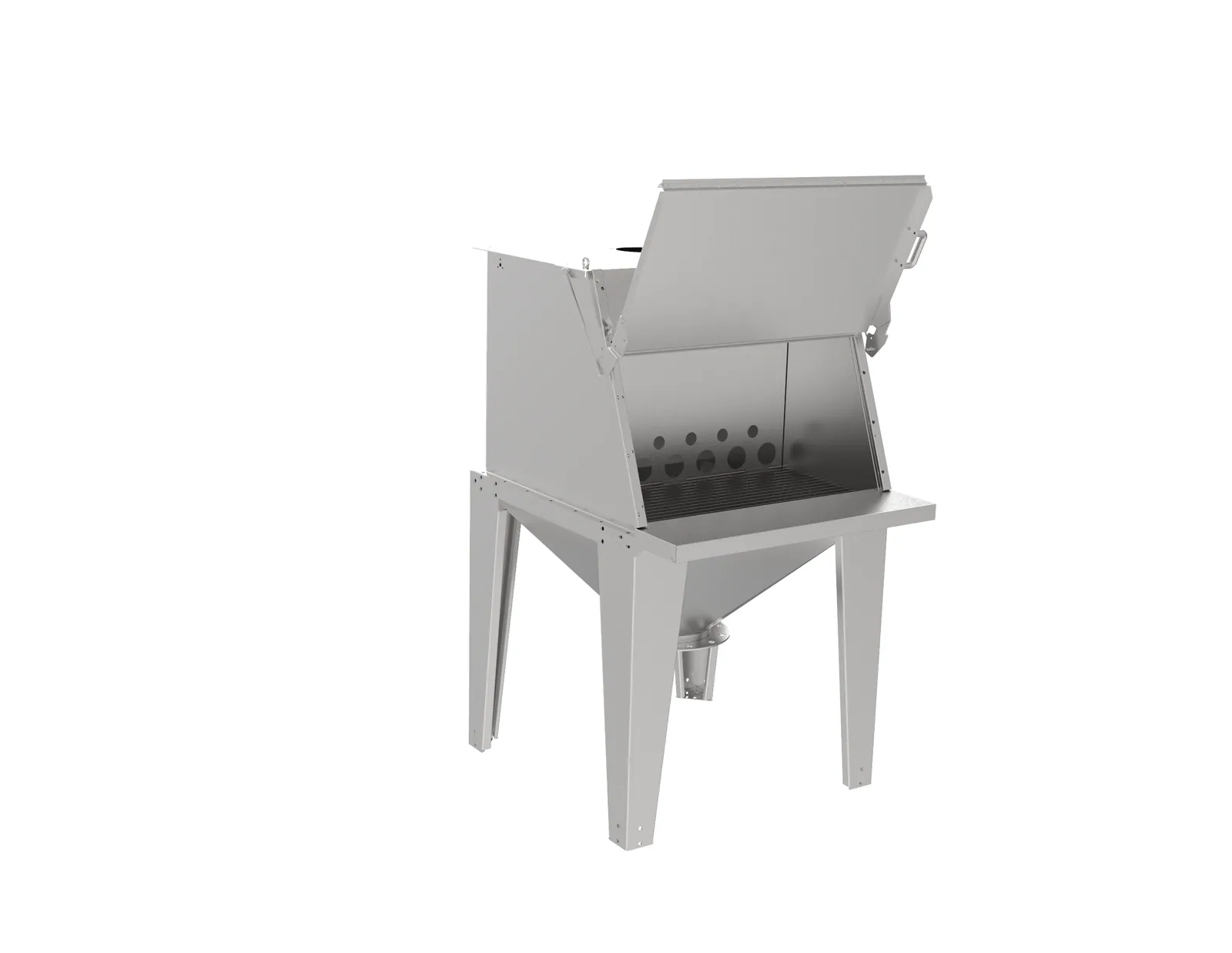
A vacuum conveying system consists of a pick-up point (big bag station, bag dump station, silo outlet or suction lance), a pipe or hose line, a vacuum receiver and a vacuum pump. When the receiver is full, the vacuum is cut, the material is discharged into the hopper below and the cycle starts again.
At OPTA Mühendislik we size vacuum conveying systems according to capacity, distance and material; we select a side channel blower or vacuum pump and calculate the receiver filter area and line diameter. Central systems in which one pump operates several receivers in sequence are managed by PLC.
How does vacuum conveying work?
The vacuum receiver works in cycles. The vacuum created by the pump draws material from the pick-up point into the receiver; the filter stops dust reaching the pump.
- The vacuum pump creates vacuum in the receiver
- Material is drawn from the pick-up point into the receiver
- When the receiver is full the vacuum is cut and the flap opens
- Material discharges into the hopper or machine
- The filter is cleaned by a reverse air pulse
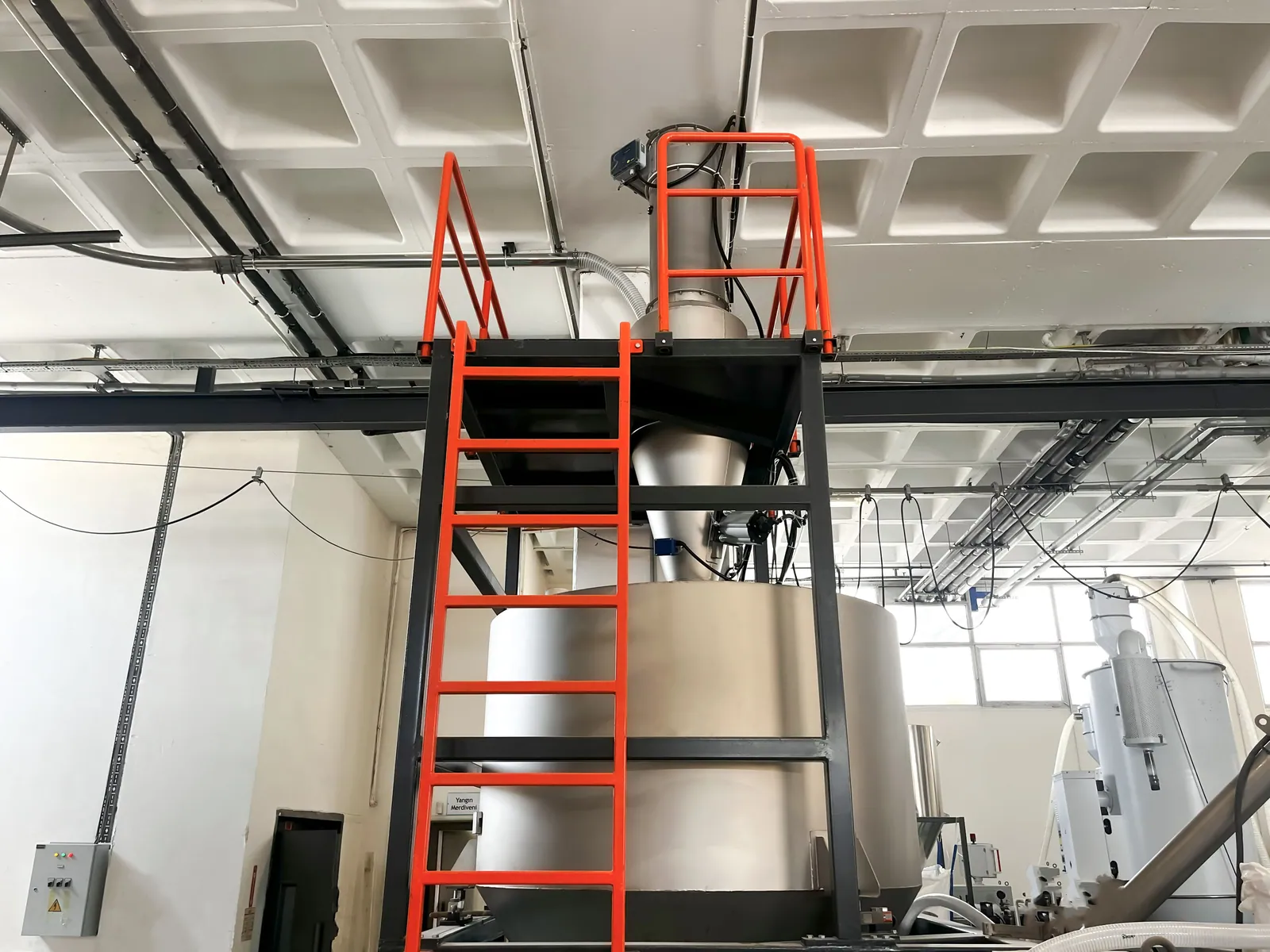
From the field
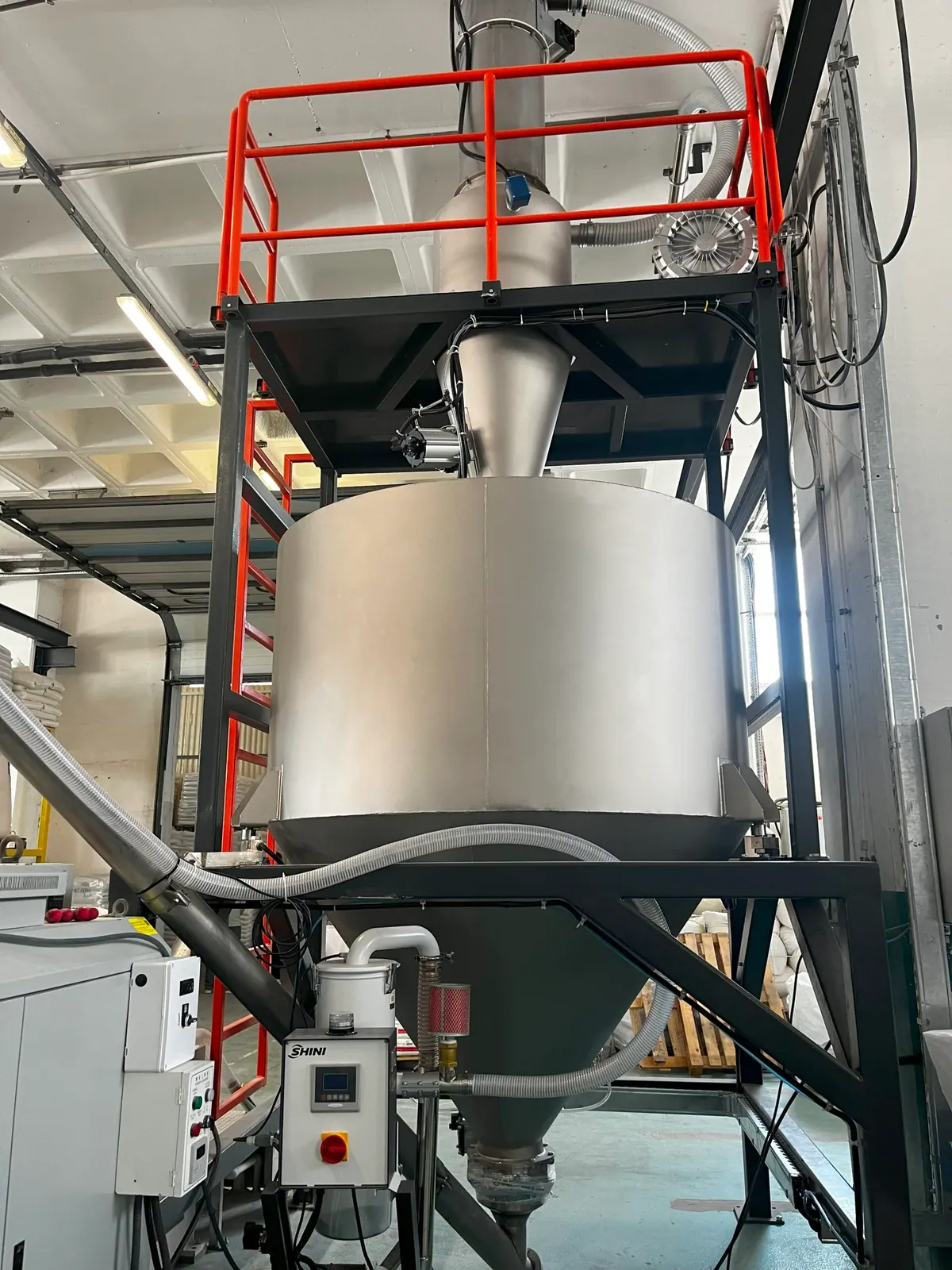
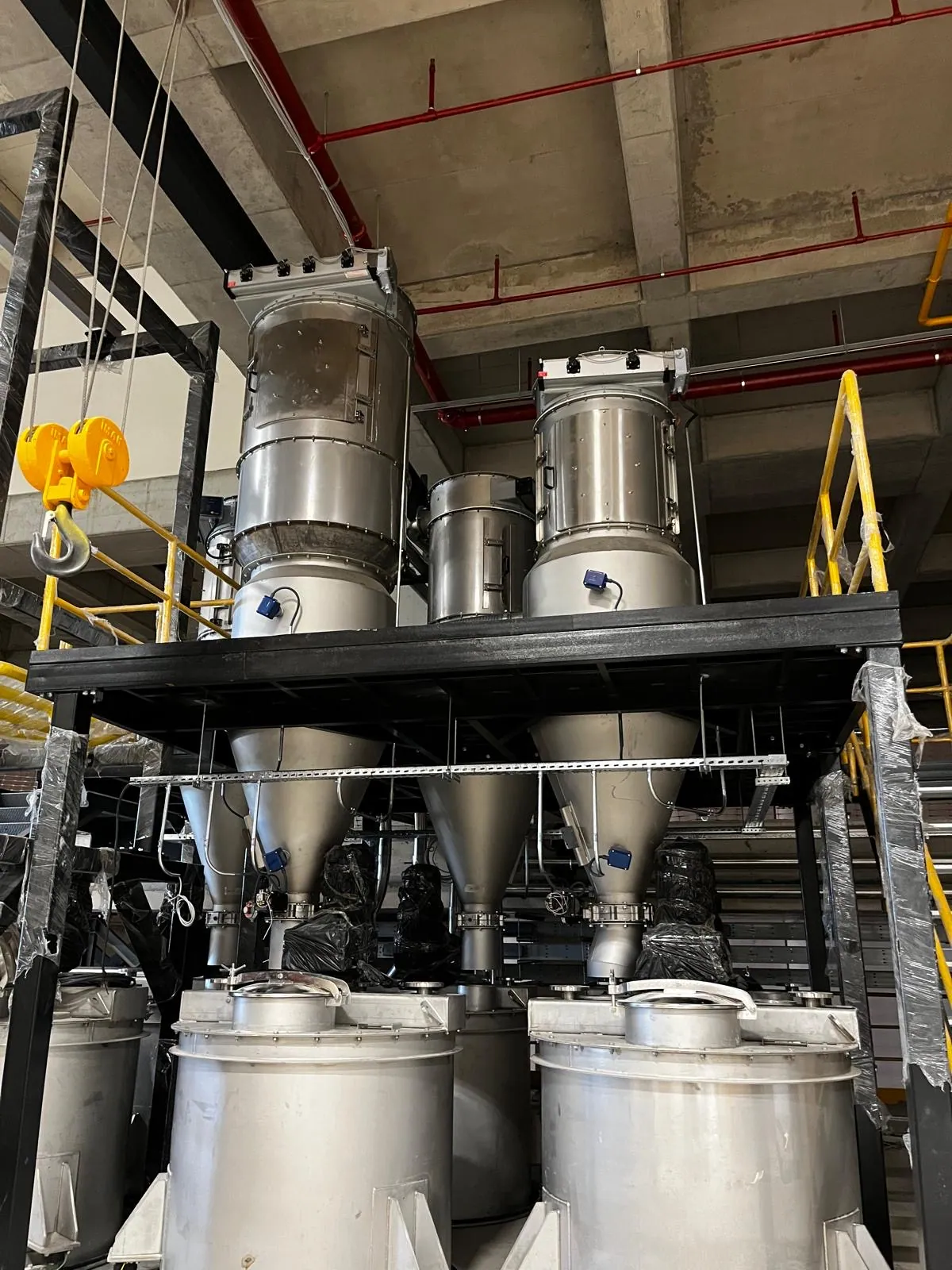
Equipment used in the system
Equipment and standards
Standard
- Stainless vacuum receiver
- Cartridge / bag filter, reverse air cleaning
- Side channel blower or vacuum pump
- Suction nozzle
- PLC control
Optional
- Weighed receiver
- Central multi-point system
- Suction lance (octabin, big bag)
- Line purge valve
- ATEX pump
Standards
- ATEX 2014/34/EU
- Machinery Directive 2006/42/EC
- Food-grade surfaces (option)
More in Vacuum conveying
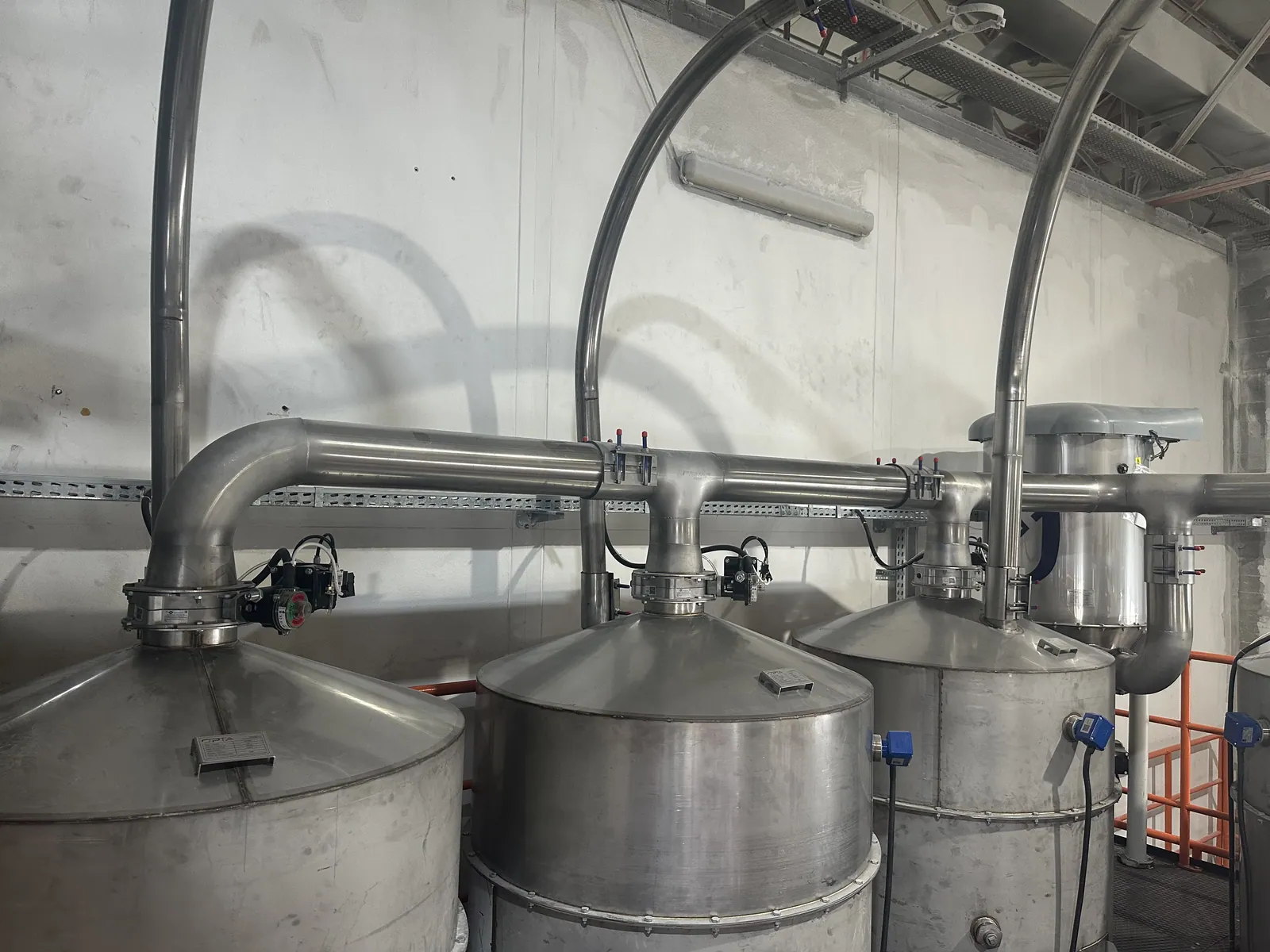 Weighed vacuum conveyingRecipe preparation by weighing in vacuum receivers.→
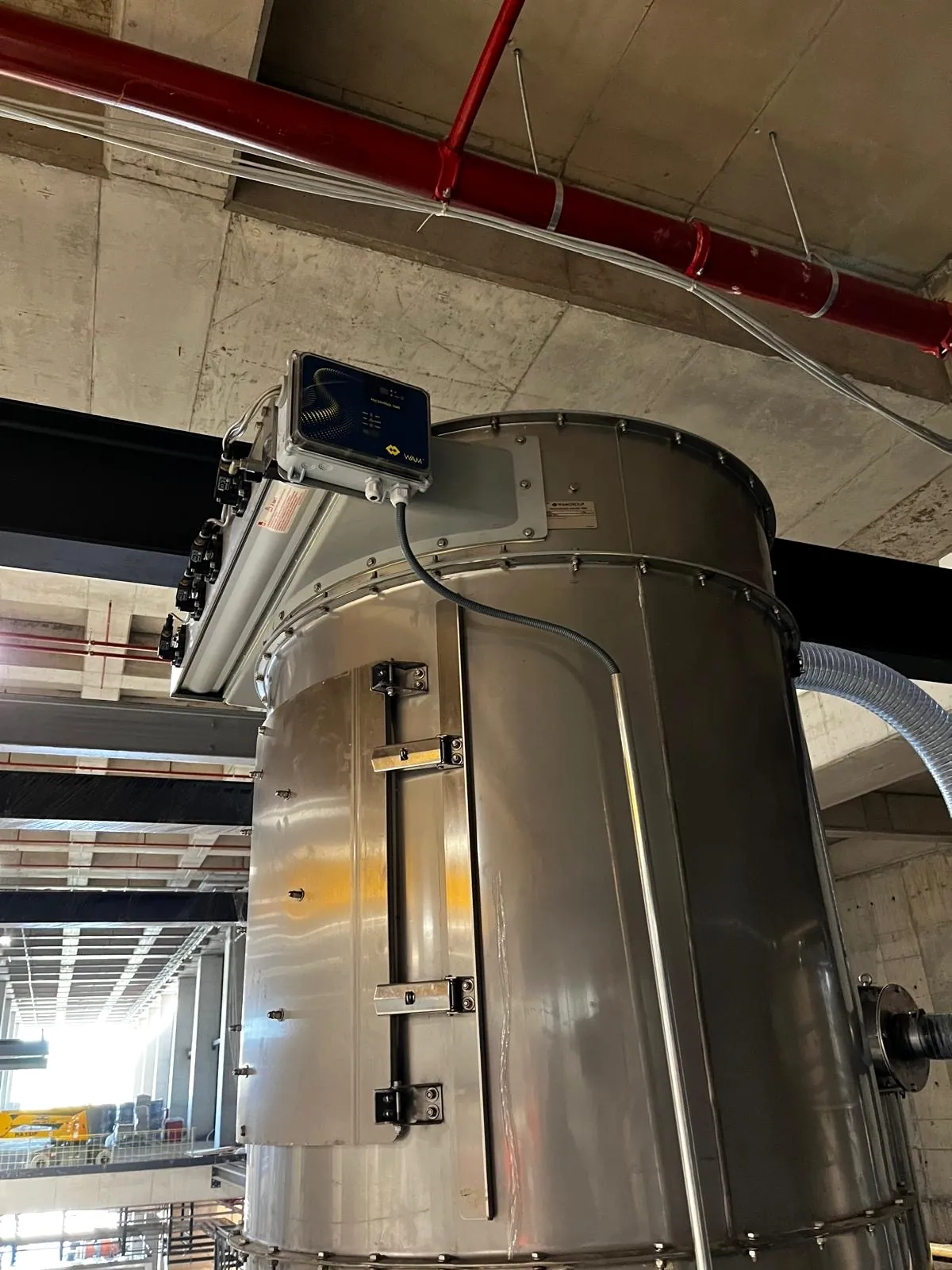 Vacuum receiverReceiver that picks up material by vacuum, filters it and discharges into a hopper.→
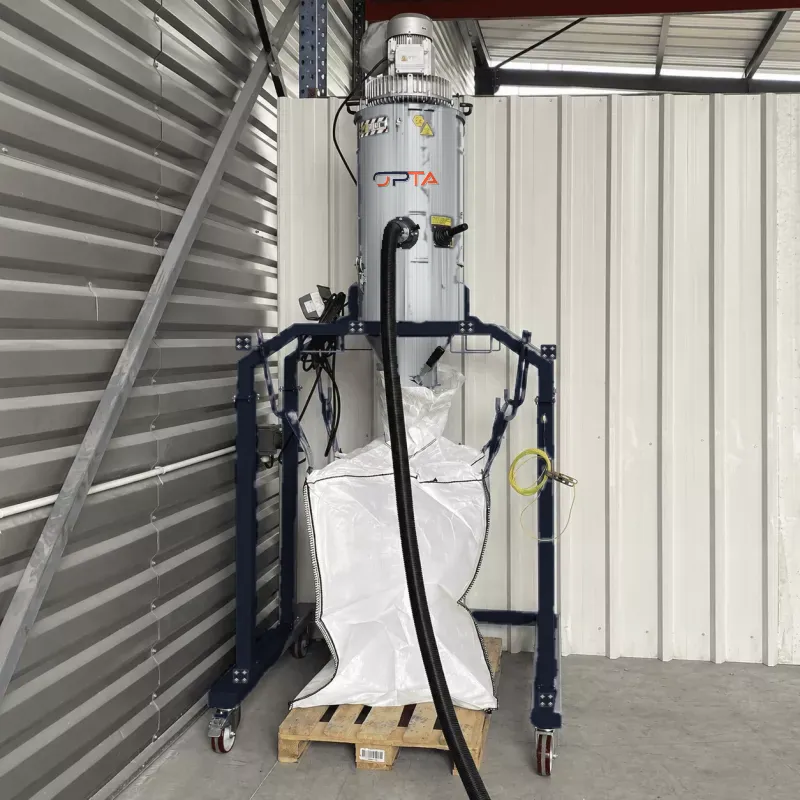 Mobile vacuum unitWheeled unit that picks up from octabins or big bags and fills big bags.→All vacuum conveyingPneumatic Conveying→
Frequently asked questions
Up to what capacities is vacuum conveying suitable?
Up to a few tonnes per hour depending on distance and material; at higher capacities pressure conveying is more economical.
Does material segregate in vacuum conveying?
In blends, different particle sizes may segregate in the line; in that case we choose a short line and suitable velocity, or recommend dense phase.
Do you build mobile vacuum units?
Yes. We have mobile vacuum units that pick up from octabins and big bags and can also fill big bags.
Let’s work together on vacuum conveying systems
Tell us about your raw material, capacity and site, and we will come back with a preliminary design and quotation.