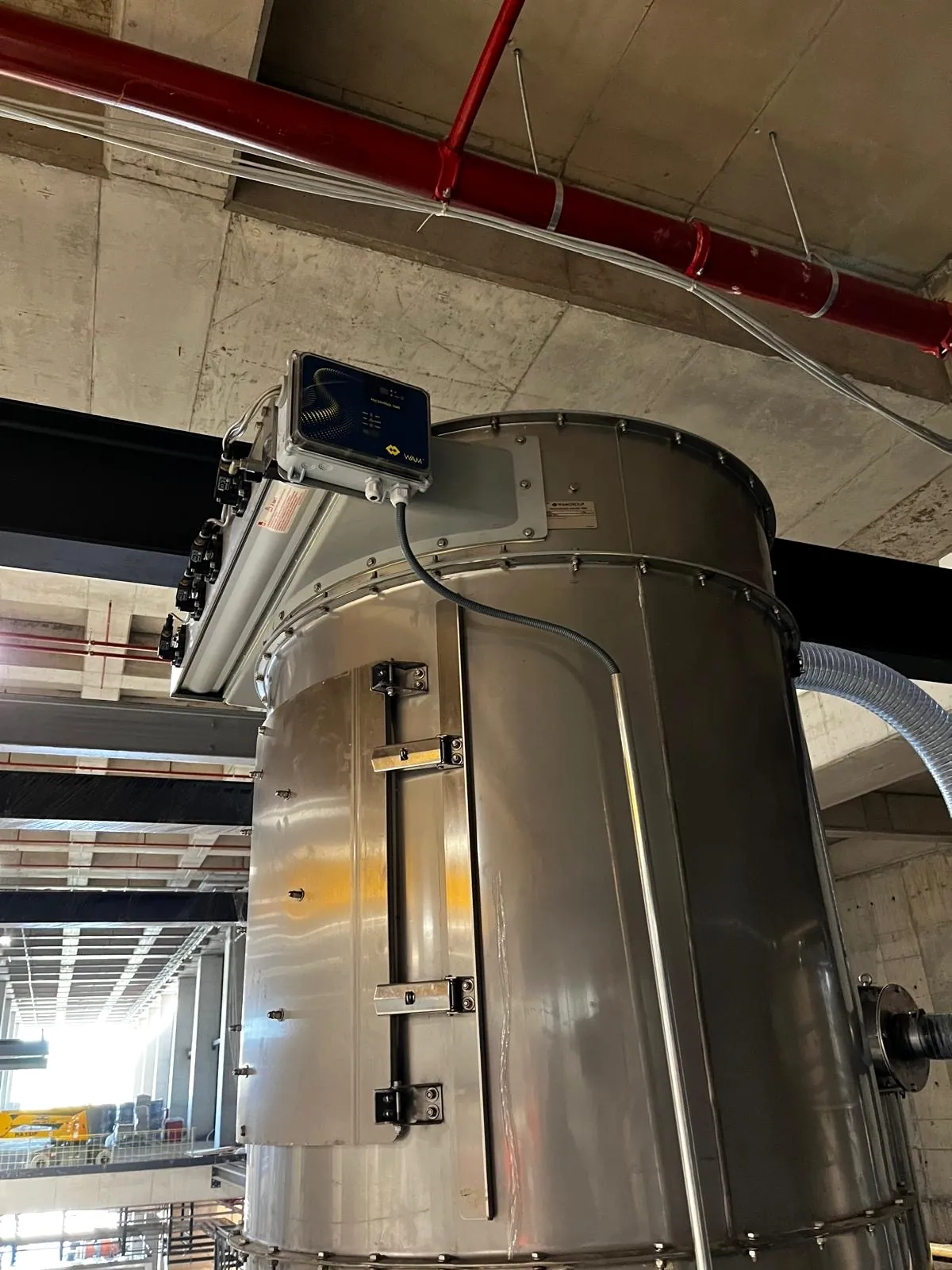
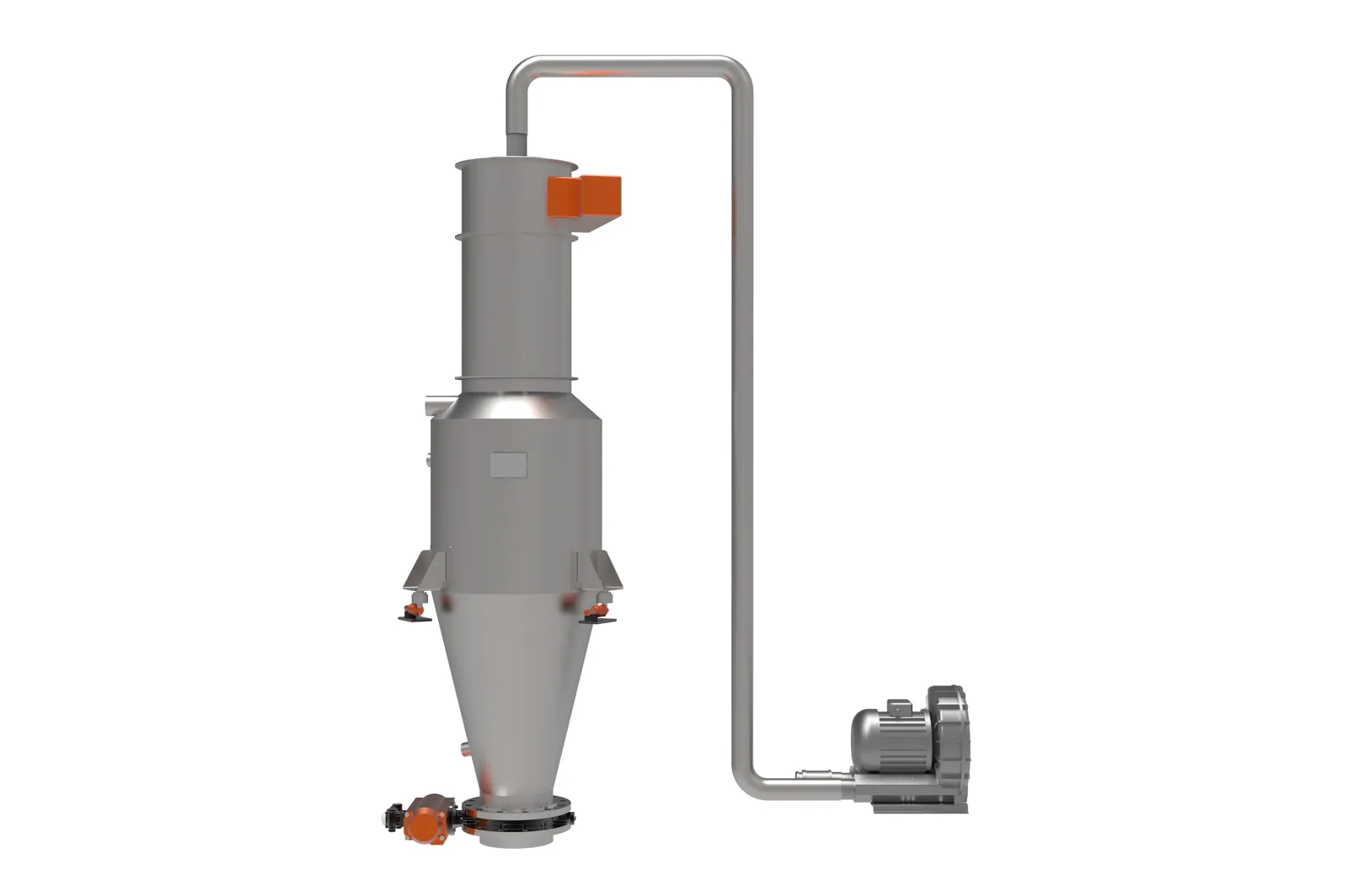
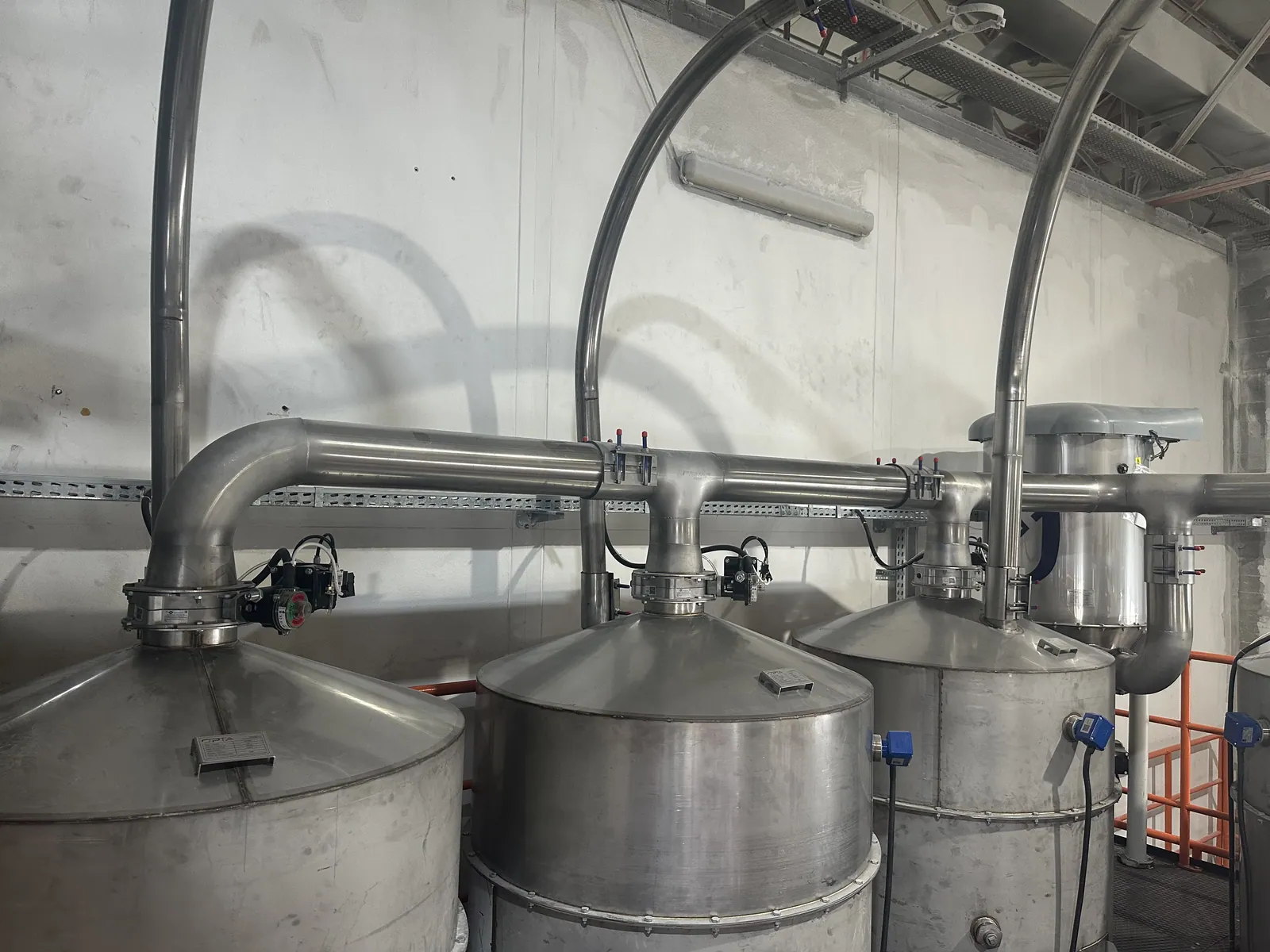
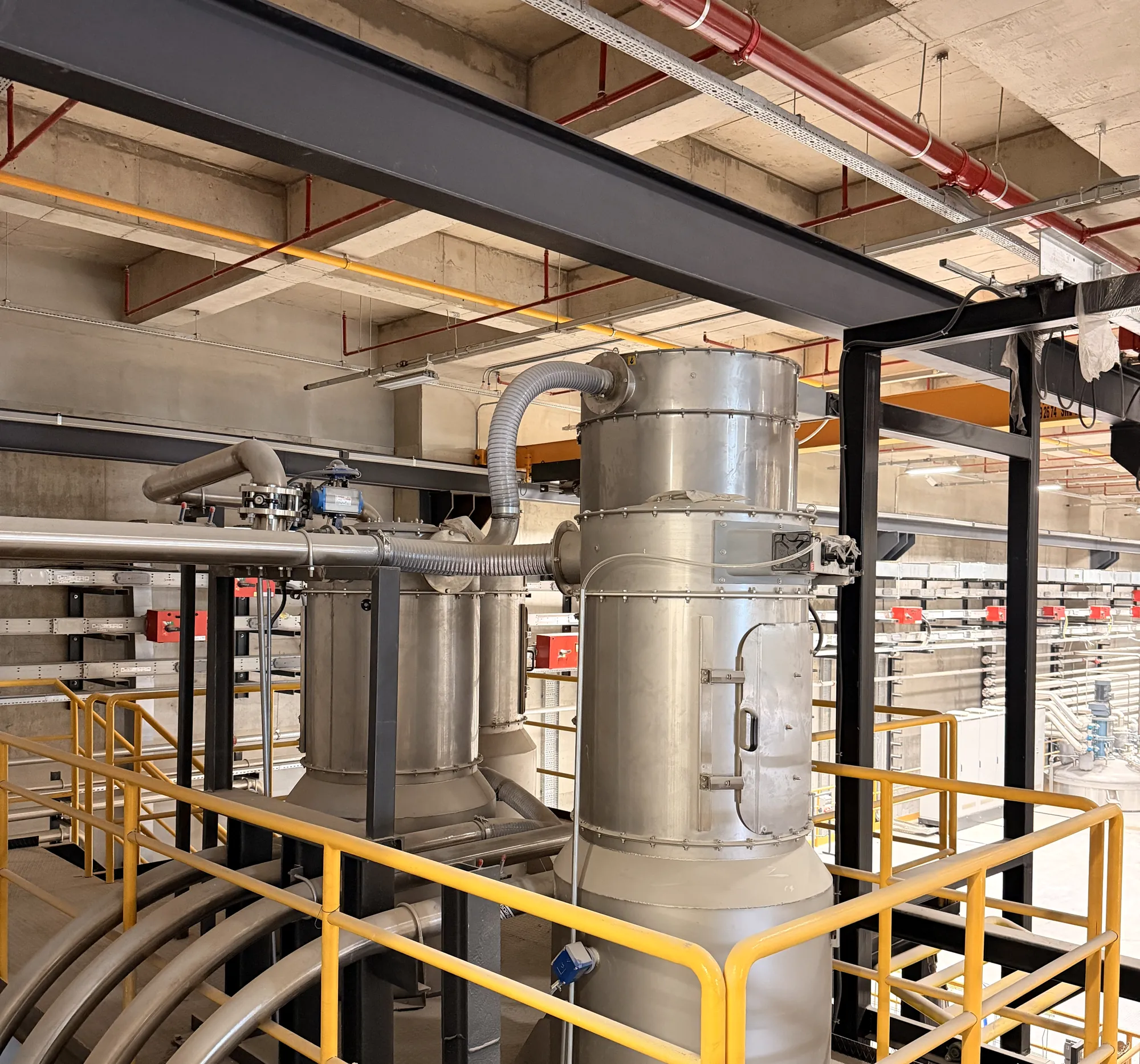
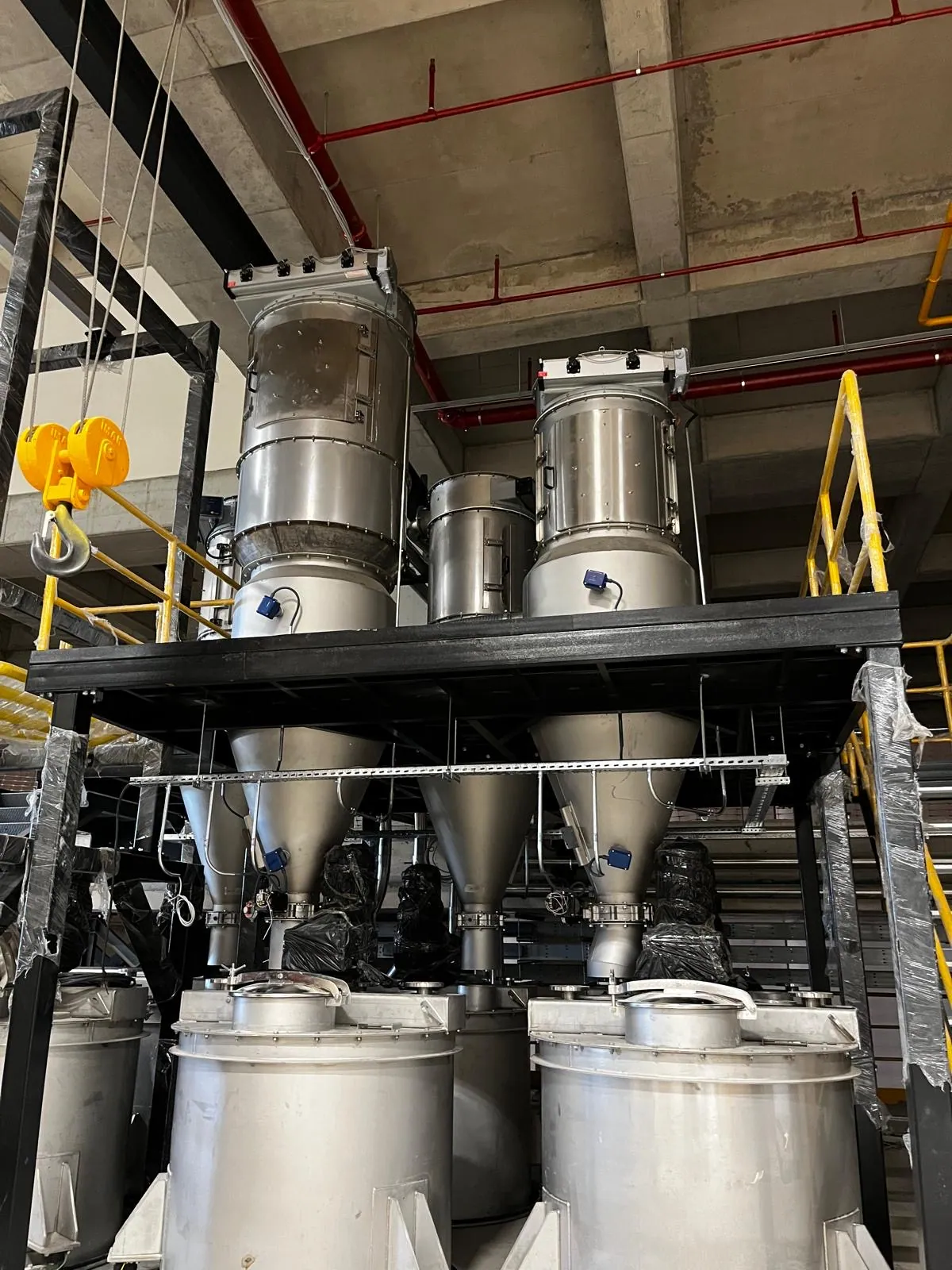
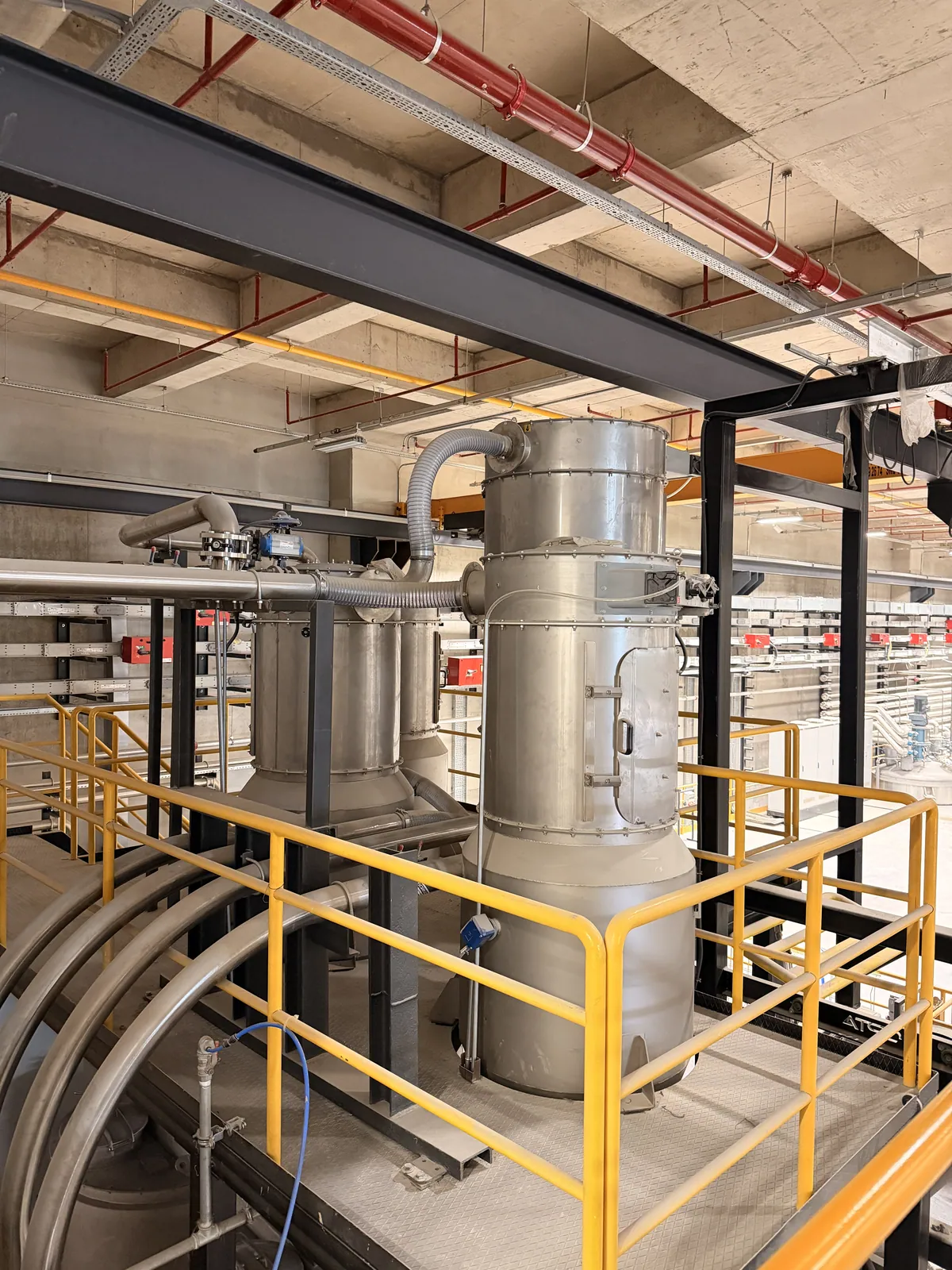
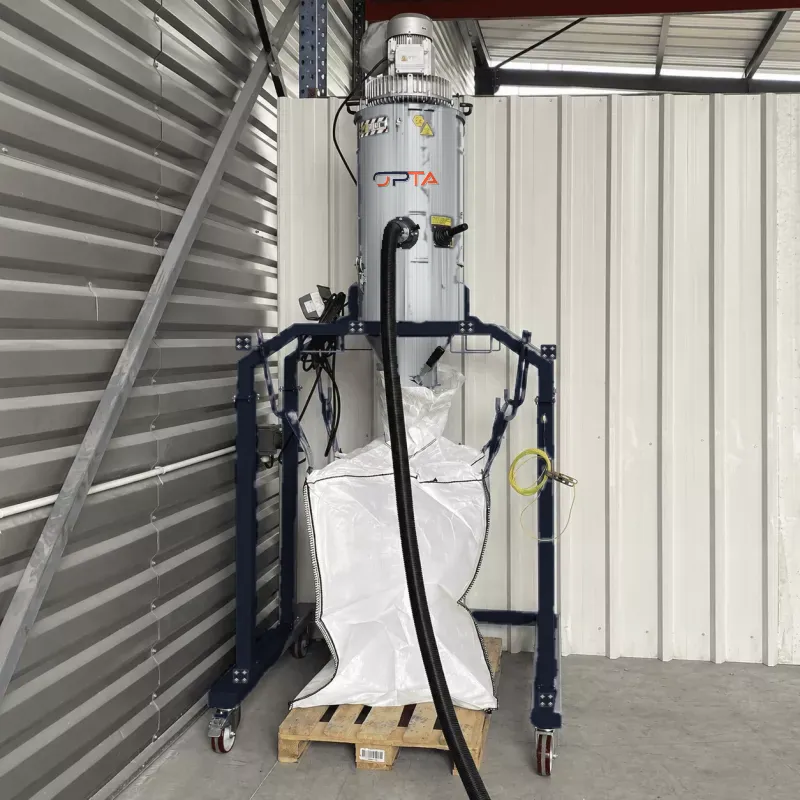
Stainless receiver that picks up material by vacuum, separates it from the air and discharges into a hopper
A vacuum receiver is the vessel at the destination of a vacuum conveying system where the material is collected. The vacuum pump creates negative pressure inside the receiver, and material is drawn from the pick-up point through a pipe or hose. The filter on top of the receiver stops dust carried by the conveying air from reaching the pump.
When the receiver is full the vacuum is cut, the bottom flap opens and the material is discharged into the hopper, mixer or machine below. At OPTA Mühendislik we size vacuum receivers according to material, capacity and cycle time, and manufacture them in our own workshop with a stainless body, filter and discharge flap.
The receiver works in cycles: filling, discharge and filter cleaning steps are managed in sequence by the PLC. Several receivers can be operated in turn with one pump.
The vacuum valve opens and vacuum builds in the receiver
Material is drawn from the pick-up point into the receiver
Filling ends by level sensor or time
The vacuum is cut, the bottom flap opens and the material discharges
The filter is cleaned with reverse air and the cycle starts again
Receiver components
01
Stainless body
Product-contact surfaces are stainless; surface treatment suitable for food and hygienic applications can be applied.
02
Filter
Cartridge or bag filter, cleaned automatically each cycle by reverse air (jet pulse).
03
Discharge flap
A pneumatically actuated flap keeps the receiver closed during vacuum and opens when filling ends.
04
Level and control
Fully automatic operation with level sensor, vacuum valve and PLC cycle control.
Vacuum receiver types
01 / 03
Machine-mounted receiver
Mounted directly on top of an extruder, injection moulding machine or mixer. It refills itself as the level in the machine hopper drops.
When is it preferred?
Single machine feeding, short distance.
Vacuum receiverLevel sensorVacuum pump
02 / 03
Hopper-mounted receiver
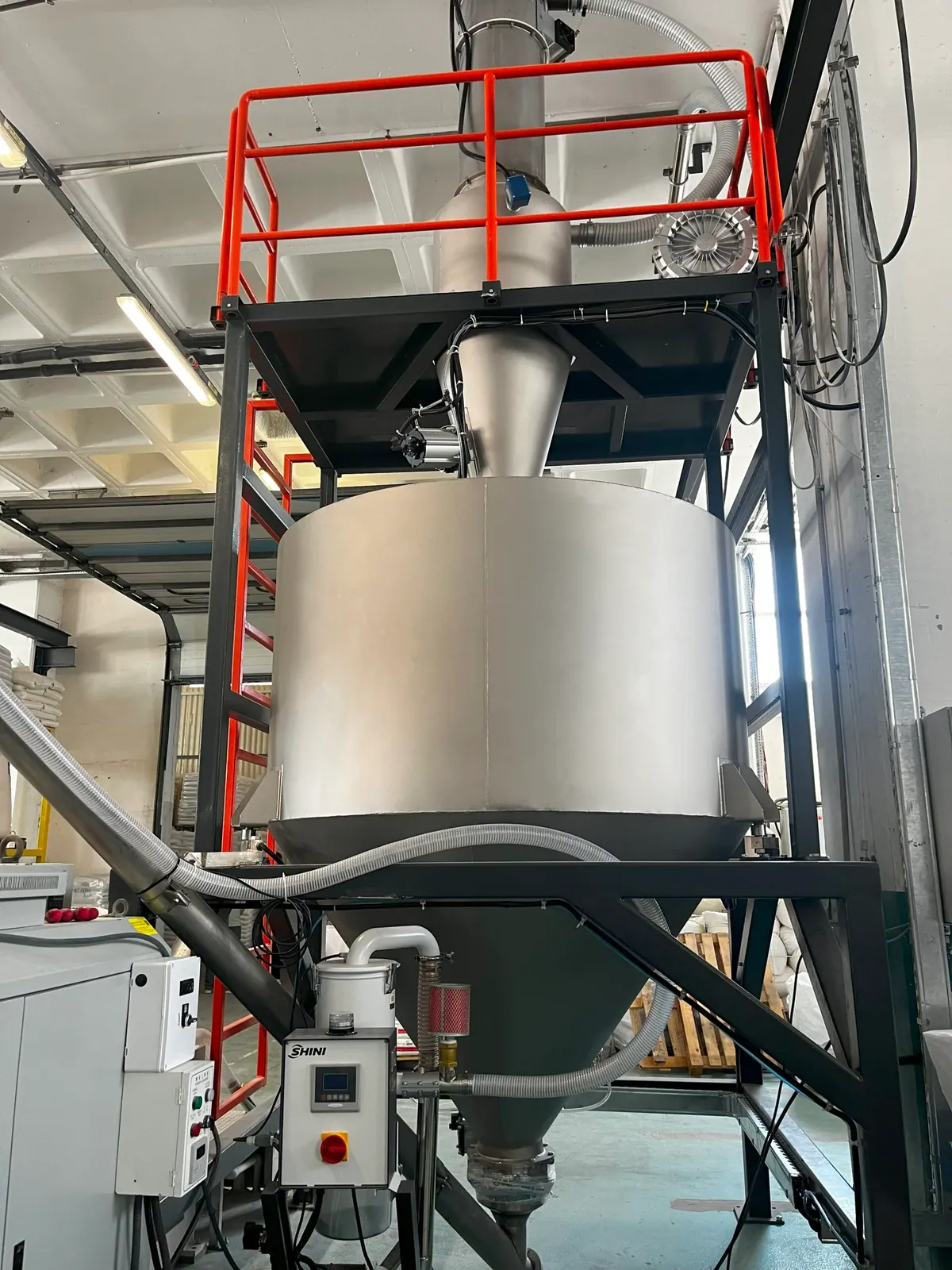
The receiver works on top of a larger buffer hopper. The hopper holds a few hours of stock, improving feeding continuity.
When is it preferred?
High-consumption lines, need for buffer stock.
Vacuum receiverBuffer hopperLevel sensors
03 / 03
Weighed vacuum conveying
The receiver or the hopper beneath it sits on load cells. Material is weighed while being conveyed; recipe preparation and consumption tracking are possible.
When is it preferred?
Multi-component recipes, recording by weight.
Load cellsWeighing indicatorSCADA
From the field
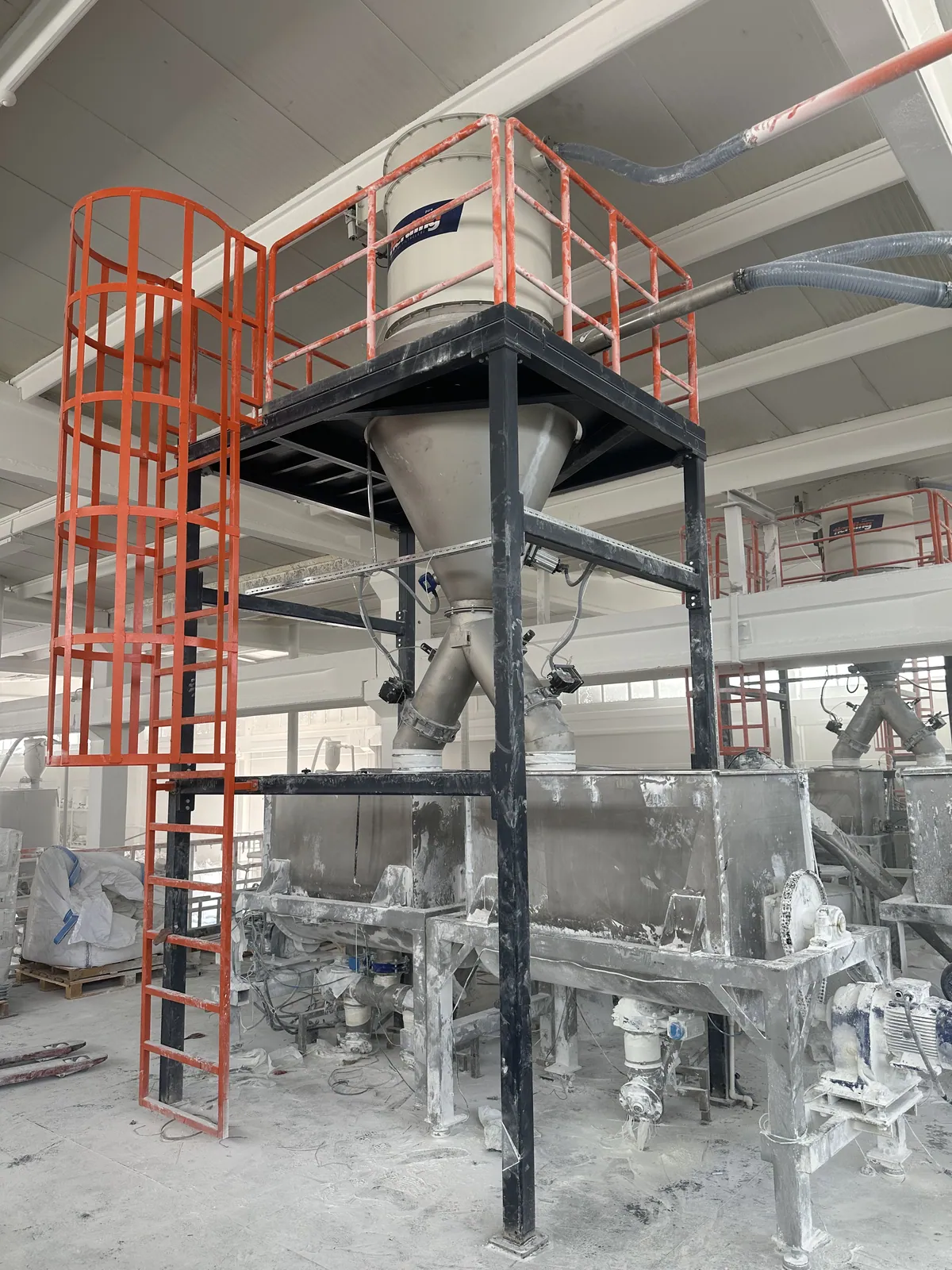
Stainless vacuum receivers on a platformMultiple vacuum receiver platformCentral vacuum feeding platform
Receiver volume is determined by the material's bulk density, the required capacity and cycle time. We calculate and manufacture it separately for each project.
How often is the filter replaced?
Because the filter is cleaned automatically with reverse air every cycle, it lasts a long time; the replacement interval depends on dust fineness and operating hours.
Can a receiver be added on top of my existing machine?
Yes. We mount vacuum receivers on existing machines with an adapter flange suited to the machine inlet and a level sensor.
Let’s work together on vacuum receiver
Tell us about your raw material, capacity and site, and we will come back with a preliminary design and quotation.