01 / 02
Abrasive powders
With abrasive materials such as calcite, quartz sand, feldspar, alumina, glass batch, cement and fly ash, low velocity multiplies the life of pipes and bends.
CalciteQuartzCementGlass batch
Gentle, segregation-free, low-wear conveying with a pressure vessel and booster air
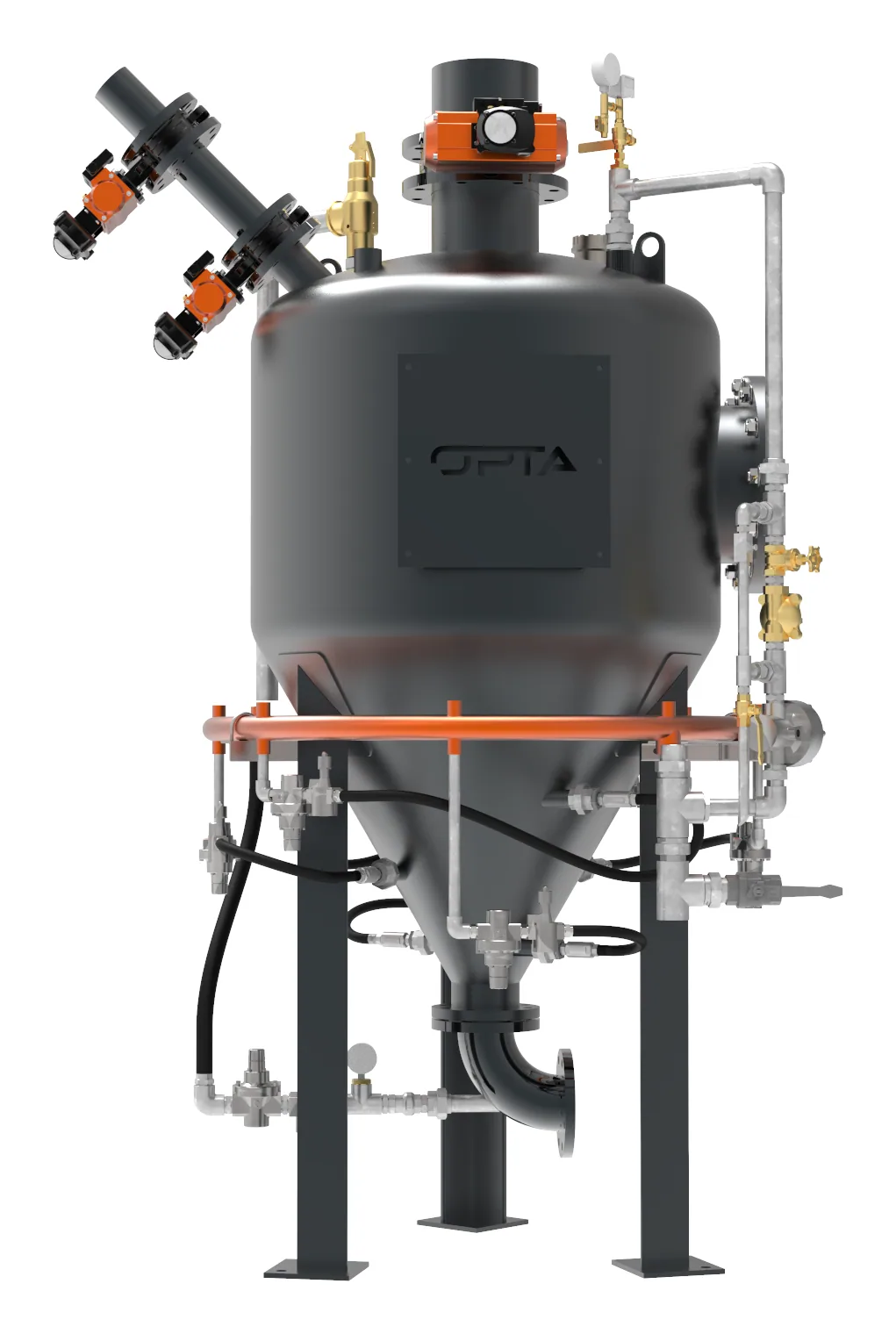
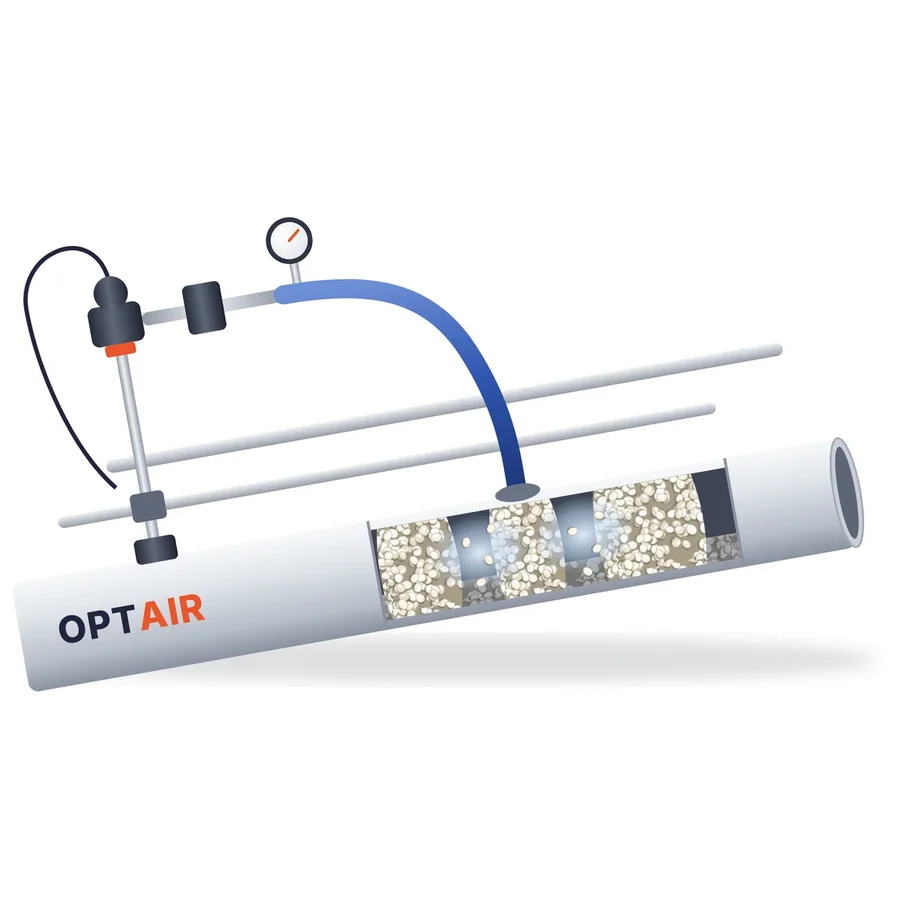
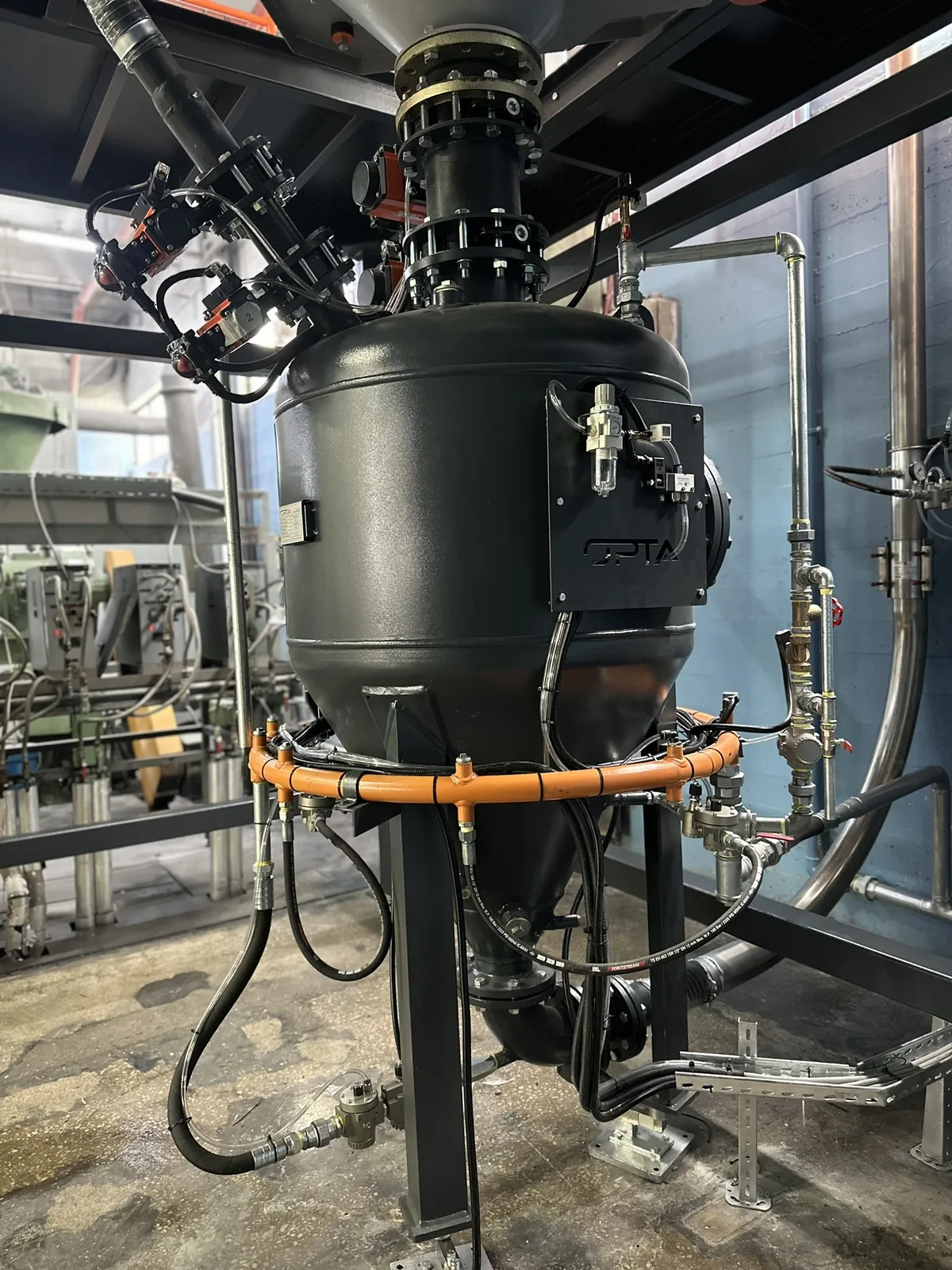
A dense phase conveying system is built around a cycle: the material fills the pressure vessel, the vessel is pressurised and pushes the material into the pipeline, and booster air keeps the plugs moving in a controlled way along the line. The material is not thrown around inside the pipe; it is pushed in blocks at low velocity.
As a result granules do not break and no dust or angel hair forms; recipes made of components with different densities and particle sizes reach their destination in the ratio they left the mixer, without segregation. With abrasive powders, pipe and bend wear is greatly reduced, and because less air is used, filters are smaller and energy consumption is lower.
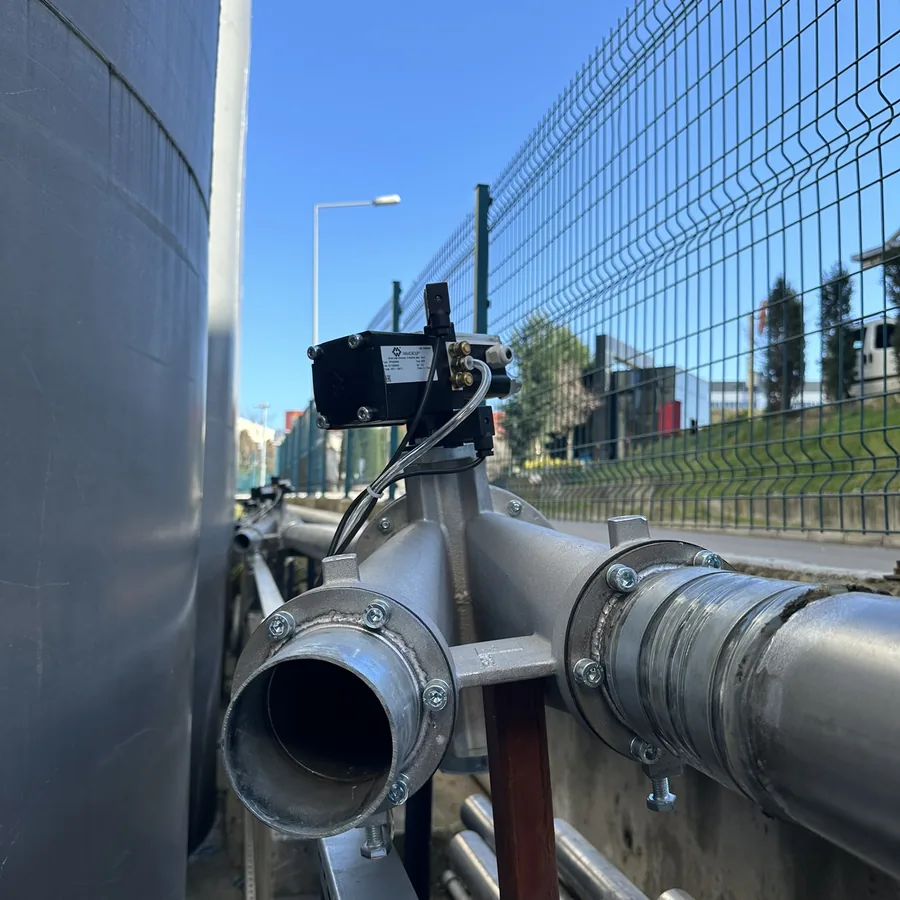
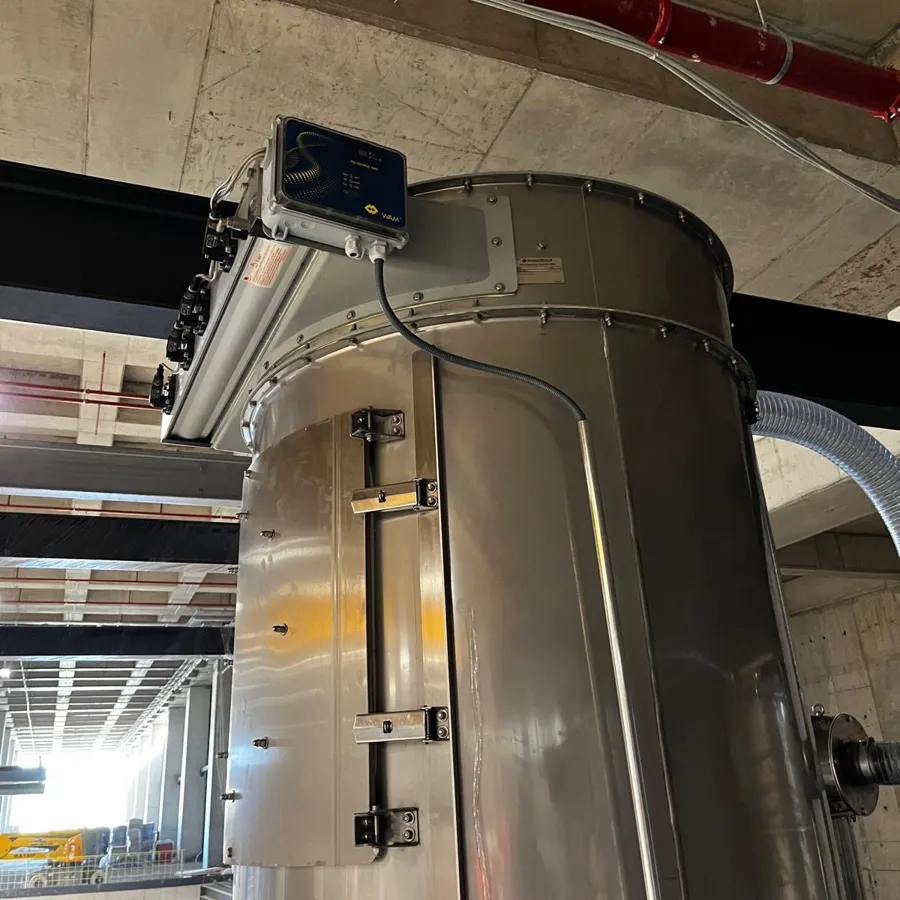
At OPTA Mühendislik we determine pressure vessel volume, line diameter, compressor air demand, the positions of OPTAIR booster air stations and the target silo filter in a single engineering calculation, and install the system turnkey to run automatically under PLC control.
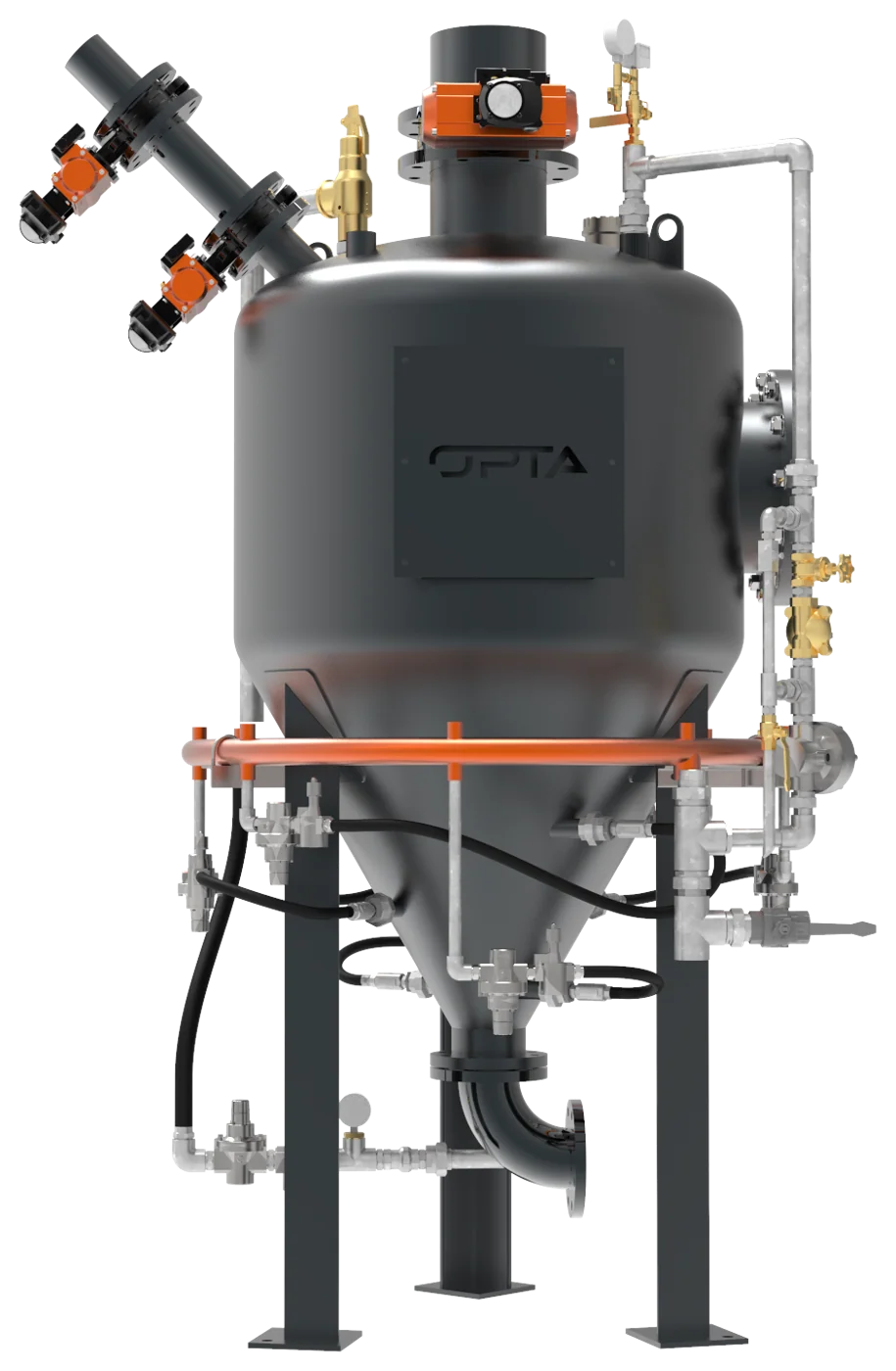
Dense phase is the most reliable way to protect the material and give the line a long life.
Thanks to low velocity and plug flow, granules, coated particles and fragile products are not damaged; no dust or angel hair forms.
Because dryblends and premixes are not thrown around inside the pipe, heavy and light components do not separate; the product reaches the silo with the homogeneity it had in the mixer.
With abrasive materials such as calcite, quartz and glass batch, the life of pipes, bends and valves is extended and maintenance costs fall.
Much less air is used than in dilute phase for the same capacity; the filter at the destination and the compressor are smaller.
Conveys reliably over 150–200 m and more, including lifts between floors.
Every cycle is monitored by pressure sensors and the PLC; with a weighed vessel, the conveyed quantity is recorded.
The inlet valve opens and material fills the pressure vessel; the level sensor signals full.
The inlet valve closes and the vessel is pressurised with compressor air.
The outlet valve opens and material is pushed into the line; OPTAIR stations support the plugs.
When the vessel is empty the line is swept with air and pressure drops.
The cycle repeats automatically until the target silo is full.
Material is pushed through the pipe at low velocity as successive plugs separated by air cushions. Because the plugs move as a whole rather than rubbing along the pipe, the material is not crushed and components do not change places.
Compare dilute, medium and dense phase with animations →
| Dense phase | Dilute phase | |
|---|---|---|
| Conveying velocity | ≈ 1 – 5 m/s | ≈ 15 – 30 m/s |
| Granule breakage | Negligible | High; dust and angel hair form |
| Segregation of blends | No segregation | May segregate |
| Pipe wear | Very low | High (with abrasive material) |
| Air consumption | Low | High |
| Air source | Compressor | Blower |
With abrasive materials such as calcite, quartz sand, feldspar, alumina, glass batch, cement and fly ash, low velocity multiplies the life of pipes and bends.
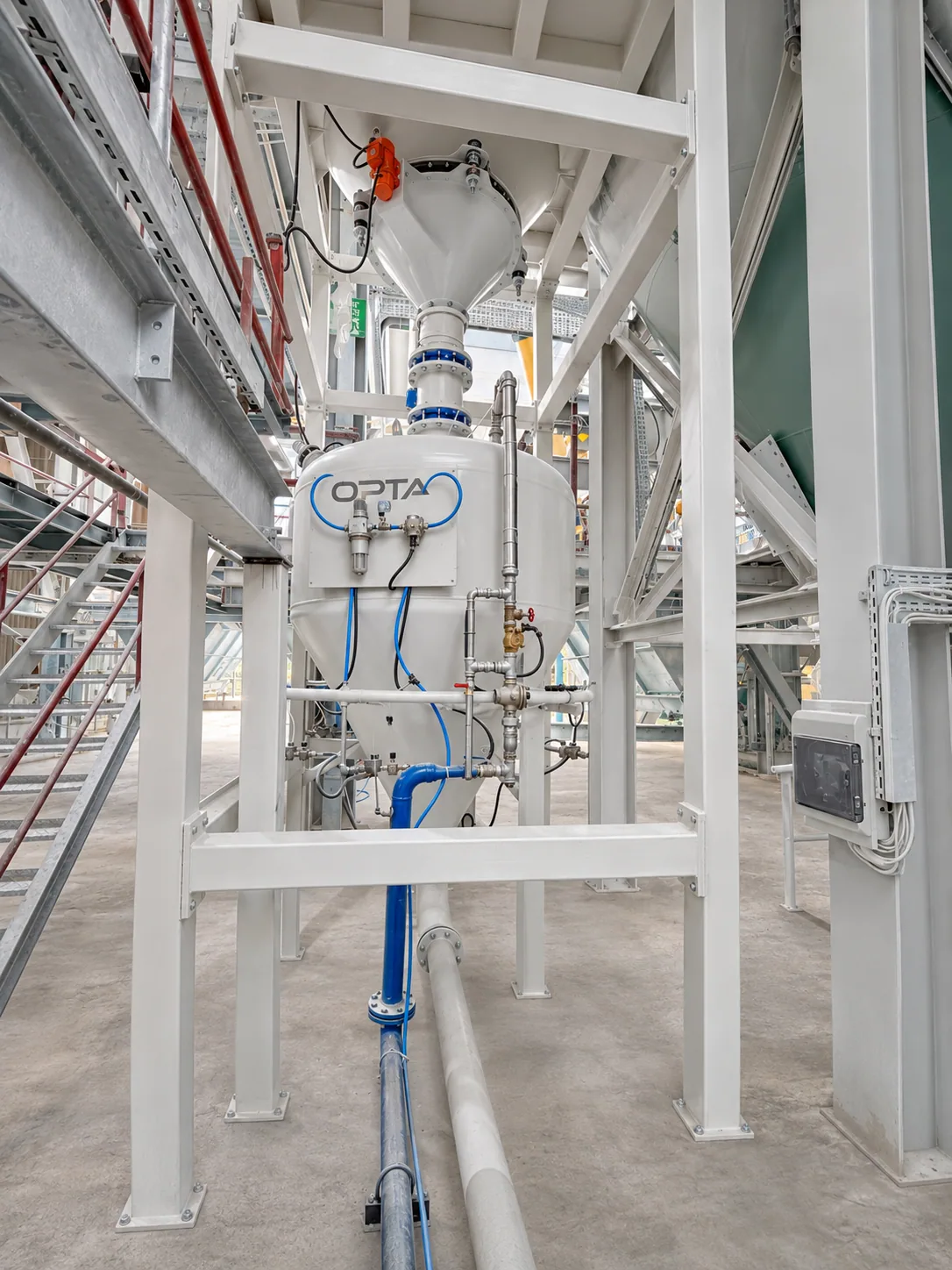
Compound and masterbatch granules, PVC dryblend, powder coatings and construction chemical blends are conveyed without breakage or segregation; product quality is preserved right up to the silo inlet.
OPTA OP-210 series pressure vessels are built in standard volumes from 24 to 5,600 litres. Dimensions and shipping weights are listed below; you can download the data sheet or contact us for the model that suits your capacity.
| Model | Capacity [L] | A [mm] | B [mm] | Ø Diameter [mm] | Inlet valve DN | Shipping weight [kg] |
|---|---|---|---|---|---|---|
| OP0024 | 24 | 865 | 1.071 | 600 | 150 | 73 |
| OP0070 | 70 | 1.130 | 1.335 | 800 | 150 | 82 |
| OP0102 | 102 | 1.170 | 1.349 | 810 | 150 | 95 |
| OP0140 | 140 | 1.370 | 1.576 | 810 | 150 | 110 |
| OP0280 | 280 | 1.608 | 1.820 | 1.010 | 200 | 160 |
| OP0346 | 346 | 1.788 | 1.838 | 1.115 | 200 | 292 |
| OP0490 | 490 | 1.938 | 2.088 | 1.115 | 200 | 300 |
| OP0600 | 600 | 1.905 | 2.165 | 1.253 | 200 | 332 |
| OP0850 | 850 | 2.190 | 2.450 | 1.253 | 200 | 350 |
| OP1100 | 1.100 | 2.591 | 2.851 | 1.253 | 200 | 455 |
| OP1700 | 1.700 | 2.743 | 3.061 | 1.605 | 250 | 640 |
| OP2200 | 2.200 | 3.200 | 3.518 | 1.605 | 250 | 825 |
| OP2800 | 2.800 | 3.582 | 3.900 | 1.605 | 250 | 1.050 |
| OP4200 | 4.200 | 3.734 | 4.112 | 2.060 | 300 | 1.240 |
| OP5600 | 5.600 | 4.267 | 4.645 | 2.060 | 300 | 1.480 |
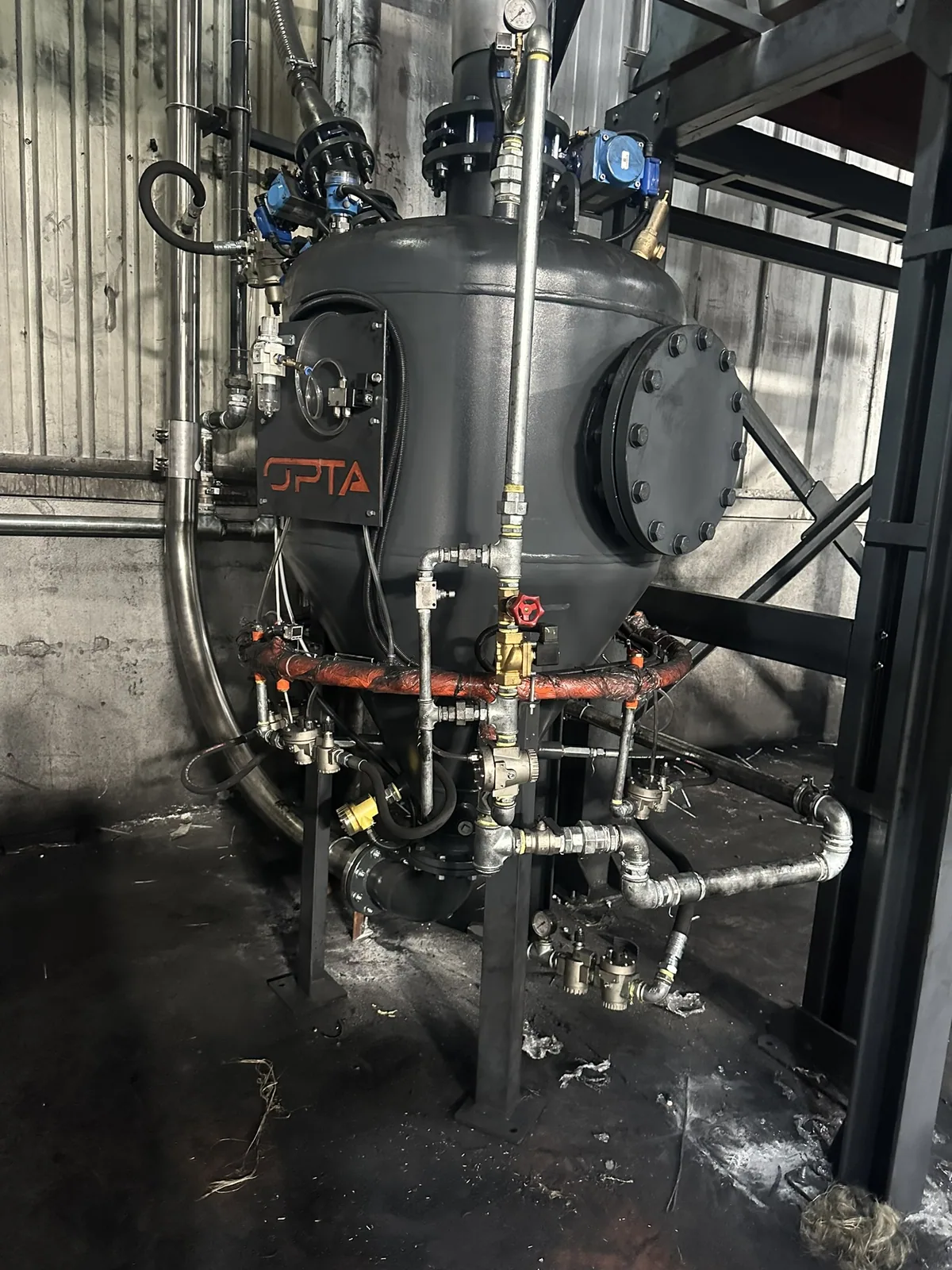
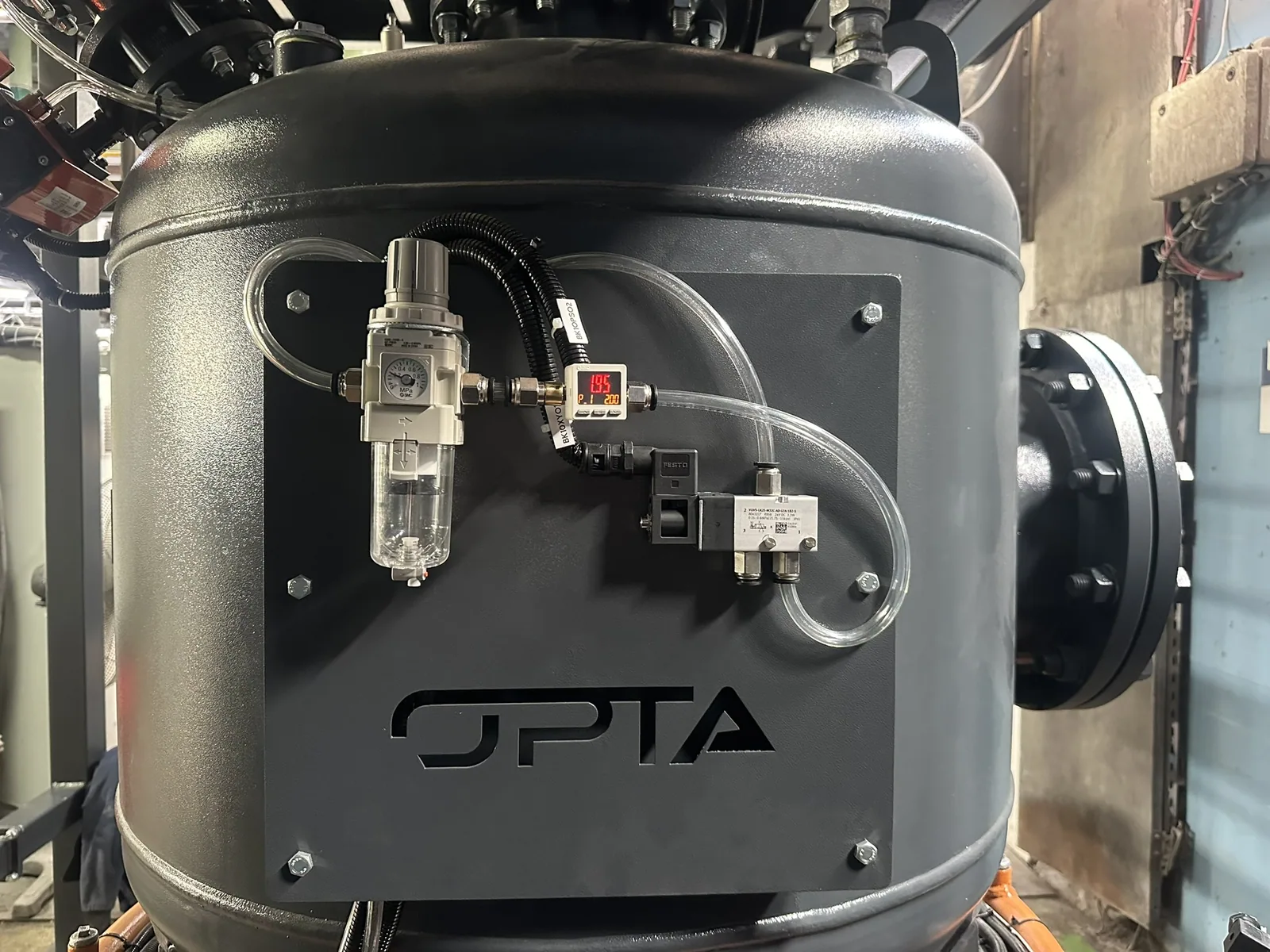
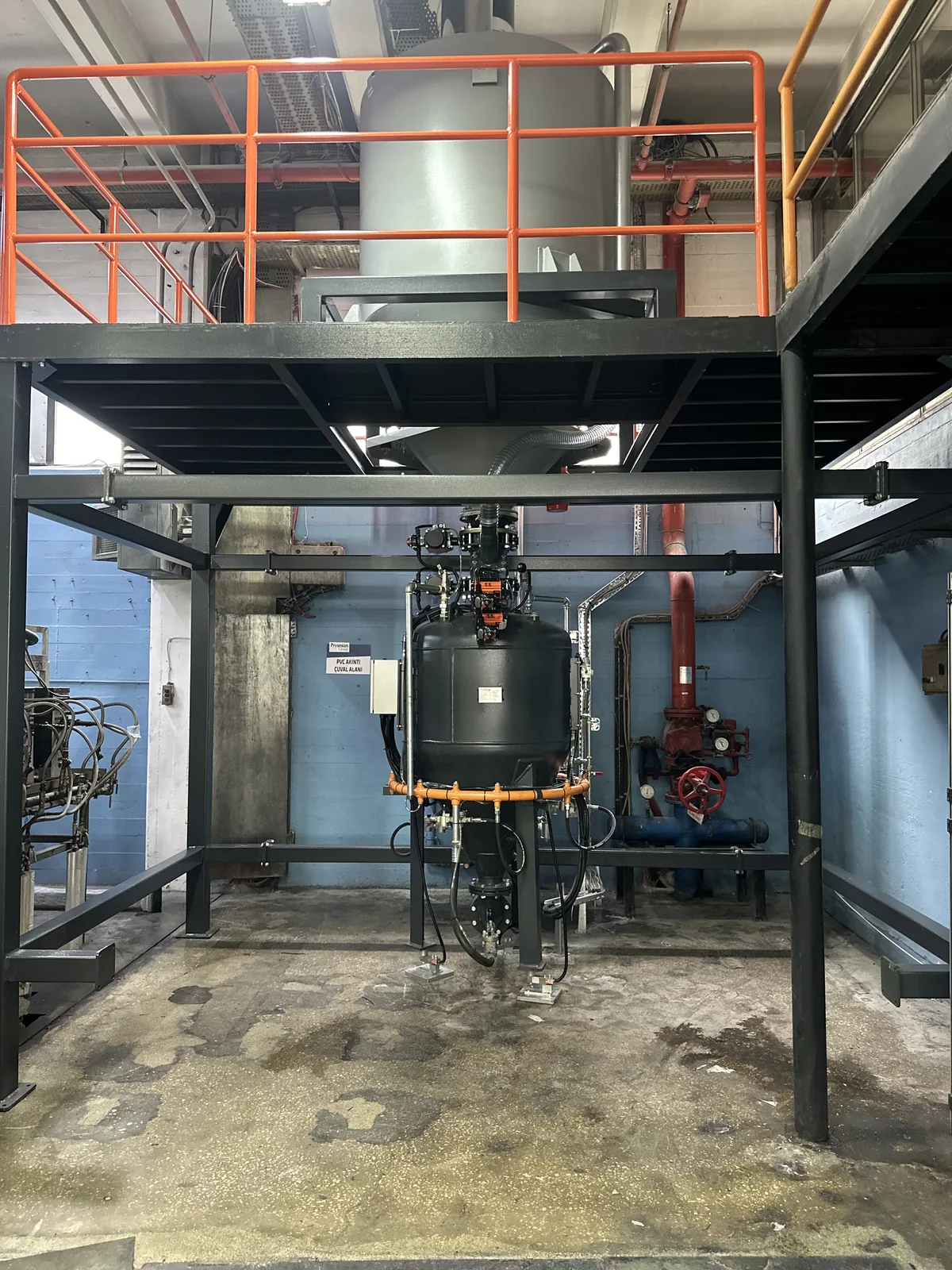
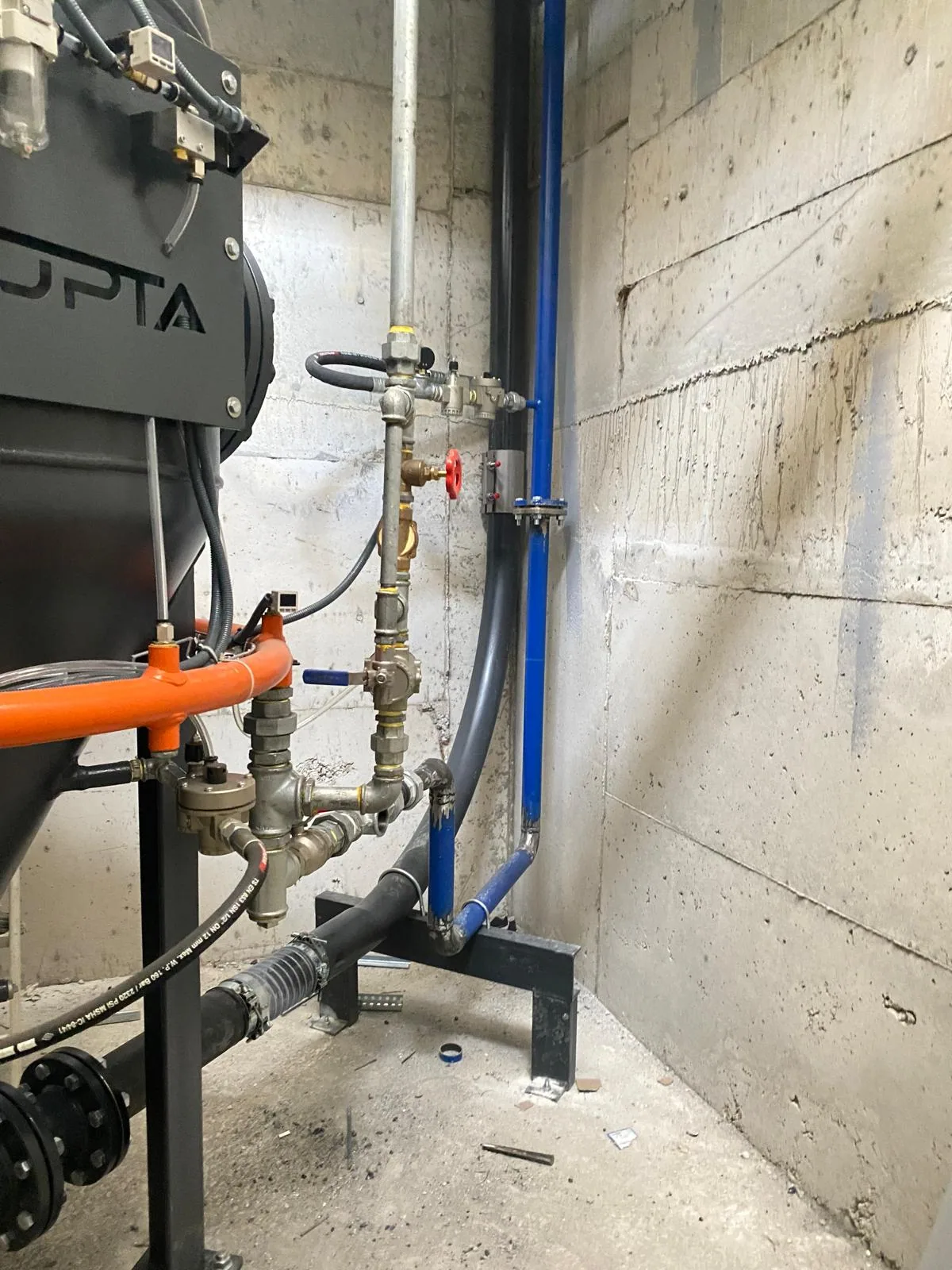 Weighed pressure vesselPressure vessel on load cells that weighs the conveyed quantity.→
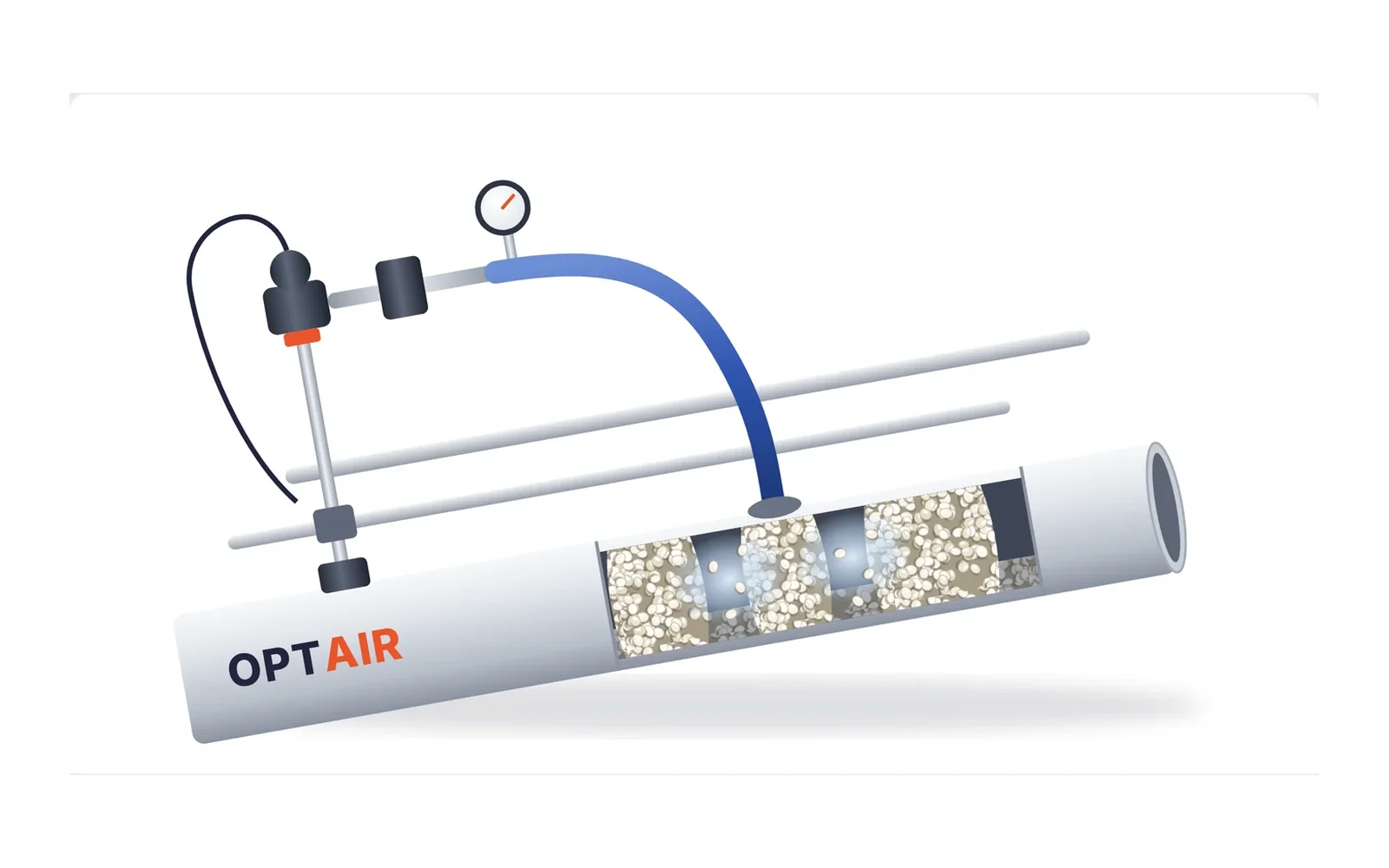 OPTAIR booster air equipmentStepwise booster air for dense phase lines; prevents blockages.→All dense phase conveyingPneumatic Conveying→
Because of low velocity and plug flow, breakage and dust generation are far lower than in dilute phase; velocity and air volume are set for the material.
In dense phase the components are not thrown around inside the pipe, so the blend ratio is preserved; that is why it is preferred for premixes.
We calculate the air flow and pressure the system needs and check your existing compressor's capacity; if necessary we recommend a separate compressor and air receiver.
Depending on the material, conveying over 150–200 m and more, including height differences, is possible.
Tell us about your raw material, capacity and site, and we will come back with a preliminary design and quotation.
How can we help?
Reach our team directly about your project.Let us help with your project. Message us on WhatsApp or give us a call.
Message on WhatsApp