Get a Quote

SILO DISCHARGE SYSTEMS

Discharge your silo first-in, first-out, without bridging or blockages

A silo discharge system takes powder or granular material from the silo cone outlet and transfers it at a steady, controlled rate to the process, a conveying line or a weigh hopper. How evenly a silo discharges matters to production continuity as much as how well it stores.

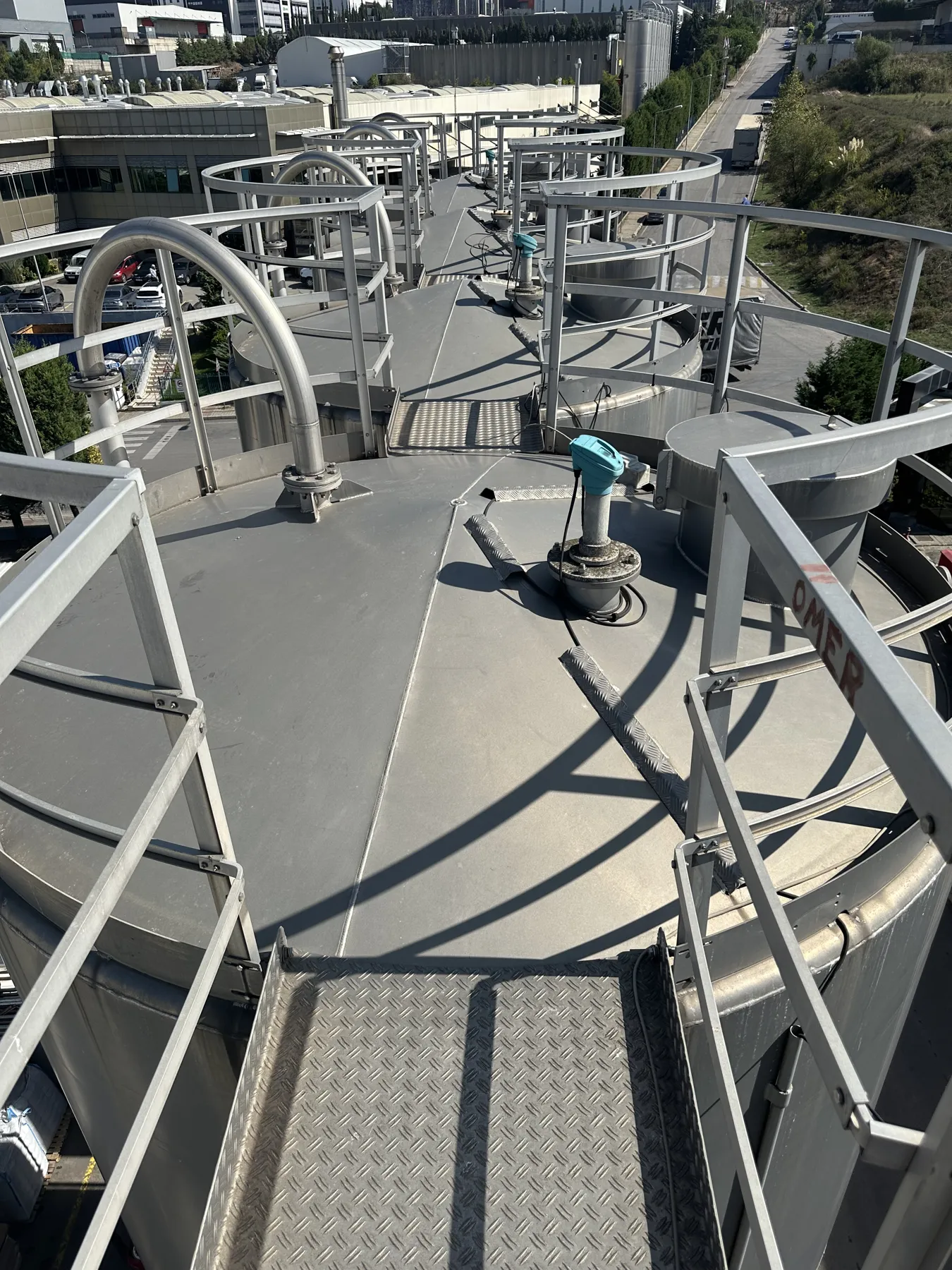
Bridging, rat-holing and build-up on the cone wall are common with cohesive powders, while segregation and erratic flow are typical with granules. At OPTA Mühendislik we select equipment such as silo activators, aeration pads, bottom sweep systems, pneumatic hammers and rotary valves according to your material's flow behaviour, and make discharge traceable through automation.

Besides new silo projects, we inspect flow problems in your existing silos on site and upgrade the discharge equipment.

Mass flowFIFO discharge
Ø 1.200 – 3.000activator diameter
ATEXcompatible equipment
Silo Discharge Systems

Discharge methods

Silo activator
01 / 04

Silo activator

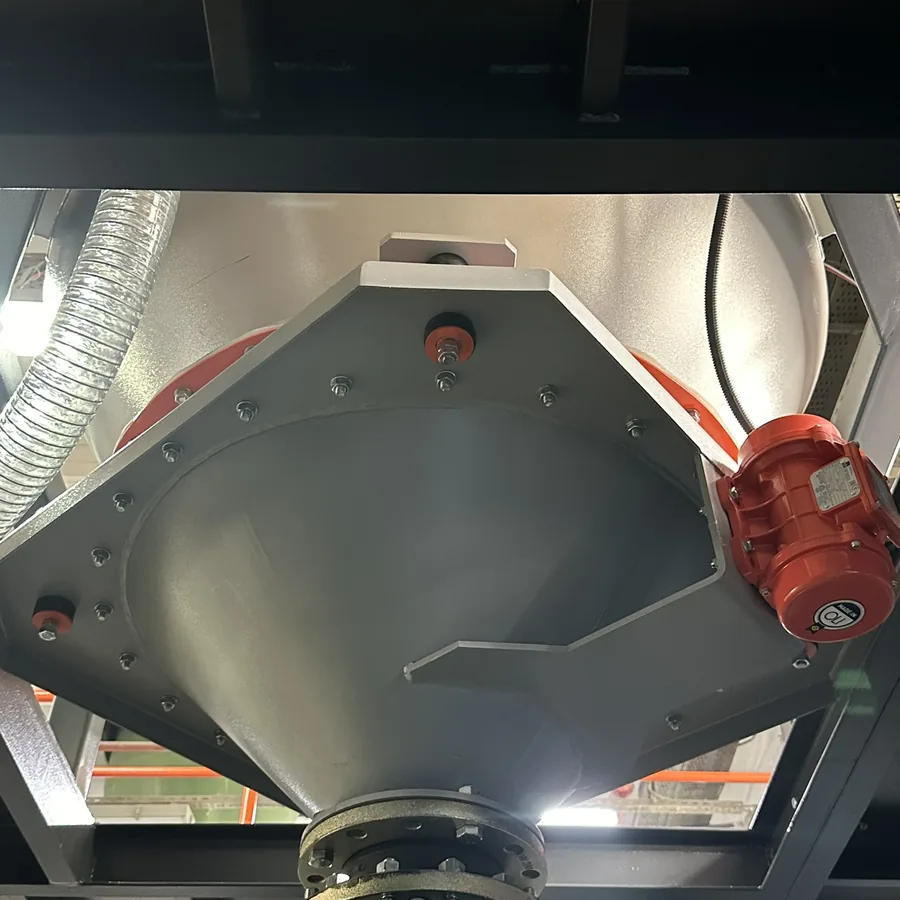
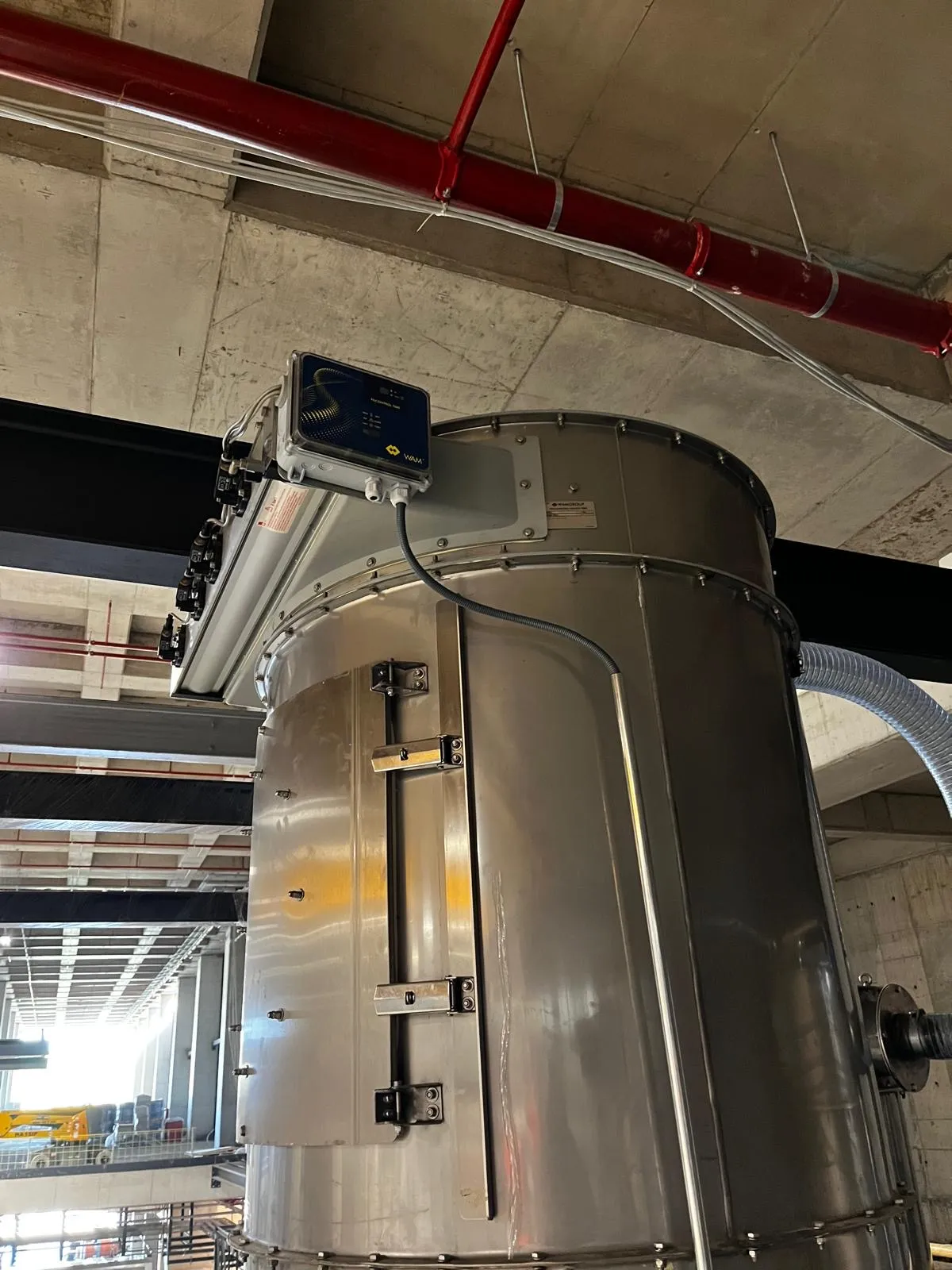
It consists of a vibrating cone and an internal deflector mounted under the silo cone with a flexible connection. The motor vibrator makes the material move across the whole cross-section, breaking bridges and rat-holes.

How does it work?

  1. The activator is connected to the silo cone with a flexible sleeve
  2. An external vibrator vibrates the conical body
  3. The internal deflector spreads the pressure so the whole cross-section flows
  4. The flow rate is controlled by the valve or feeder at the outlet

When is it preferred?

Cohesive powders prone to bridging such as calcite, talc, pigment and PVC powder, and large-diameter silos.

Silo activatorFlexible sleeveButterfly / slide gate valve
Aeration pads and bottom sweep
02 / 04

Aeration pads and bottom sweep

Aeration pads or bottom sweep nozzles placed on the cone surface inject dry, oil-free air into the material in pulses. The material fluidises and build-up on the cone wall is released.

How does it work?

  1. Pads are placed at intervals on the cone surface
  2. Dried compressed air is pulsed through solenoid valves
  3. The material detaches from the cone wall and moves to the outlet
  4. Air is shut off when discharge ends

When is it preferred?

Cement, fly ash, calcite and fine fluidisable powders; applications that must run on low energy.

Aeration padBottom sweep nozzleSolenoid valve group
Pneumatic hammer
03 / 04

Pneumatic hammer

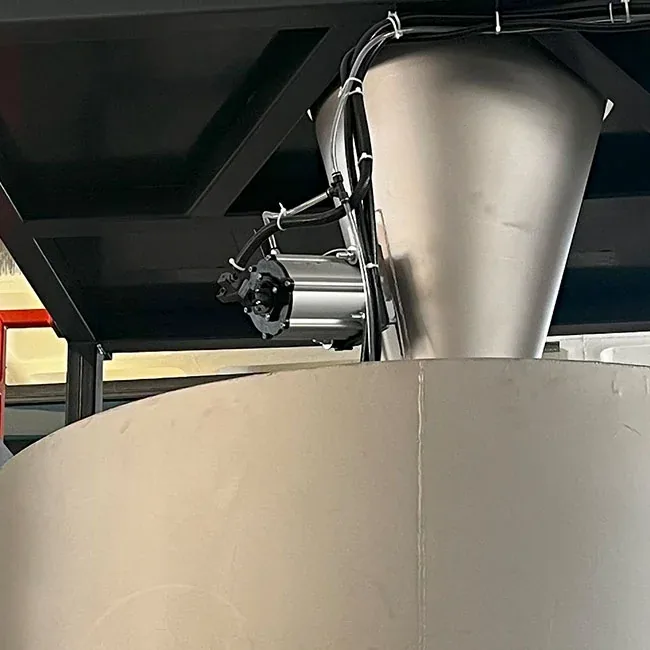
A pneumatic hammer mounted on the outer cone surface strikes at intervals to dislodge material stuck to the cone wall. It is a simple, maintenance-free solution that can easily be added to existing silos.

How does it work?

  1. The hammer is fixed to a welded plate at the critical zone of the cone
  2. It is triggered by the PLC on a timer or when flow stops
  3. The impact energy breaks the build-up loose

When is it preferred?

Occasional build-up in existing silos and small-diameter hoppers.

Pneumatic hammerTimer / PLC
Metered discharge with rotary valve and screw
04 / 04

Metered discharge with rotary valve and screw

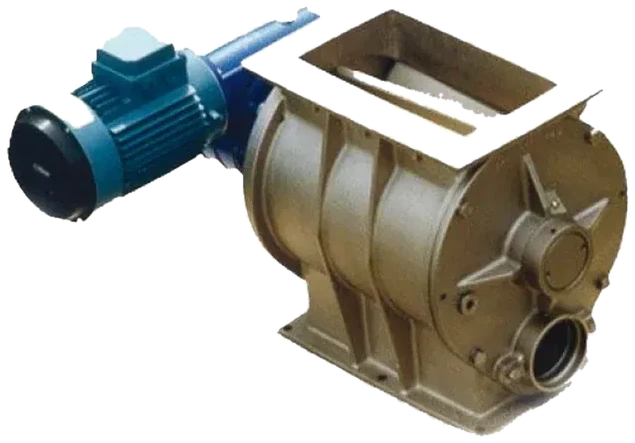
This is the last piece of equipment connecting the silo to the process or a pneumatic line. The rotary valve isolates the line pressure from the silo and sets the rate by speed; the screw conveyor carries the material horizontally or at an incline to the required point.

How does it work?

  1. A valve and flexible connection are fitted at the silo outlet
  2. The rotary valve or screw speed is set by a frequency inverter
  3. Material is fed to a weigh hopper or pneumatic line

When is it preferred?

Any application that needs a steady feed from the silo to a pneumatic conveying line, mixer or weigh hopper.

Rotary valveScrew conveyorFrequency inverter

Equipment used for discharge

We select equipment based on the material's flow test and the silo geometry.

For safe, continuous discharge

Standard

  • Cone and outlet diameter based on flow analysis
  • Manual slide gate maintenance valve at the outlet
  • Minimum level sensor
  • Flexible, leak-tight connections

Optional

  • Silo activator
  • Aeration pad / bottom sweep
  • Pneumatic hammer
  • Silo weighing with load cells
  • No-flow sensor

Standards

  • ATEX 2014/34/EU
  • Machinery Directive 2006/42/EC
  • Dry, oil-free air (ISO 8573-1)

More in Silo systems

SilosStainless, aluminium and carbon steel; leg-supported or skirted silos.→Silo filling systemsDust-free silo filling from tankers, big bags or pneumatic lines.→Silo equipmentFilters, activators, fluidisers and safety equipment.→All silo systemsRaw Material Storage→

Frequently asked questions

My silo bridges — can it be solved without buying a new silo?

In most cases, yes. We examine the material's flow properties and the cone geometry, and improve the existing silo with a silo activator, aeration pads or a pneumatic hammer.

Activator or aeration pads?

An activator is more effective for cohesive and moist powders; aeration pads are more economical for dry, fine, fluidisable powders. We make the choice based on a material test.

Can a silo feed more than one machine?

Yes. From the silo outlet, a screw or pneumatic line with diverter valves can feed several points sequentially or simultaneously.

Let’s work together on silo discharge systems

Tell us about your raw material, capacity and site, and we will come back with a preliminary design and quotation.